

Introduction: Dust Control Has an Energy Cost
Energy-saving dust extraction is becoming a priority for manufacturers that need clean air, stable production, and lower operating costs at the same time. Dust extraction systems are essential in industrial environments, but they also consume electricity through fans, motors, compressed-air pulse cleaning, control systems, and supporting equipment. When a dust collector runs at full speed all day, even during low-load production periods, the energy cost can become a serious part of the facility's total cost of ownership.
The challenge is that dust extraction cannot be reduced carelessly. Too little airflow can allow dust to escape from capture hoods, settle inside ducts, contaminate products, increase housekeeping work, or create safety risks in combustible dust environments. A good energy-saving strategy does not simply slow the fan. It balances airflow, filtration, pressure drop, process demand, safety requirements, and long-term maintenance.
This article explains how industrial facilities can reduce energy use in dust extraction systems without compromising dust capture performance. It focuses on practical engineering decisions: fan control, duct design, filtration, pressure monitoring, system layout, maintenance, and supplier selection.
Why Dust Extraction Uses So Much Energy
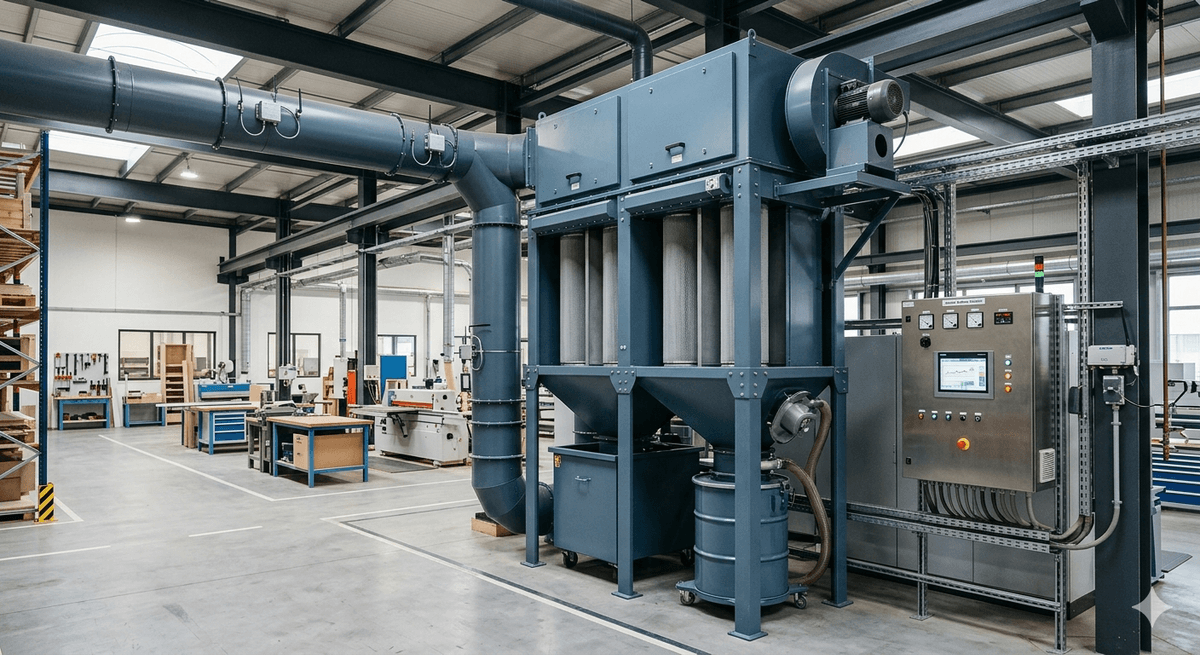
Most industrial dust extraction systems move large volumes of air. A fan must overcome resistance from capture hoods, ductwork, elbows, dampers, filters, collection equipment, and exhaust paths. The harder the system is to pull air through, the more power the fan motor needs. This is why two systems with the same collector size can have very different energy costs.
Energy demand often rises when systems are oversized, ducts are poorly designed, filters are clogged, or extraction points remain open when equipment is not operating. A system that was originally installed to be "safe enough" may run at a higher airflow than necessary for much of the day. In some facilities, this full-speed operation continues for years because operators worry that reducing airflow could reduce capture performance.
NAROO's dust extraction systems guide explains that extraction systems use intake hoods, ductwork, filtration units, and exhaust fans to capture airborne particles. Each of these components influences energy demand. A truly energy-saving dust extraction design must treat the system as a connected airflow network rather than a single dust collector box.
The Main Energy Drivers in Dust Extraction
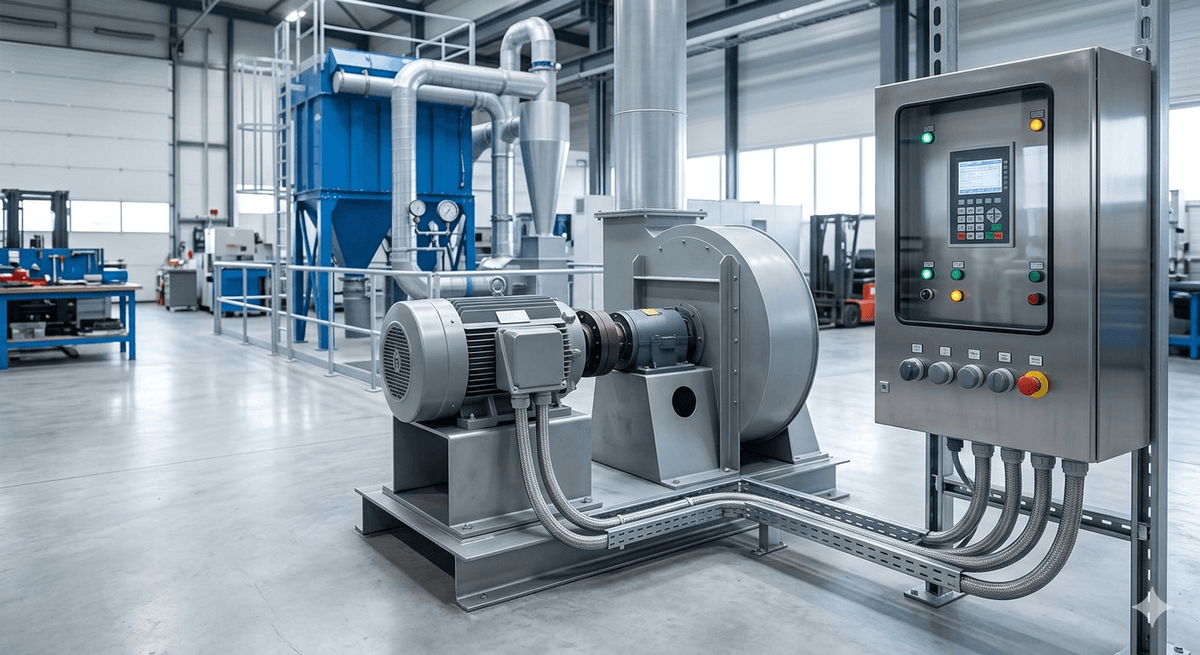
The fan motor is usually the largest energy consumer in a dust extraction system. When airflow demand changes but the fan continues running at full speed, electricity is wasted. Variable frequency drives, airflow controls, and process-based control logic can help adjust fan output to actual demand, but they must be applied with an understanding of the full system.
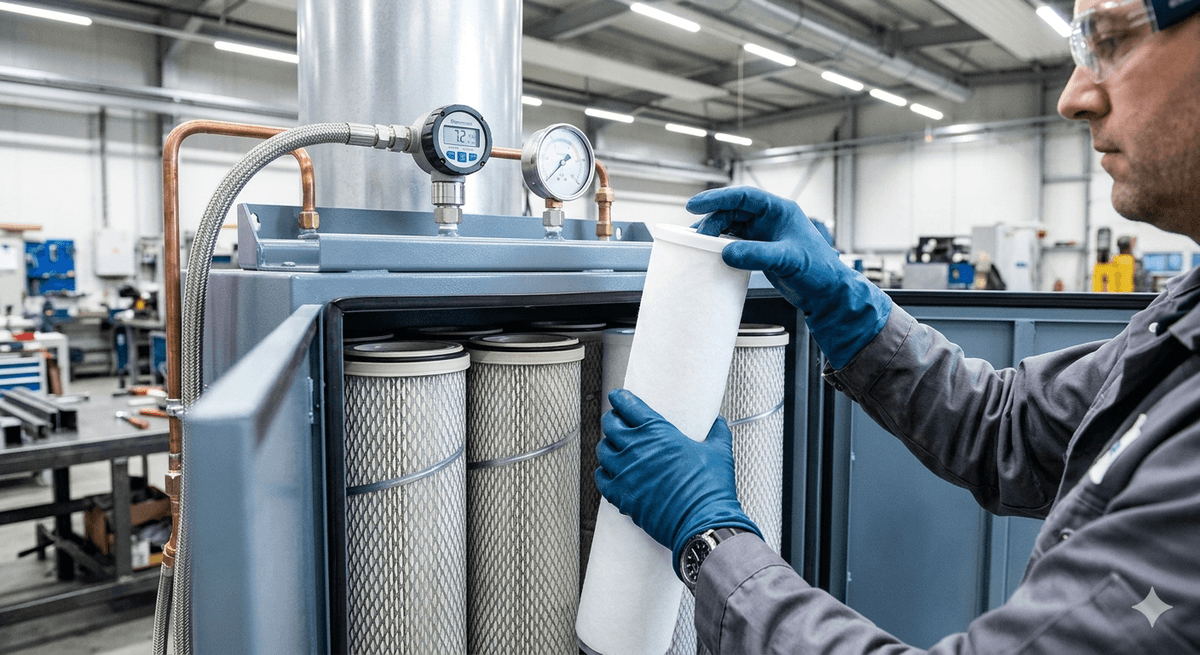
Filter pressure drop is another major factor. As filters load with dust, resistance increases. Donaldson notes that an increase in differential pressure across filters can significantly increase fan energy draw, potentially reducing or eliminating the benefit of a VFD. This is why filter condition and cleaning strategy are central to energy-saving dust extraction.
Duct design also matters. Long duct runs, unnecessary elbows, undersized ducts, poor hood placement, and uncontrolled leakage can all add resistance. The system may then require a larger fan or higher fan speed to maintain the same capture performance. Good design reduces energy use by minimizing wasted pressure and moving air only where it is needed.
Smart Airflow Control: Save Energy by Matching Demand
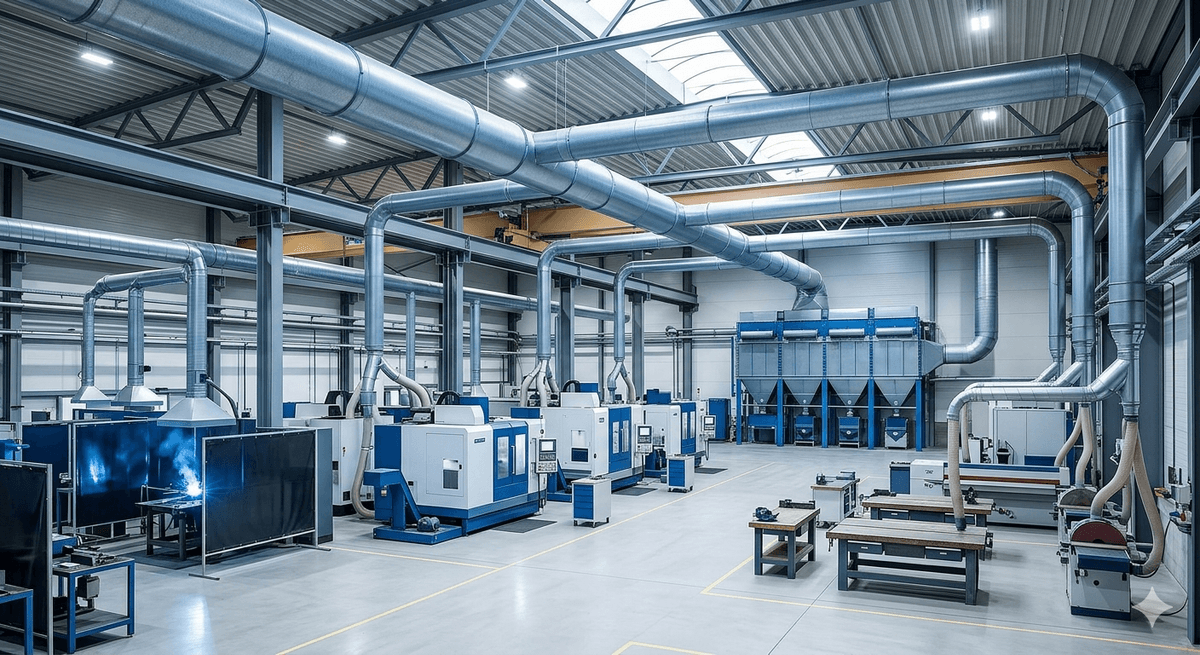
One of the most effective ways to reduce energy use is to match dust extraction airflow to process demand. In many facilities, not every workstation, machine, or production line operates at the same time. If the system can identify which points need extraction, it can reduce unnecessary airflow from inactive areas.
Smart airflow control may use automatic dampers, pressure sensors, airflow sensors, machine interlocks, variable frequency drives, and programmable control logic. The goal is to maintain the required capture velocity at active dust sources while reducing total system airflow when demand is lower. This approach can be especially valuable in central systems serving multiple machines or production zones.
NAROO's article on central dust collection systems highlights the value of customizable features such as automatic start and stop functions based on tool operation. For energy-saving dust extraction, that idea is critical: the system should respond to production, not simply run at maximum output by default.
VFDs Are Useful, but They Are Not a Complete Strategy
A variable frequency drive can reduce fan speed and therefore reduce power consumption. In fan systems, even a modest reduction in speed can produce a meaningful energy reduction. This is one reason VFDs are frequently discussed in industrial ventilation and dust collection energy projects.
However, installing a VFD alone is not enough. If filters are clogged, ducts are poorly designed, or hoods are not capturing dust correctly, reducing fan speed can make the system unstable. If combustible dust is present, airflow reductions must also be evaluated for safe conveying velocity, dust accumulation risk, and applicable safety requirements. Energy savings should never come at the expense of dust control or explosion protection.
The best approach is to combine VFD control with sensor feedback, system balancing, filter monitoring, and process demand logic. A VFD should help the system maintain the right airflow, not guess at a lower speed. This is especially important for industrial environments where dust loading changes throughout the shift.
Filter Maintenance Directly Affects Energy Savings
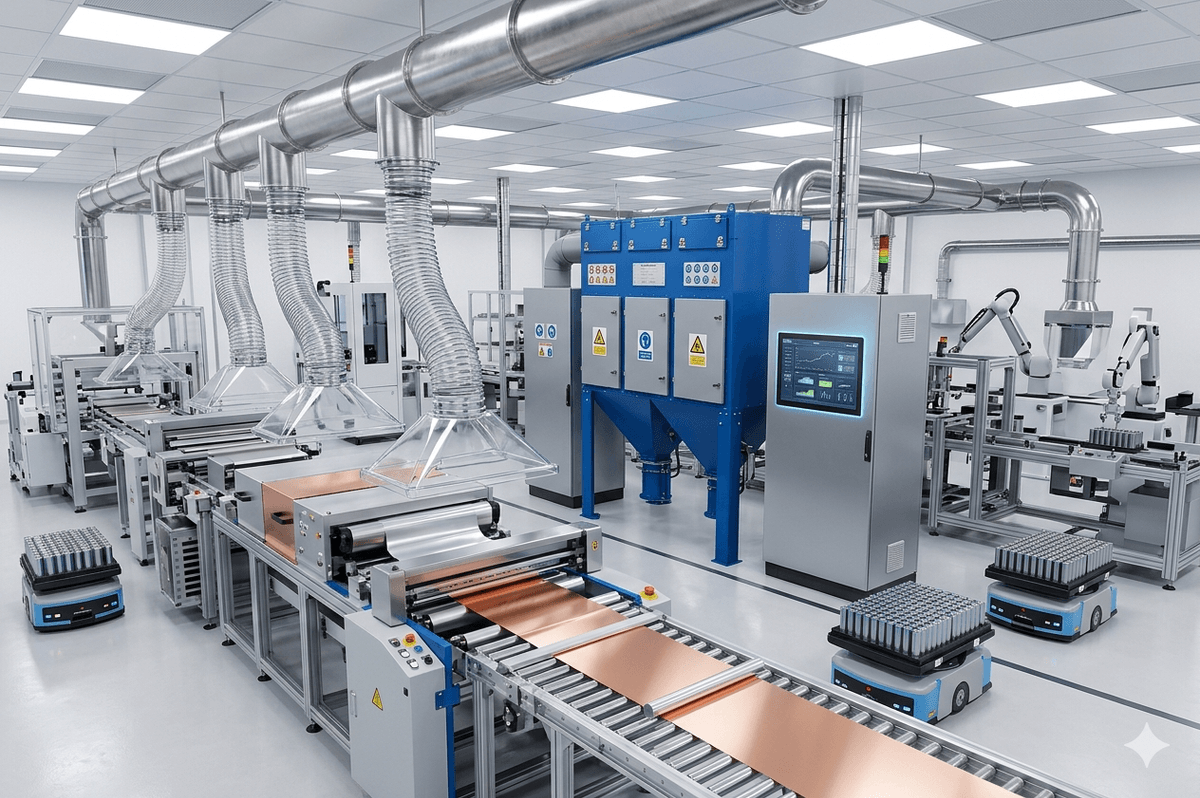
Filters are often treated as maintenance items, but they are also energy items. A loaded filter creates higher resistance. Higher resistance forces the fan to work harder, which increases energy use. If pressure drop continues to rise, the system may lose airflow at the capture points, creating both performance and safety concerns.
Energy-saving dust extraction depends on monitoring filter pressure drop and maintaining filters before they become a hidden energy penalty. Pulse-cleaning settings, compressed-air quality, filter media selection, dust characteristics, and hopper management all influence how efficiently a collector operates over time.
NAROO's dust collection filter cartridge resource is relevant here because filter performance affects airflow stability, cleaning frequency, and long-term operating cost. Choosing the right filter is not only a filtration decision; it is also an energy and maintenance decision.
Choosing the Right Collector Type for Energy Efficiency
Different dust collector types create different pressure losses and maintenance requirements. Cartridge collectors can be compact and efficient for many fine dust applications. Bag filters may be useful for large-volume or specific dust-loading conditions. Cyclone collectors can remove larger particles before they reach final filtration, reducing filter load and improving system stability.
NAROO's cyclone dust collector page explains how centrifugal force and inertia separate particles of different densities and weights. By reducing the load on high-efficiency downstream collectors, cyclone separation can support continuous operation and may reduce the frequency of filter cleaning or replacement in suitable applications.
The right collector depends on dust type, particle size, loading rate, process layout, combustible dust risk, maintenance access, and required filtration efficiency. An energy-efficient design starts with equipment selection that matches the dust and process rather than simply choosing the largest fan or collector available.
Energy Savings in Battery and New Energy Manufacturing
Battery manufacturing, energy storage, and new energy facilities often require strict dust control because airborne particles can affect product quality, process stability, and safety. At the same time, these facilities may operate large production lines for long hours, making energy use a major concern.
NAROO's lithium battery dust collection page emphasizes the importance of advanced explosion-proof dust collection systems for lithium battery production. In this type of environment, energy-saving dust extraction must be integrated with safety and process control. The system needs to capture dust effectively while minimizing wasted airflow across production stages such as mixing, coating, cutting, assembly, or handling.
For new energy facilities, the most effective strategy is usually a customized system design. This can include zone-based extraction, pressure monitoring, optimized hoods, efficient duct routes, explosion protection measures, and maintenance access designed around the actual production workflow.
Safety Must Remain the First Constraint
Energy efficiency should never be pursued by weakening safety controls. In combustible dust environments, dust extraction systems may need to manage ignition sources, dust accumulation, explosion isolation, venting, suppression, grounding, and other safety requirements. Lower airflow may save power, but if it allows dust to accumulate inside ducts or production areas, the facility may create a larger hazard.
OSHA's combustible dust bulletin emphasizes the need to prevent and mitigate fire and explosion risks from combustible dust. For facilities handling metal dust, battery materials, chemical powders, pharmaceutical powders, or other combustible materials, airflow strategy must be evaluated alongside explosion protection and regulatory requirements.
NAROO's ATEX compliant dust control systems article is useful for understanding how dust control, explosion protection, maintenance needs, and energy efficiency can be considered together. A good system should reduce waste, but not by reducing the safety margin.
How to Evaluate an Energy-Saving Dust Extraction Project
Before upgrading a dust extraction system, facilities should gather baseline data. Useful information includes fan motor size, operating hours, current airflow, static pressure, filter differential pressure, compressed-air use, number of active extraction points, dust type, production schedule, maintenance history, and electricity cost. Without baseline data, it is difficult to prove savings or identify the best improvement path.
Next, evaluate where energy is being lost. Are fans running when machines are idle? Are filters operating at high pressure drop? Are ducts longer or more complex than necessary? Are manual dampers left open? Are capture hoods poorly positioned? Is the system oversized because of future expansion that never happened? These questions often reveal savings opportunities before major equipment replacement is needed.
For new systems, energy goals should be included during design. The facility should ask suppliers about fan selection, motor efficiency, VFD compatibility, control logic, duct layout, filter access, pressure monitoring, and how the system will be commissioned and balanced. NAROO's product center describes dust collectors customized for different industries and process characteristics, which is the right starting point for energy-aware system planning.
Maintenance Practices That Protect Energy Performance
Even a well-designed system can lose efficiency if it is not maintained. Filters can clog, ducts can leak, dampers can drift from their intended settings, sensors can become inaccurate, and dust buildup can increase resistance. Maintenance should therefore be part of the energy-saving plan, not an afterthought.
Key practices include tracking differential pressure, inspecting filters and seals, checking duct leakage, confirming damper positions, cleaning hoppers, reviewing compressed-air pulse settings, verifying sensor readings, and comparing current performance against commissioning data. A small increase in pressure drop or air leakage may not look dramatic at first, but over months of operation it can become a measurable energy cost.
NAROO's company profile describes an integrated approach covering R&D, design, production, sales, and installation. For energy-saving dust extraction, this full-system view matters because energy performance depends on design, equipment, installation, and service working together.
Questions to Ask a Dust Extraction Supplier
When selecting an energy-saving dust extraction supplier, ask how the system will maintain capture performance while reducing power use. Can the supplier calculate required airflow by extraction point? Can they design ductwork to reduce unnecessary pressure loss? Can they recommend appropriate collector types for the dust load? Can they integrate VFDs, sensors, automatic dampers, or remote diagnostics?
Ask about filter access, differential pressure monitoring, pulse-cleaning control, explosion protection, commissioning, and maintenance support. For high-risk dusts, ask how energy-saving controls interact with safe conveying velocity and combustible dust requirements. For battery, metal, chemical, or pharmaceutical applications, ask whether the supplier has experience with similar dust characteristics.
NAROO's experience across automobiles, glass, non-ferrous metals, energy storage, solar photovoltaics, chemicals, medicine, and smelting makes it relevant for facilities that need customized dust removal rather than a generic collector. The best supplier should help define an energy-saving strategy around the actual process, not simply add a smaller fan or a VFD to an unchanged system.
Conclusion
Energy-saving dust extraction is not about turning down airflow blindly. It is about designing and operating the system so that clean air, worker protection, product quality, safety, and energy efficiency support each other. The largest opportunities often come from matching airflow to demand, reducing pressure loss, maintaining filters, choosing the right collector type, and using smart controls where they make sense.
For industrial facilities, the path to lower energy cost begins with understanding how the current dust extraction system uses power. From there, teams can evaluate fan control, duct design, filtration, maintenance, and safety requirements together. A system that saves energy but fails to capture dust is not efficient. A system that captures dust while wasting electricity is not optimized. The goal is balanced performance.
NAROO can be considered as a dust removal and air purification solution partner for facilities evaluating energy-saving dust extraction, central dust collection, cyclone pre-separation, lithium battery dust control, ATEX-aware dust management, and customized industrial filtration systems. Final system design, safety validation, and compliance decisions should always be based on the facility's actual dust hazards, process requirements, and applicable regulations.