

Grinding Dust Travels Farther Than Many Shops Expect
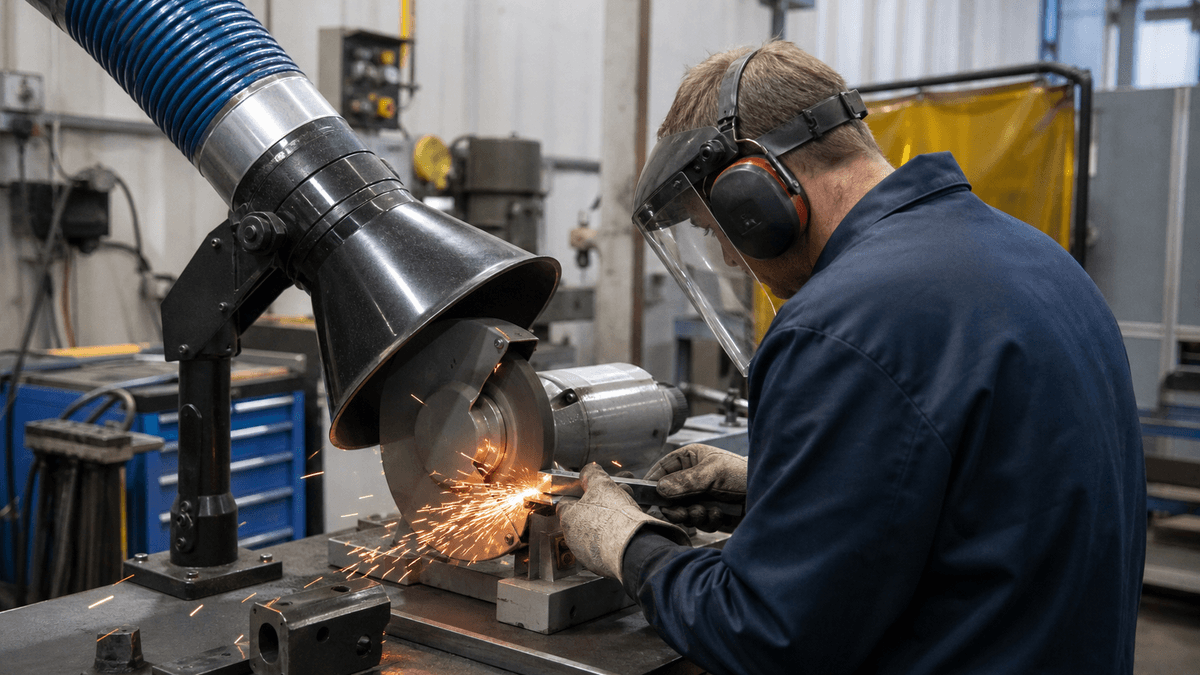
Metal grinding dust hazards are often noticed first at the workstation: visible debris, breathing-zone exposure, sparks, and dirty surrounding equipment. The bigger issue is that grinding dust rarely stays where it starts. Fine particles can move through nearby aisles, settle on surfaces, load filters quickly, and create a broader housekeeping and maintenance problem for the shop.
That is why the right response is usually not a generic room fan or occasional cleanup. Grinding operations need capture close to the source, a collector matched to the dust burden, and a review of whether the handled metals introduce combustible dust or reactive-material concerns.
Source Capture Matters More Than General Ventilation
For grinding applications, a source-capture approach is usually more effective than trying to clean the room after dust has dispersed. Hood placement, enclosure strategy, duct route, and spark-aware design all matter. Once metal dust spreads into the general workspace, the plant has already lost efficiency and made housekeeping harder.
NAROO's dust collection products and its industrial application positioning are relevant because grinding dust control is a system decision, not just a machine purchase.
Which Collector Path Fits a Grinding Operation?
The answer depends on the metal, particle size, and production pattern. A cartridge dust collector may be attractive where fine dry particulate and compact filtration are the priority. In other cases, heavier loading or broader process demands may justify a bag dust collector comparison. If pre-separation helps reduce downstream loading, a cyclone collector can be part of the system conversation.
For some metals and spark-sensitive conditions, the plant may also need to review whether a different handling strategy is more appropriate. The collector type should follow the dust properties, not just the habit of the facility.
Hazard Review Cannot Ignore the Material Itself
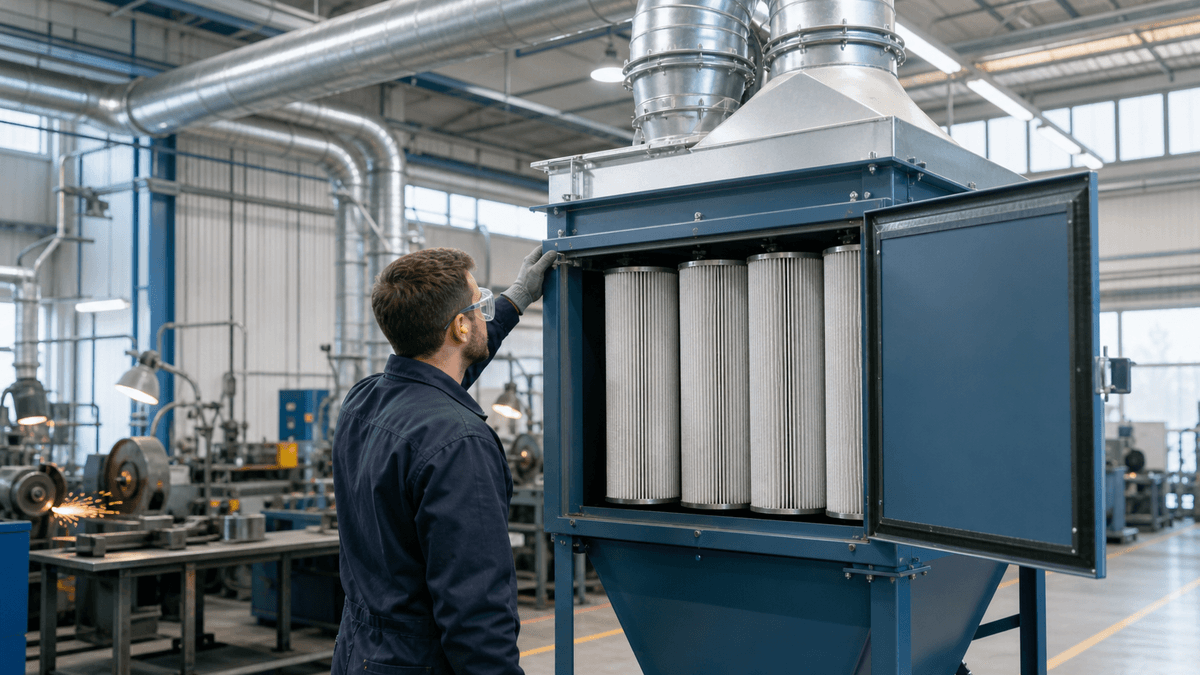
OSHA and NFPA guidance remains important here because some grinding dusts raise combustible dust concerns. Plant teams should know what alloys or materials are being processed, how fine the dust is, where it accumulates, and what ignition or confinement risks exist. A dust collector article becomes more useful when it acknowledges these decision points clearly instead of treating all metal dust as identical.
Internal Links That Fit This Topic
NAROO's automobile application page is a natural internal link for metalworking-related production environments. The laser processing page can support broader fabrication discussions where fine particulate and fume management overlap. The other applications page gives additional room for mixed-process manufacturing contexts.
Operational Checks That Reduce Grinding Dust Trouble
- Confirm that hoods stay close enough to the grinding source during real work.
- Review whether operators have altered capture points to gain access.
- Check collector loading patterns and filter condition regularly.
- Audit settled dust in surrounding zones, not only near the grinder.
- Verify approved cleanup practices for the handled metal dust.
Where NAROO Fits
NAROO fits this topic best as a supplier for industrial dust removal systems that can be matched to fabrication processes and site conditions. Its company profile, product categories, and application pages support that kind of process-led discussion without overstating what any single collector can guarantee.
Conclusion
Metal grinding dust hazards begin at the point of generation but quickly become a plant-wide control issue if capture is weak. Shops that treat grinding dust as a process hazard, a housekeeping issue, and a collector-design problem at the same time are more likely to build a stable solution.