

A semiconductor dust collector is not the same thing as cleanroom HVAC. Cleanroom filtration protects the production environment by managing supplied and recirculated air. Process extraction captures contaminants where they are generated. A room can meet a cleanliness target while a maintenance opening, wafer-dicing station, crystal-cleaning task, or powder-handling step still creates a concentrated local release.
The right design starts by separating particulate sources from gases, vapors, and liquid aerosols. It then creates controlled boundaries around the tasks that release particles, chooses compatible filtration, and plans filter change and waste handling as carefully as normal production.
Map Particles by Process Step
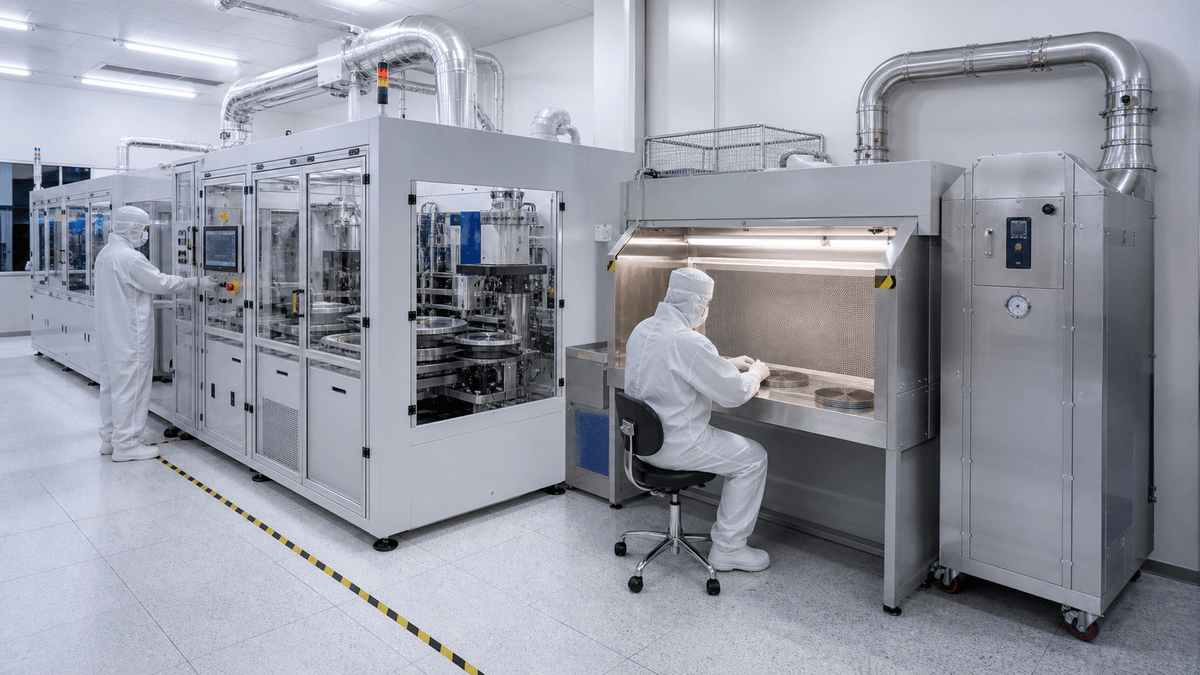
Semiconductor and related electronics manufacturing can involve crystal growth, slicing, grinding, backlapping, polishing, dicing, laser processing, chamber cleaning, abrasive maintenance, and advanced-packaging operations. Not every facility performs every step, and the materials can vary widely.
Record each task, material, particle form, temperature, moisture, chemical residue, batch frequency, operator position, and cleaning method. Include abnormal events such as broken wafers, chamber opening, clogged lines, spent-filter removal, and cleanup after equipment service.
NIOSH guidance for gallium arsenide production identifies crystal puller cleaning, crystal sawing, wafer polishing, backlapping, and dicing as areas where particulate or surface contamination may require attention. This illustrates why source mapping must follow the real process rather than the room classification.
Cleanroom HVAC Should Not Become the Process Collector
Allowing process dust to disperse into room air places the burden on ceiling filters, return paths, and housekeeping. It can also move contamination across equipment or zones. Close enclosure and local exhaust capture the release with less air and give the plant a defined waste path.
Maintain the intended pressure relationships between cleaner and less-clean areas. A process enclosure may operate negative to its surroundings, but its exhaust should not destabilize the entire room. Coordinate extraction with makeup air and facility HVAC controls.
NAROO's high-cleanliness photovoltaic filtration work offers relevant manufacturing context, while semiconductor process exhaust still requires material- and tool-specific design.
Openings During Maintenance Deserve Their Own Capture
Production tools may be sealed during operation and release particulate only when opened for cleaning. That short maintenance event can create a concentrated exposure and surface-contamination risk. A fixed hood, ventilated enclosure, portable local exhaust, or dedicated service connection can control the release if it is positioned before the tool is opened.
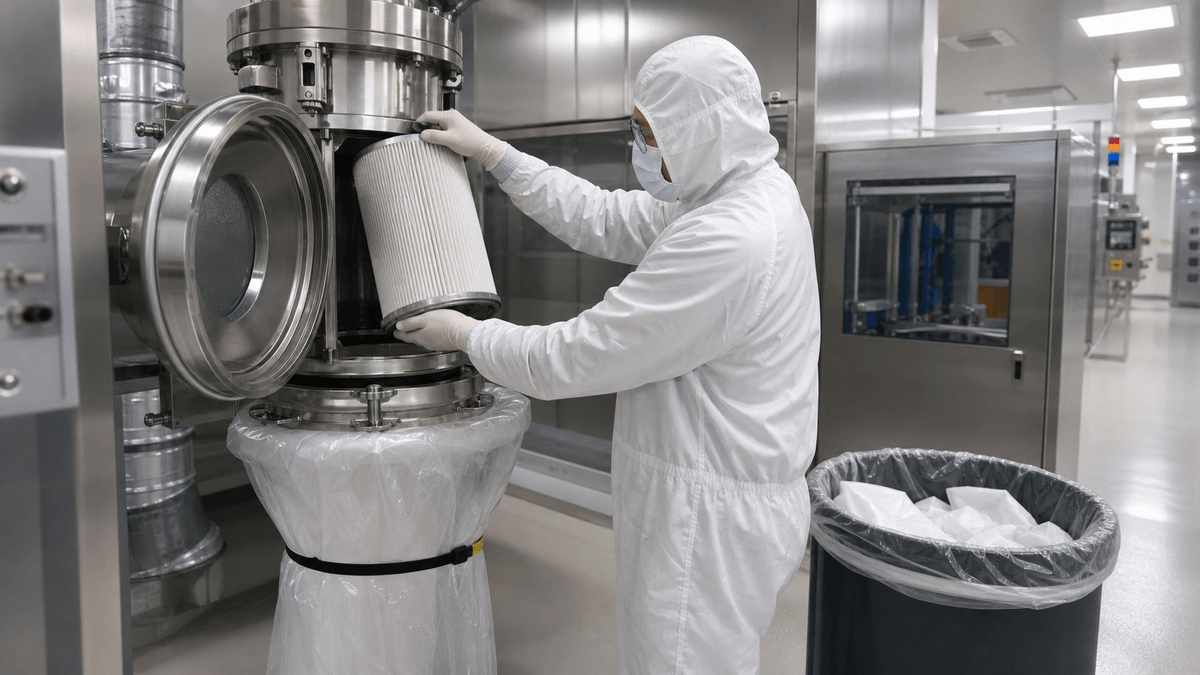
NIOSH recommends local exhaust and HEPA-filtered vacuuming for certain gallium arsenide cleaning tasks, along with wet cleaning where appropriate. Filter removal requires care because captured material remains concentrated inside the equipment.
Design the service procedure with maintenance technicians. Provide reach, visibility, tool access, and a place for contaminated wipes, bags, and components. A control that blocks the work will be moved aside during the task that needs it most.
Wet Processes Can Still Create Airborne Contaminants
Wet sawing, grinding, and polishing can suppress dry dust, but droplets, mist, dried residue, and contaminated coolant still need control. Enclose splash zones, capture aerosols where necessary, and define the liquid-treatment path. Do not send wet mist into a dry cartridge collector without confirming compatibility.
After coolant dries, residues may become airborne during scraping or cleanup. Housekeeping methods should avoid redistributing contaminated material. Wet wiping or correctly selected filtered vacuuming may be appropriate based on the substance and site procedure.
For fine or sticky particulate applications, NAROO's wetted filter provides a wet-collection category for engineering review. Chemical compatibility, wastewater, and semiconductor-specific contamination requirements remain separate decisions.
Keep Toxic Gas and Particulate Exhaust Decisions Separate
Semiconductor facilities can use hazardous, pyrophoric, corrosive, or reactive gases. A particulate collector is not a general-purpose gas abatement device. Exhaust streams should be segregated according to chemistry, reaction potential, temperature, condensation, and treatment requirements.
Do not combine a dusty service hood with process-gas exhaust merely because both are near the same tool. Review potential reactions, deposits, fire risk, pressure interactions, monitoring, and failure modes. Gas cabinets, scrubbers, burn boxes, and other abatement systems follow different design logic from dry particle filtration.
NAROO's dust-removal product range supports the particulate side of the discussion; gas hazards need qualified process-abatement specialists.
Filter Selection Starts With the Material Inventory
Fine dry particulate from compatible operations may lead designers to a cartridge dust collector. NAROO describes surface filtration, pulse-jet cleaning, and airflow-resistance calculation for this product category. The final selection still depends on particle properties, toxicity, moisture, temperature, loading, and cleaning requirements.
Heavier compatible process dust may fit a bag filter. Coarse particulate may be removed upstream with a cyclone pre-separator, although fine and hazardous particulate will generally need appropriate final filtration.
High-efficiency final filters may be needed for certain applications, but efficiency is only part of containment. Housing seals, bypass control, pressure monitoring, safe changeout, and disposal determine whether captured material stays contained.
Product Protection and Worker Protection Overlap
Particles can affect yield, optics, surfaces, and sensitive equipment while also creating occupational exposure concerns. These goals often support the same source-capture strategy, but their acceptance criteria may differ. Product cleanliness does not automatically demonstrate worker protection, and exposure control does not by itself prove process cleanliness.
Define what will be measured: room particle counts, local airborne concentration, surface contamination, exhaust performance, filter pressure, or outlet emissions. Use qualified sampling methods and establish action levels appropriate to the material and process.
Filter Change Is a Contained Process
A semiconductor dust collector concentrates material on filters and in hoppers. Maintenance can therefore create a higher-contact task than routine production. Plan isolation, purge or cooldown where applicable, access, protective equipment, bagging, transport, decontamination, and waste classification before installation.
Use smooth, cleanable surfaces and minimize ledges. Position instruments and service doors where technicians can reach them without crossing cleaner areas with contaminated components. If a bag-in/bag-out or other contained-change method is required, include it in the original design rather than as a retrofit.
NAROO's integrated design and installation model can support coordination among process-tool, facility, controls, and maintenance teams.
Monitor the Boundary, Not Only the Filter
Differential pressure shows how resistance across the filter changes, but it does not prove an enclosure is closed or a maintenance hood is positioned correctly. Combine equipment data with airflow indicators, pressure relationships, door states, and task observations.
EPA fabric-filter guidance identifies outlet particulate, differential pressure, temperature, exhaust flow, cleaning operation, and fan current as possible performance indicators. The semiconductor project may require additional containment or facility monitoring based on the material and process.
Alarm logic should state what changed and what action follows. A maintenance technician needs to know whether to stop opening the tool, check a damper, inspect a filter, or call facility support.
Commission Production, Service, and Failure States
Normal production may be the least demanding condition because tools are closed and interlocked. Commissioning should also include loading and unloading, chamber opening, wet cleanup, dry residue removal, filter pulsing, waste-container changeout, and representative maintenance. Verify airflow direction before a contaminated boundary is opened.
Test foreseeable failures such as loss of exhaust, blocked filters, open access doors, failed dampers, or interrupted facility air. Confirm that alarms are visible, process interlocks act as intended, and the tool or task reaches a controlled state. The response should not depend on an operator noticing invisible particulate.
Record enclosure pressure, branch airflow, filter differential pressure, room pressure, damper positions, and acceptable operating configurations. Repeat relevant checks after tool relocation, recipe changes, new materials, increased throughput, or facility ventilation modifications.
A Process-Boundary Checklist
- Identify every normal and maintenance opening where particles can escape.
- Separate dry particulate, wet aerosol, vapor, and process-gas exhaust routes.
- Confirm airflow direction from cleaner space into the controlled source.
- Verify that the capture method fits the actual service task.
- Define filter and waste changeout before equipment selection.
- Establish monitoring for source capture, filtration, and room pressure.
- Reassess after material, chemistry, tool, or production changes.
What the Supplier Needs to Know
Provide process steps, material and hazard data, particle form, expected loading, temperature, moisture, chemical carryover, source drawings, operating and maintenance cycles, room classification, pressure requirements, utilities, available space, waste route, and monitoring expectations.
Ask the supplier to explain source enclosure, airflow calculations, material compatibility, filter and housing choice, cleaning, discharge, safe service, controls, alarms, commissioning, and documentation. The strongest proposal will identify what the collector does not treat as clearly as what it does.
Assign interface ownership before fabrication. The process-tool vendor, facility ventilation team, collector supplier, controls integrator, environmental group, and EHS team may each control part of the final result. A responsibility matrix should identify who supplies dampers, sensors, interlocks, exhaust connections, utilities, acceptance tests, and maintenance procedures so that no containment gap is left between contracts.