

Plants Usually Get This Decision Wrong at the Start
Many buying teams talk about a bag dust collector as if it were just one more item on an equipment list. In practice, the decision is more structural than that. A collector that works well in one plant can underperform in another because the dust arrives differently, the airflow path is different, or maintenance access was treated as an afterthought. The question is not whether a bag dust collector is common. The question is whether it fits the process better than other filtration routes.
That distinction matters because the wrong collector choice rarely fails on day one. It usually fails through pressure loss drift, unstable capture, difficult maintenance, or operator workarounds that slowly reduce performance. By the time the plant notices the pattern, the purchase has already become expensive to correct.
Start With the Dust Stream, Not the Product Name
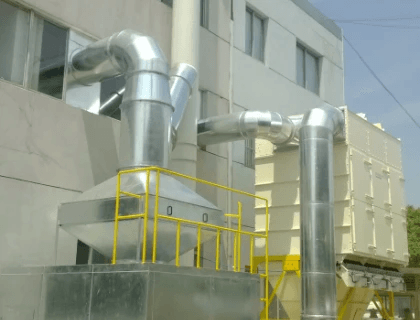
A useful bag dust collector review begins with the dust stream itself. How much material is entering the system across a normal shift? Does the dust arrive in steady flow or in heavy bursts? Is it primarily process dust, transfer-point dust, or flue-gas related particulate? How much of the total dust load is generated at one source versus many distributed pickup points?
These are not minor design details. They shape duct sizing, fan behavior, hopper discharge planning, and the practical load placed on the filter section. A buying team that cannot explain the dust stream clearly is not ready to compare collector categories yet.
Narootech's bag dust collector page is useful here because it describes the product around dust separation from flue gas and the use of woven fabric filter elements to trap solid particles. That is a stronger starting point than generic phrases about industrial dust control because it tells the buyer what kind of separation logic the system is built around.
Why Bag Systems Stay Relevant in Heavy-Dust Work
Bag systems remain relevant because many plants are not dealing with only light, uniform, easy-to-manage particulate. Some processes create heavier loading, broader particle-size variation, or operating patterns that reward a more robust filter arrangement. On Narootech's product page, dust-laden air passes through woven fabric filter elements, particles collide with filter fibers due to inertia, and dust is captured on the outer surface of the bags before cleaned air exits the system. That description aligns well with process environments where dust separation has to stay stable under real production conditions rather than ideal laboratory assumptions.
This does not mean a bag collector is always the right answer for high volume or harsh process conditions. It means the category should stay on the table when the dust load is substantial and the plant needs an architecture built around fabric filtration rather than a smaller-format comparison alone.
Three Situations Where a Bag Collector Often Moves Up the Shortlist

First, it often deserves attention when the process generates significant ongoing dust loading. Second, it is often worth serious review when the plant needs a collector path that can be integrated into a larger process-dust or flue-gas discussion. Third, it becomes more attractive when the team is planning for future line expansion and wants to avoid buying a collector that becomes undersized as soon as production changes.
That is also why a broad category comparison still matters. A plant may begin with a bag collector concept but later decide that the system performs better with a cyclone dust collector upstream for coarse-particle pre-separation, or that a cartridge dust collector is better for a cleaner fine-particle application. Narootech's products overview is valuable because it lets a buyer compare these routes without forcing the answer too early.
What Process-Matching Really Means in the RFQ Stage
Process-matching means translating production reality into collector design requirements before the request for quotation is finalized. That includes peak loading, not just average loading. It includes hood location and duct layout, not just collector body size. It includes discharge handling after collection, because an unstable hopper or removal routine can undermine an otherwise reasonable filtration design.
It also means asking whether maintenance can be done cleanly and safely. A technically acceptable collector can still become a poor plant decision if access for inspection, bag replacement, cleaning verification, or shutdown coordination is awkward. Procurement teams often underestimate this because maintenance burden does not show up well in marketing material.
Common Mismatch Patterns That Hurt Long-Term Performance
One common mismatch is buying around footprint first and then asking the system to absorb a dust load it was never truly planned for. Another is choosing a collector around nominal airflow while giving too little attention to duct routing, losses, and real source-capture behavior. A third is assuming a process with highly variable loading will behave like a steady-state process simply because the average production numbers look manageable on paper.
Plants also run into trouble when they ignore what happens outside the collector body. Pickup design, operator cleaning practices, transfer-point containment, and collected-dust discharge can all push a bag system toward stable performance or toward chronic intervention. Good bag dust collector selection is therefore half filtration decision and half system-discipline decision.
Application Context Helps Buyers Avoid Generic Choices
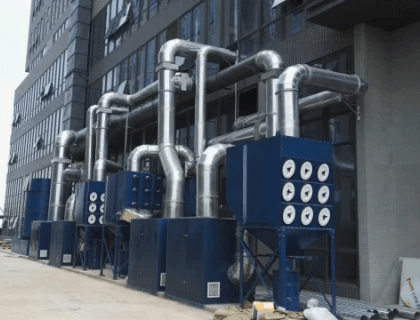
Industrial buyers often make better decisions when they check product pages against application pages. Narootech's automobiles page is relevant when the plant environment involves process dust tied to automotive production. The lithium battery page is useful when fine dust discipline and controlled manufacturing conditions affect the collector discussion differently. The other applications page is a practical fallback when the process does not fit neatly into one sector page.
Using application pages this way improves internal linking, but more importantly it prevents the article from pretending that every bag collector decision happens in the same operating environment.
Questions Worth Asking Any Supplier Before You Commit
- What assumptions are being used about dust loading, particle behavior, and operating hours?
- How does the proposed collector layout account for duct routing, pressure loss, and capture-point reality?
- What maintenance access is expected for inspection and bag replacement?
- How should the system be adjusted if the line expands or production rhythm changes?
- Is upstream pre-separation or downstream polishing filtration needed for this process?
Conclusion
A bag dust collector is usually the better answer when the buyer works backward from the dust stream, the process rhythm, and the maintenance reality instead of buying around a familiar category name. The strongest projects are not the ones that choose a bag system quickly. They are the ones that prove why fabric-based separation is the right fit for the specific plant.