

The Catalog Is Only the First Filter

Baghouse dust collector manufacturers often present airflow ranges, bag counts, cleaning methods, and equipment photos. Those details matter, but they are only the first filter. A baghouse must match dust loading, temperature, particle behavior, maintenance access, duct layout, fan performance, discharge method, and safety requirements. A buyer who compares only equipment size may miss the engineering support that determines whether the system works in production.
Donaldson describes baghouses as industrial dust collectors that use multiple felt bags to filter dusty air from manufacturing and processing applications. That simple description hides many design choices: inlet design, bag media, cleaning method, hopper geometry, fan location, ducting, pressure drop, dust discharge, and controls. The manufacturer must be able to explain those choices for the buyer's process.
NAROO's bag filter product category should be considered in that broader system context. It is not enough to ask whether a supplier can provide a baghouse. The better question is whether the supplier can match the baghouse to dust behavior and plant operation.
Screen 1: Application Understanding
A strong manufacturer asks detailed questions before recommending equipment. What process creates the dust? What is the dust loading? Is the dust dry, sticky, abrasive, hot, or combustible? Will the collector run continuously? What maintenance crew is available? Where can the collector be installed? Can the plant tolerate downtime for filter changes?
If a manufacturer moves too quickly to a standard model, the buyer should slow the process down. Baghouse performance depends on application fit. For lithium battery production, NAROO's lithium battery application page points to safety and precision needs. For chemical, pharmaceutical, smelting, textile, or non-ferrous metal environments, NAROO's other applications page may be more relevant.
Application understanding also includes capture strategy. A baghouse may be the main collector, but poor hooding or duct routing can still leave dust in the workplace. The manufacturer should be comfortable discussing the entire dust path, not only the collector body.
Screen 2: Filter and Cleaning Logic
Baghouse systems depend on filter media and cleaning strategy. Pulse jet cleaning, reverse air cleaning, shaker cleaning, and hybrid arrangements can suit different dust loads and operating patterns. Bag material, surface treatment, and temperature capability should be matched to the dust. A buyer should ask how the manufacturer selects media and how pressure drop will be monitored.
This is where baghouse and cartridge collector comparisons become useful. NAROO's cartridge dust collector page describes surface filtration and pulse jet cleaning technologies. A manufacturer that offers multiple collector types can help buyers decide whether baghouse filtration is truly the best fit or whether cartridge, cyclone-assisted, or other equipment should be considered.
Camfil's dust and fume collector pages emphasize that dust extraction can affect energy use, production efficiency, and indoor air quality. Filter selection is part of that operating-cost equation. A cheaper filter package may cost more if it increases pressure drop, shortens replacement intervals, or makes maintenance difficult.
Screen 3: Combustible Dust and Protection Questions
Baghouse dust collector manufacturers should handle combustible dust questions carefully. They should not make casual guarantees, but they should know when combustible dust testing, hazard analysis, explosion venting, isolation, suppression, or inerting discussions are needed. OSHA's combustible dust page lists standards that may address aspects of combustible dust hazards. NFPA standards may also be relevant depending on material and jurisdiction.
NAROO's products page mentions primary and secondary explosion-proof capabilities, degradation suppression, flame retardancy, early-warning alerts, and system linkage functions. Buyers should treat those features as topics for technical discussion. The actual system must be selected and validated around the dust and facility, not around a general feature list.
If the baghouse handles metal dust, battery powders, chemical powders, or other hazardous dusts, involve EHS and process engineering early. Equipment selection should be tied to risk assessment, not left to procurement alone.
Screen 4: Installation and Service Capability
A baghouse is usually not a plug-in machine. It may require foundations, access platforms, ducting, fans, compressed air, controls, discharge equipment, explosion protection devices, and integration with production operations. A manufacturer that can support system design, installation, commissioning, and maintenance planning has an advantage over a supplier that only ships equipment.
NAROO's company positioning includes R&D, design, production, sales, installation, and service. Its company profile can support supplier-background sections when the article needs credibility, but product and application pages should carry most internal links. Buyers should ask for service expectations, documentation, spare parts, and training support before purchase.
Service planning should include filter change access, hopper cleanout, fan inspection, control troubleshooting, and recurring performance checks. A well-selected baghouse can still become a problem if operators cannot maintain it safely.
Supplier Shortlist Questions
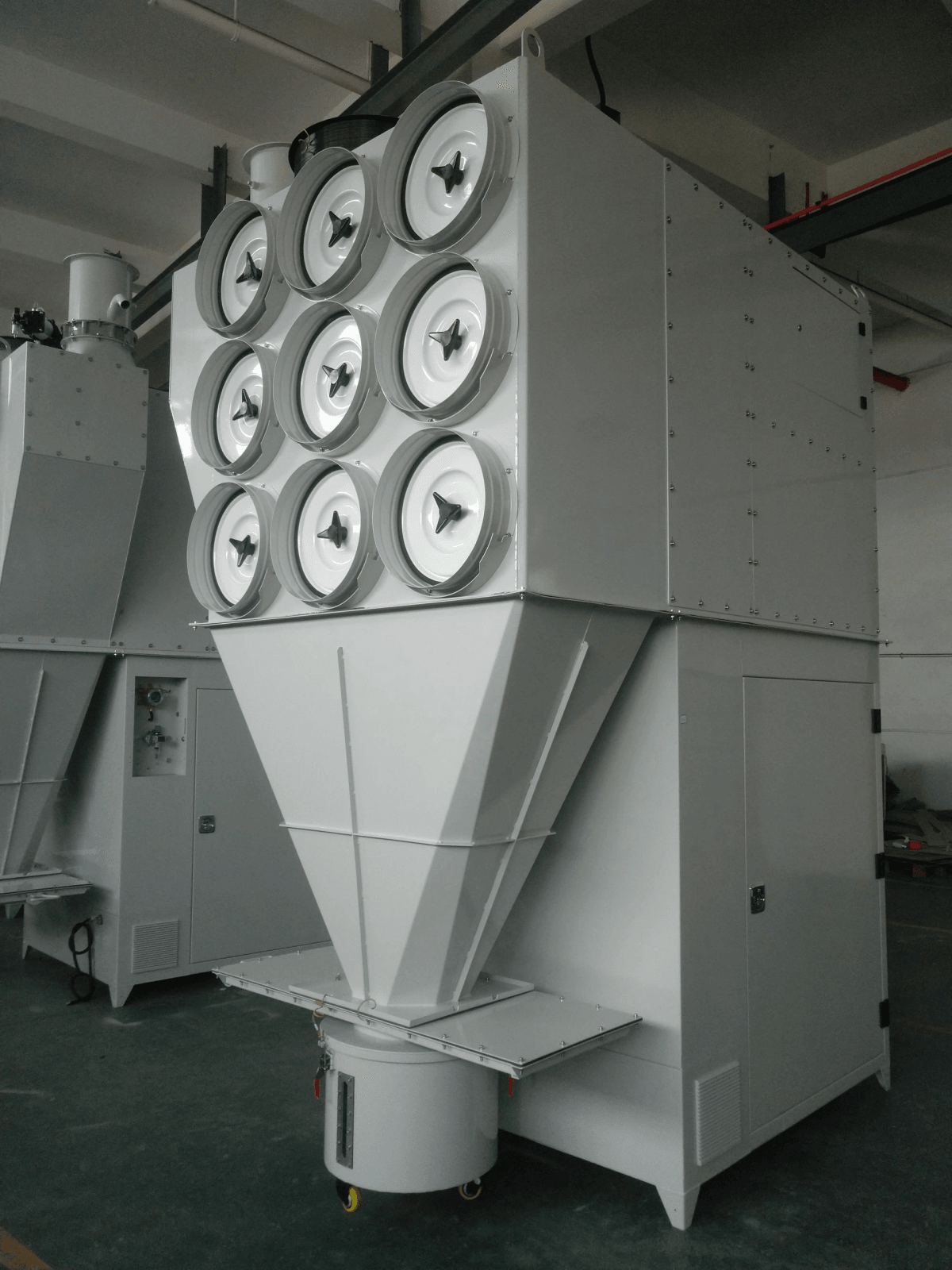
Use these questions to compare baghouse dust collector manufacturers:
- Which dust characteristics did the supplier use to size the system?
- Why is a baghouse better than a cartridge, cyclone, wetted, or mixed system?
- What filter media is recommended, and why?
- How will pressure drop, airflow, and cleaning performance be monitored?
- What combustible dust assumptions are being made?
- How are dust discharge and maintenance access handled?
- What installation, commissioning, and service support is included?
- What documentation will be provided for operation and maintenance?
If a supplier cannot answer these questions clearly, the buyer may be comparing a catalog item rather than a solution. The best manufacturer is often the one that helps clarify the problem before quoting the equipment.
NAROO Fit for Baghouse Projects
NAROO can be positioned as a dust removal and air purification solution provider for industrial facilities that need bag filter systems as part of a larger dust control plan. Its product center and bag filter category provide natural internal links for baghouse-related articles. If the facility needs pre-separation, the cyclone dust collector page may also be relevant. If the process requires application-specific dust control, link to lithium battery, laser processing, automobile, photovoltaics, or other applications as appropriate.
For buyers, the practical approach is to share process data, dust characteristics, operating hours, layout constraints, and safety concerns. A stronger brief produces a better shortlist and a more realistic baghouse proposal.
Red Flags During Manufacturer Comparison
Several warning signs can help buyers avoid weak baghouse proposals. Be cautious if a manufacturer avoids questions about dust characteristics, does not ask for layout information, treats combustible dust as a simple accessory choice, or cannot explain the filter media recommendation. Also be cautious if maintenance access is not shown clearly in drawings. A baghouse that is hard to service may become less effective every month after startup.
Another red flag is a proposal that does not define what is included. Fans, ducts, hoods, controls, discharge equipment, platforms, explosion protection devices, installation, commissioning, and training may or may not be part of the quoted scope. If one proposal includes a complete system and another includes only the collector shell, the prices cannot be compared directly.
Finally, ask how performance will be verified. A serious manufacturer should be willing to discuss airflow checks, pressure drop readings, visible dust observations, commissioning steps, and operator handover. Baghouse selection is not finished when the purchase order is issued. It is finished when the installed system captures dust effectively and the plant team knows how to maintain it.
Compare Drawings, Not Just Product Names
Two suppliers may both quote a baghouse, but the drawings can reveal very different engineering assumptions. Check inlet location, hopper angle, access doors, filter removal direction, compressed-air header location, explosion vent orientation, platform requirements, and discharge height. These details affect safety, maintenance, and installation cost.
Plant layout is especially important. A collector that fits on paper may block forklift routes, maintenance aisles, overhead cranes, or emergency exits. Outdoor installations may need weather protection, foundations, duct insulation, and drainage planning. Indoor installations may need noise review, access control, and careful routing of clean-air discharge.
Ask each manufacturer to show how its proposal fits the plant, not only the process. A manufacturer that can discuss layout, access, installation sequence, and service clearance is often more useful than one that only lists airflow and bag count.