

The Most Expensive Mistake Is Treating the Collector as the Whole Solution
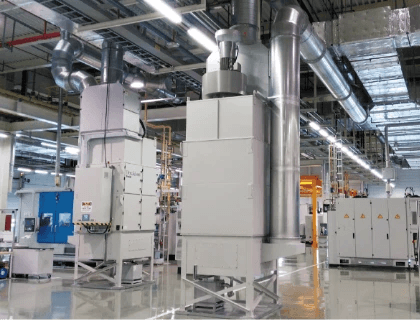
When a team starts searching for a combustible dust collector, it is usually responding to a legitimate risk concern. The problem is that search urgency can push the buying process in the wrong order. Instead of auditing the dust hazard first, some plants jump directly to product comparison. That creates a false sense of progress. The collector becomes the center of attention even though the real hazard picture may still be unclear.
Combustible dust risk does not begin at the collector door. It begins where material is generated, dispersed, allowed to settle, and later disturbed again. A collector can be part of the risk-reduction strategy, but it cannot replace disciplined hazard recognition, source capture, and plant operating control.
Five Questions That Should Be Answered Before the RFQ Goes Out
First, what exactly is the material and what is known about its combustible dust behavior in the actual process? Second, where does the dust escape and where can it accumulate outside the intended capture path? Third, how does the current line behave during startups, shutdowns, upset conditions, and cleaning periods? Fourth, what ignition sources are credible in the surrounding process? Fifth, what documentation and review standard will the plant use to evaluate supplier claims?
If those questions do not yet have disciplined answers, the project is not ready to treat collector comparison as the primary task. It is still in the hazard-understanding stage.
Why Source Capture and Housekeeping Belong in the Same Conversation
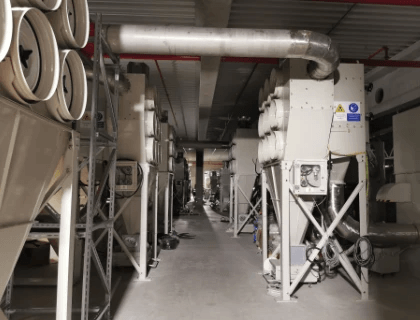
A combustible dust collector performs best when the dust problem reaching it has already been limited by good source capture. If dust regularly escapes at transfer points, enclosure gaps, manual dumping stations, or process connections, the collector is being asked to correct for weak containment as well as remove airborne particulate. That is rarely a stable long-term strategy.
Housekeeping matters just as much. Settled dust that is allowed to build up can be re-entrained into the air or become part of a larger facility exposure during disturbance events. This is why guidance from OSHA's combustible dust resources and the development history around NFPA 660 remain so important. They keep the discussion focused on layered control rather than product labels alone.
Collector Category Still Matters, but It Comes Later
Once the hazard picture is better defined, collector category becomes a more useful technical discussion. Fine-particle applications may lead a team to study Narootech's cartridge dust collector page, which describes surface filtration, pulse-jet cleaning, and airflow-parameter calculation. Heavier process dust may point toward the bag dust collector page, where the site frames the equipment around woven fabric filter elements and dust separation from flue gas. For pre-separation of larger particles, the cyclone dust collector page is relevant because it uses centrifugal force and inertia to remove larger dust particles and reduce loading on downstream filtration.
The important point is not to declare one of these categories universally right for combustible dust. The important point is to place collector choice on top of a real hazard review instead of using the keyword as a shortcut.
How to Read Supplier Language Without Overtrusting It
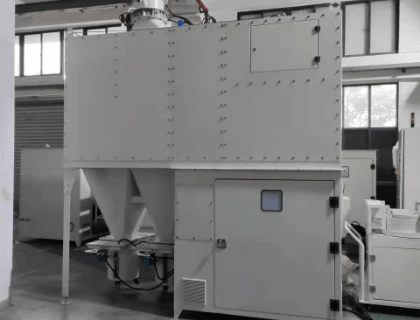
Industrial buyers often see phrases such as explosion-proof, safe design, hazardous dust experience, or compliance support. Some of that language may be directionally useful, but it should never replace a verification workflow. A serious buyer should ask what exactly is being claimed, what part of the system the claim applies to, what standards or certifications are relevant to the project, and what documentation can be supplied in writing.
This is also where broad category pages help. Narootech's products page allows a buyer to compare system paths without pretending that the category itself proves compliance. The company profile can support supplier-background review, but project-level safety conclusions still need project-level evidence.
Application Pages Make the Topic Less Abstract
Combustible dust risk is easier to evaluate when the article stays tied to real production contexts. Narootech's lithium battery application page is useful where fine powder handling and strict process discipline shape the dust-control strategy. The laser processing page can support articles where particulate extraction and process cleanliness intersect differently. The other applications page is a practical cross-sector link when the article stays broad.
A Better Shortlist Checklist
- Confirm the actual material hazard and the operating conditions in which dust is generated.
- Identify where containment is weak before asking the collector to compensate for it.
- Review housekeeping and cleaning routines as part of the collector decision.
- Compare collector categories only after the dust source and loading pattern are mapped.
- Require precise supplier documentation rather than broad safety language.
Conclusion
A combustible dust collector should be chosen only after the plant has audited the dust problem around it. Teams that reverse that sequence usually buy with more confidence, ask better technical questions, and avoid turning one equipment purchase into a substitute for hazard understanding.