

The Dust Usually Starts Where Material Changes Direction
Conveyor belt dust removal is often treated as a general housekeeping problem, but the real source is usually specific. Dust escapes at loading zones, transfer points, drop chutes, belt discharges, crushers, screens, hoppers, and places where material impacts a belt or changes direction. Once dust enters the open plant, it becomes harder to capture and easier to spread.
The best dust-control plan starts by reducing escape at the transfer point. Enclosure, skirting, controlled drop height, local extraction, and correct airflow can prevent dust from becoming a room-wide issue. A collector installed far from the source can only filter the air that reaches it.
For industrial buyers, the practical question is not only "Which dust collector is large enough?" It is "Where is the dust becoming airborne, and how do we capture it before it travels?"
Contain, Capture, and Filter
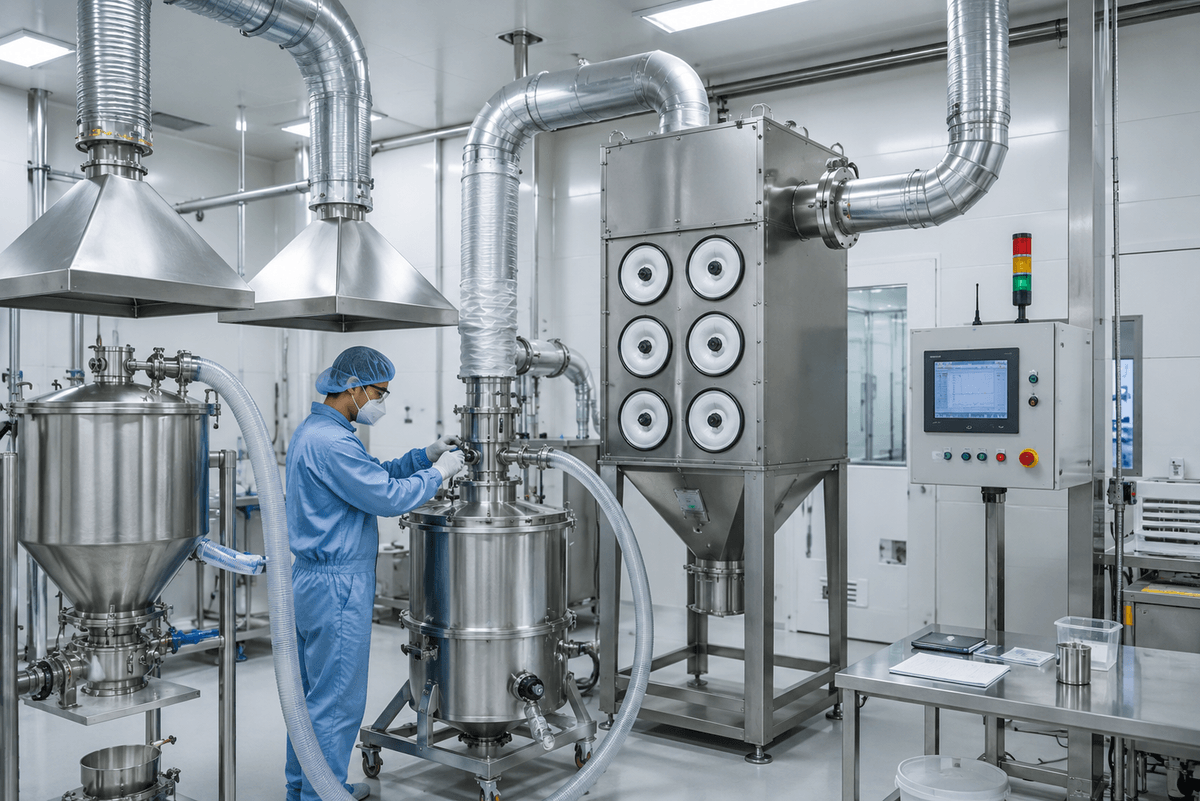
Conveyor dust control works best in three steps. First, contain the material movement as much as practical. Second, capture dust-laden air at the point of release. Third, filter or separate the dust using equipment matched to particle size, loading, and operating conditions.
NAROO's product center includes cartridge, bag, cyclone, and wet collection categories. This matters because conveyor dust can vary widely. A fine dry powder may need cartridge filtration. Heavy process dust may fit a bag collector. Coarse particles may benefit from cyclone pre-separation.
Without containment, the collector may need excessive airflow. Without capture, dust escapes into the plant. Without the right filter stage, pressure drop and maintenance problems return.
Transfer Points Need Close Capture
A transfer point can release dust in short bursts as material falls, impacts, and spreads on the belt. The hood or pickup should be close enough to capture dust without pulling product off the belt or disrupting material flow. If the pickup is too far away, the system may draw large volumes of air while missing the densest dust release.
Good design also considers belt speed, material size, moisture, drop height, enclosure leakage, access doors, and cleaning needs. If operators must open panels frequently, the extraction design should account for real maintenance behavior.
For applications with mixed particle sizes, NAROO's cyclone dust collector page is relevant because centrifugal separation can reduce the load on final filters when coarse material is present.
Choose the Collector Around the Dust Load
Conveyor systems can carry light powder, abrasive dust, mineral material, chemicals, grain, battery materials, metal fines, or other bulk solids. The collector should match the dust load and particle behavior. A compact cartridge collector may be effective for fine dry dust, while a bag collector may be better for heavier continuous dust loading.
NAROO's cartridge dust collector page describes surface filtration and pulse jet cleaning for fine particle filtration. NAROO's bag dust collector page describes durable bag filter systems for industrial process dust.
If dust is sticky, wet, or difficult for dry media, wet collection may be worth evaluating. NAROO's wetted filter page discusses wet scrubbing for fine and sticky particulate emissions.
Duct Velocity and Discharge Matter
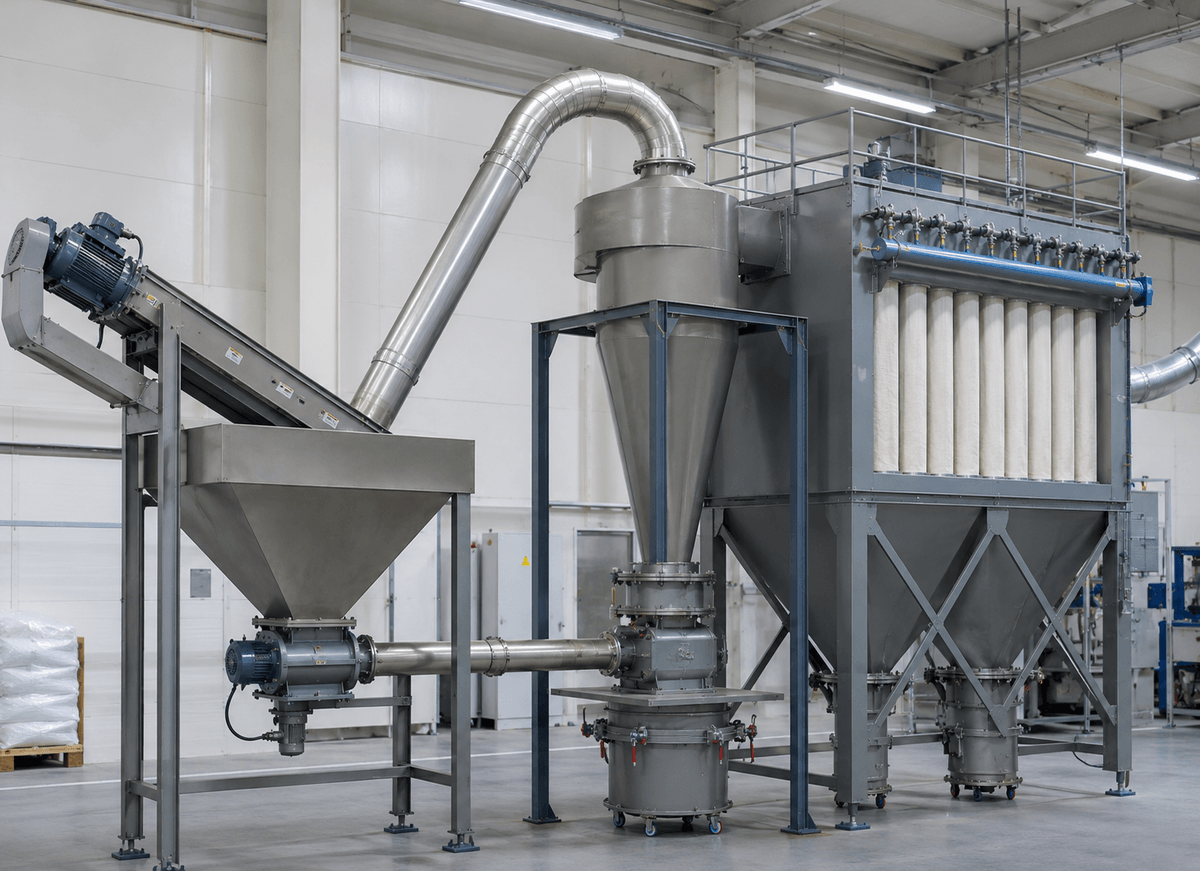
Conveyor belt dust removal systems can fail when duct velocity is too low. Dust may settle in horizontal runs, elbows, or poorly designed branches. Over time, this buildup can reduce airflow, create cleaning problems, and increase combustible dust concerns if the material is hazardous.
The discharge side matters as well. Collected dust must leave the collector without leaking air, backing up into the hopper, or creating secondary dust exposure during disposal. Rotary airlocks, sealed drums, screw conveyors, or other discharge methods should match dust volume and material behavior.
Maintenance teams should inspect ducts, hoppers, access doors, and discharge devices regularly. A collector with clean filters can still underperform if dust builds up upstream or downstream.
Combustible Dust Review May Apply
Many bulk materials can create combustible dust under the right conditions. Grain, sugar, plastic, wood, metal powders, carbon dust, and some chemical powders can present fire or explosion hazards when finely divided and dispersed in air. Conveyor systems can provide fuel, air movement, dispersion, and ignition sources.
OSHA combustible dust resources and NFPA 660 may be relevant when conveyor dust can burn or explode. Review dust testing, housekeeping, grounding and bonding, electrical classification, explosion protection, isolation, and safe cleaning procedures before finalizing the system.
NAROO's company profile describes dust removal and air purification support from design through installation, which is useful when conveyor dust control needs system-level planning.
Conveyor Dust Removal Checklist
- Identify loading zones, transfer points, discharge points, and cleanup areas.
- Reduce drop height and leakage where practical.
- Use enclosure and close capture before adding more fan capacity.
- Match cartridge, bag, cyclone, or wet collection to the dust properties.
- Check duct velocity so dust does not settle in the system.
- Plan sealed dust discharge and easy maintenance access.
- Review combustible dust hazards when material properties require it.
Signs the System Is Chasing Dust Instead of Capturing It
A conveyor dust system may be underperforming if dust appears several meters away from the transfer point, if operators need frequent cleanup around walkways, or if settled dust returns soon after housekeeping. Another warning sign is when the collector pressure looks normal but dust is still visible near the belt. That usually means the air reaching the collector is not the dusty air that needs to be captured.
Watch the transfer point during actual material flow. Dust behavior can change with belt speed, material moisture, particle size, drop height, and loading rate. A system that works during a low-load test may fail during full production. Good commissioning should include representative operating conditions, not only an empty-belt airflow check.
Commissioning Questions for Conveyor Dust Systems
After installation, verify capture at each pickup point. Check whether dust escapes when material hits the belt, when the belt starts and stops, and when access panels are opened for routine work. Confirm airflow at branches, pressure drop across filters, fan current, and dust discharge performance.
Record a baseline while the conveyor is running under normal load. Maintenance teams should know the expected pressure range, cleaning interval, and dust discharge volume. Without baseline data, later troubleshooting becomes guesswork.
If the system includes a cyclone before a final collector, compare dust collected at each stage. If the cyclone collects very little material or the final filters still overload quickly, the particle distribution or airflow may not match the original assumptions.
FAQ
Can conveyor dust be controlled with general ventilation?
General ventilation may help room air movement, but it usually cannot replace source capture at loading and transfer points. Capture should happen before dust spreads across the plant.
Does a cyclone replace the final dust collector?
Usually no. A cyclone can remove heavier particles in suitable applications, but fine dust often still needs cartridge, bag, or another final filtration stage.
What maintenance task is most often missed?
Discharge inspection is often overlooked. If the hopper, airlock, or drum backs up or leaks air, the collector can re-entrain dust and lose performance even when filters are acceptable.
Supplier Inputs That Improve the Design
A supplier can design a stronger conveyor belt dust removal system when the plant provides real process details. Useful inputs include belt width, belt speed, material type, particle size, moisture, bulk density, drop height, transfer layout, number of pickup points, operating schedule, and dust complaints from operators. Photos and videos of the transfer point during full production are often more useful than a simple equipment list.
Also share maintenance expectations. Will operators need frequent access to the chute? Is the conveyor indoors or outdoors? Is water washdown used nearby? Is the dust abrasive or sticky? How will collected dust be returned, disposed of, or stored? These details affect enclosure design, duct routing, collector selection, and discharge equipment.
When a supplier has enough information, the proposal can address the actual conveyor behavior. Without that information, the quote may rely on assumptions that fail during real production.
When to Consider a System Upgrade
An upgrade may be justified when dust escapes despite maintenance, when production throughput increases, when material changes create finer dust, or when filters plug faster than expected. It may also be needed when older ductwork has too much buildup or when the plant adds conveyors to an existing system without recalculating airflow.
Before replacing the collector, inspect transfer-point containment, branch balance, fan capacity, duct condition, and discharge performance. Sometimes a focused improvement at the chute or hood can solve more than a larger collector.
Bottom Line
Conveyor belt dust removal succeeds when the system controls dust at the transfer point instead of chasing it across the plant. Containment, close capture, correct collector selection, duct velocity, discharge control, and maintenance planning all work together. The collector is important, but the source design usually decides whether the system performs.