

Dust collection cartridges are often blamed when a collector loses airflow, pulses constantly, or needs frequent filter changes. Yet the cartridge may only be showing a problem created elsewhere: excessive inlet loading, moisture, poor air distribution, weak compressed air, hopper backup, or media that does not match the dust.
A better maintenance strategy treats filter life as a system result. Start at the source, follow the dust through the inlet and housing, verify pulse cleaning and discharge, and use pressure trends to understand what changed.
Failure Usually Starts Before the Filter
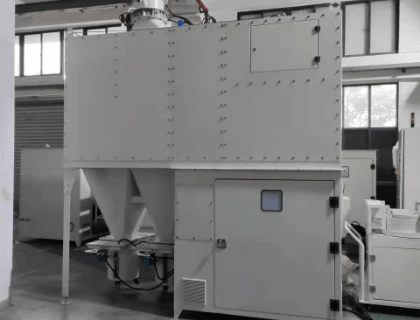
A cartridge collector receives whatever the process sends into the duct. If a hood captures large chips, hot particles, sticky mist, or sudden slugs of material, the filters must absorb that mistake. Inlet abrasion, uneven dust distribution, and direct impingement can load one section long before the rest of the bank.
Inspect source controls and ductwork when cartridge life changes. A removed prefilter, open damper, new machine, higher production rate, leaking process connection, or changed material can increase the load without any modification at the collector.
NAROO's cartridge dust collector design language emphasizes airflow resistance calculations, duct layout, pressure loss, surface filtration, and pulse-jet cleaning. Those factors work together; the cartridge is not an isolated consumable.
Moisture Turns Dust Cake Into a Plug
Condensation, humid air, process moisture, oil mist, or sticky material can bind dust to the media. Pulse cleaning may remove loose surface dust but struggle against a smeared or hardened layer. Differential pressure then rises quickly after each cleaning cycle.
Check inlet temperature and dew-point conditions, outdoor duct exposure, compressed-air quality, process leaks, and changes in material moisture. Heating or insulation may be considered where condensation is the cause, but the solution must fit fire, process, and energy requirements.
For inherently sticky particulate, a dry cartridge system may not be the right technology. NAROO's wetted filter provides a wet-collection option to evaluate for fine and sticky emissions.
Too Much Air Through Too Little Media Raises the Workload
Air-to-media ratio describes how much airflow passes through the available filter area. A high ratio can increase media velocity, pressure drop, dust penetration into the structure, and cleaning demand, depending on the dust and filter design. A low number is not automatically best either because larger equipment has cost and space consequences.
Use actual operating airflow and simultaneous source demand, not only fan nameplate data. Consider particle size, bulk density, loading, shape, moisture, and release pattern. A process with low average loading but sharp batch peaks may challenge filters differently from a steady source.
If airflow has increased since commissioning, the original cartridges may now be working outside the intended system conditions. Rebalancing branches or adding sources should trigger a collector-capacity review.
Pulse Cleaning Needs Pressure, Volume, and Timing

Pulse-jet cleaning uses short bursts of compressed air to flex the media and release dust cake. Weak supply pressure, undersized piping, clogged valves, damaged diaphragms, water in the air line, or incorrect pulse timing can reduce cleaning effectiveness.
More frequent pulsing is not always better. Excessive cleaning consumes compressed air and may accelerate wear or remove a useful stable dust layer. Cleaning too late can allow pressure drop to climb and airflow to fall. Follow the collector and media requirements, then optimize from pressure trends and actual dust behavior.
Listen for inconsistent pulses and inspect the header, solenoids, valves, and nozzles during planned maintenance. Verify that pulse air reaches each cartridge correctly.
The Hopper Must Empty Before Dust Returns to the Filters
Pulse cleaning only moves dust from the cartridges into the hopper. If the hopper bridges, the rotary valve stops, or a collection drum overfills, dust can be re-entrained and deposited on the filters again. Frequent pulsing then creates little lasting improvement.
Inspect hopper level, discharge seals, valve operation, container-change frequency, and material flowability. Keep hoppers as temporary discharge zones rather than storage bins unless the equipment is specifically designed otherwise.
Where coarse particles create much of the loading, a cyclone pre-separator can reduce the burden on final filters. Suitability depends on particle behavior and required final filtration.
Seals Matter as Much as Media
A high-quality cartridge cannot prevent bypass around a damaged gasket, loose clamp, warped access door, or poorly seated filter. Dust tracks on the clean side are a warning sign. Bypass can affect outlet emissions and contaminate downstream fans or ducts.
Inspect sealing surfaces during every change. Clean the seat without damaging it, install the correct orientation, apply the specified compression, and check access-door gaskets. Do not mix cartridge dimensions or styles simply because they fit into the opening.
EPA guidance notes that outlet particulate concentration can be a direct indicator of fabric-filter performance, with pressure differential, flow, cleaning operation, temperature, and fan current providing additional context.
Differential Pressure Is a Trend, Not a Single Verdict
Pressure drop rises as dust accumulates and falls after effective cleaning. The normal range depends on the collector, media, airflow, and dust. One reading means little without operating context.
Trend differential pressure against production rate, fan speed, pulse activity, temperature, and hopper discharge. A steady rise may indicate loading or cleaning loss. A sudden drop can indicate a torn filter, bypass, open door, failed fan, or sensor problem. A low reading is not automatically good.
Locate pressure taps where they remain representative and inspect them for blockage. Verify the instrument and tubing before replacing filters based solely on an abnormal display.
Cartridge Geometry Must Fit the Dust
More pleats create more nominal media area, but tightly packed pleats can be difficult to clean when dust bridges between them. The best geometry depends on particle size, shape, loading, and cleaning behavior. Media treatment, construction, and temperature or chemical compatibility also matter.
Provide suppliers with representative dust information and used-filter observations. Photographs showing where dust accumulates can reveal inlet or cleaning problems. If the process changed, do not reorder the same cartridge automatically.
NAROO's dust collection product range includes cartridge, bag, cyclone, and wet approaches, allowing the filtration method to follow the process rather than forcing every dust into one format.
When a Bag Filter May Be the Better Fit
Heavy continuous dust, certain particle behaviors, or process conditions may favor a bag dust collector. Cartridge systems remain attractive for many fine-dust applications, but compact size should not override loading and cleanability.
Compare technologies using total airflow, inlet concentration, particle properties, operating schedule, pressure loss, cleaning utilities, maintenance access, discharge, space, and lifecycle cost. The right collector is the one that remains stable under the real process.
Set Replacement Rules Before the Alarm
Replace cartridges based on system performance and condition, not calendar age alone. Consider sustained pressure outside the acceptable range, reduced capture airflow, failed media or seals, outlet emissions, contamination, physical damage, or an inability to recover after verified cleaning.
Plan safe removal and disposal. Captured dust remains concentrated on the media. The hazard assessment should define isolation, protective equipment, bagging, handling, and cleaning methods. Keep changeout records so the plant can compare service life and identify recurring patterns.
Perform a Used-Cartridge Autopsy
Do not discard every failed cartridge before learning from it. With appropriate controls for the captured material, examine the filter for uneven loading, hard deposits, moisture staining, abrasion, pleat collapse, damaged end caps, gasket tracks, burn marks, or dust on the clean side. Compare cartridges from different positions in the same collector.
A heavy band near the inlet may indicate direct impingement. Clean upper pleats and packed lower pleats can point to poor dust release or hopper re-entrainment. Similar damage across every cartridge may suggest process chemistry or operating conditions rather than an isolated installation error.
Document photographs, service hours, pressure trends, process changes, and disposal date. This evidence gives the supplier a better basis for recommending media, geometry, inlet changes, or operating adjustments.
Questions for the Next Cartridge Order
- Has the process material, rate, temperature, or moisture changed?
- What differential-pressure pattern occurred over the cartridge life?
- Was dust evenly distributed across the filter bank?
- Did pulse pressure and hopper discharge remain normal?
- Were there signs of bypass, abrasion, moisture, or chemical attack?
- Does the current media and geometry match the observed failure mode?
FAQ
Should cartridges be changed at a fixed pressure?
Use the equipment and media guidance plus airflow, capture, emissions, and trend data. A single universal pressure does not fit every collector or process.
Why do new cartridges sometimes show lower airflow than expected?
Check fan operation, dampers, duct blockage, airflow balance, cartridge installation, and the pressure instrument. Filter resistance is only one part of total system pressure.
Can cartridges be washed?
Only if the filter manufacturer and media design specifically allow the method. Improper washing can damage media, seals, treatments, or structural support.
Does more pulse pressure always clean better?
No. Excessive pressure can damage filters or components. Use the specified operating range and correct the underlying loading or moisture problem.
Read the Cartridge as Evidence
Early cartridge failure is useful evidence about the process. Inspect where dust loaded, how pressure changed, whether cleaning and discharge worked, and what entered the collector. Fixing that system cause usually delivers more value than repeatedly buying the same replacement.