

Dust collector differential pressure is one of the clearest operating signals in an industrial filtration system. It measures resistance across the filter section, so it can reveal filter loading, cleaning-cycle behavior, airflow imbalance, and certain equipment faults long before operators see dust escaping into the plant.
The mistake is treating the number as a simple replace-filter alarm. Differential pressure is more useful as a trend. A stable trend under known production conditions tells the maintenance team that air is moving through the expected path. A strange trend asks for investigation: what changed in the dust, airflow, cleaning system, or duct route?
A Pressure Reading Needs a Baseline
A collector does not have one universal "right" pressure drop. The normal range depends on filter style, dust load, air volume, cleaning method, particle behavior, and how long the system has been running since filter installation. A cartridge collector handling fine dry powder will not behave like a baghouse serving heavy process dust or a cyclone-assisted system handling coarse particulate.
NAROO's cartridge dust collector page emphasizes airflow resistance calculation, duct layout, pipe diameter, equipment pressure loss, and air-to-cloth ratio. Those design inputs become the baseline that makes differential pressure meaningful after startup.
Do Not Read the Gauge in Isolation
The pressure gauge cannot see the hood. It cannot tell whether operators moved a pickup arm, whether a transfer chute is open, or whether a duct branch is partially blocked. Pair differential pressure with visible capture checks, housekeeping observations, fan current, compressed-air condition, filter inspection, and production logs.
For heavy-dust operations, NAROO's bag dust collector is a relevant comparison because dust cake behavior and cleaning rhythm often dominate pressure trends. For coarse dust, a cyclone dust collector may reduce final-filter loading and make pressure behavior more stable.
Cleaning Energy Matters
Pulse-jet collectors depend on compressed air, valves, pulse timing, and filter seating. If compressed air is wet, pressure is low, pulse valves stick, or cleaning frequency is poorly matched to the dust, differential pressure can climb even when the filters are not old. Replacing filters without fixing cleaning energy only resets the problem temporarily.
Plants should log compressed-air pressure, pulse settings, cleaning frequency, and pressure recovery after each cleaning event. When the recovery weakens over time, the system is telling the maintenance team where to look.
When Differential Pressure Points to Redesign
Sometimes the reading is not a maintenance problem. If new filters load quickly, airflow falls, and dust escapes repeatedly, the collector may be undersized, the air-to-cloth ratio may be too aggressive, or the upstream capture design may be sending avoidable material into the filter section. A system review is more useful than another emergency changeout.
NAROO's industrial dust collection product range supports this kind of review because cartridge, bag, cyclone, and wet collection paths each solve different process problems. In high-cleanliness settings, such as photovoltaic production or lithium battery manufacturing, stable pressure trends also support process consistency.
A Practical Daily Log

- Record pressure at the same production state each shift.
- Note filter age and last changeout date.
- Record production material, feed rate, and unusual dust conditions.
- Check compressed-air pressure and dryer condition for pulse systems.
- Inspect visible dust escape before assuming the collector is healthy.
- Compare readings after maintenance instead of relying on memory.
Build a Troubleshooting Sequence Around the Gauge
The best way to use dust collector differential pressure is to build a repeatable troubleshooting sequence. Start with the simplest confirmation: is the gauge or transmitter working, are impulse lines clear, and is the reading being taken across the intended filter section? A blocked pressure tap can make a healthy collector look sick, while a loose line can make a loaded collector look normal. Instrument checks are not glamorous, but they prevent expensive guesswork.
After the reading is verified, move upstream. Look at the hoods, pickup points, duct branches, dampers, and process enclosures. A collector can show a reasonable pressure drop while still failing to capture dust because the air is not entering the hood correctly. A machine guard may have been modified, a flexible hose may be crushed, or a branch damper may have been moved during maintenance. These issues belong in the same diagnostic conversation as filter loading.
Next, check the collector body. Inspect access doors, gaskets, hopper level, discharge device, compressed-air headers, pulse valves, and filter seating. If the hopper is storing dust instead of discharging it, re-entrainment can raise loading and make pressure behavior unstable. If filters are not seated evenly, the pressure reading may hide localized bypass that later becomes visible dust escape.
Commissioning Data Makes the Trend Useful
Many plants start logging differential pressure only after a problem appears. That is better than nothing, but the most useful data begins at commissioning. A good startup record should include clean-filter pressure, normal loaded pressure, air volume verification, fan speed, damper positions, compressed-air pressure, pulse settings, and the production condition during the test. Without these numbers, later teams have to reconstruct the system history from memory.
Commissioning should also document the difference between startup behavior and steady-state behavior. New filters may run at a lower pressure drop before a stable dust cake forms. In some applications, a very low reading during early operation is not the final target; the system may settle into a different range after several production cycles. Maintenance teams need to know that difference so they do not mistake normal stabilization for a fault.
When a plant upgrades equipment, changes dust sources, adds a branch line, or modifies production speed, the baseline should be updated. NAROO's design-through-installation capability is relevant here because pressure trends are shaped by the full system, not only the collector cabinet. A revised duct layout or process expansion can change the meaning of the same pressure number.
How Different Teams Use the Same Signal
Maintenance teams use differential pressure to plan filter inspections, cleaning-system checks, and changeouts. Production teams use it to understand whether dust control is stable during peak output. EHS teams use it as one piece of evidence that local exhaust ventilation and filtration are functioning as intended. Procurement teams use historical trends to compare the true cost of replacement filters, downtime, compressed air, and service labor.
The signal becomes more valuable when these teams share context. For example, if pressure climbs only during one product run, the issue may be dust property rather than collector failure. If pressure rises after a new operator begins using a cleanup method that sends bulk material into a hood, training may solve the problem faster than equipment replacement. If pressure stays low but housekeeping worsens, the plant may have a capture problem upstream of the filters.
A good report should therefore include a short note field, not only a number. Operators can record unusual material, damp dust, a changed tool, a blocked hood, a maintenance event, or an abnormal discharge condition. Over time, these notes turn differential pressure from a static gauge reading into a practical plant-history tool.
Supplier Brief: What to Send Before Asking for Advice
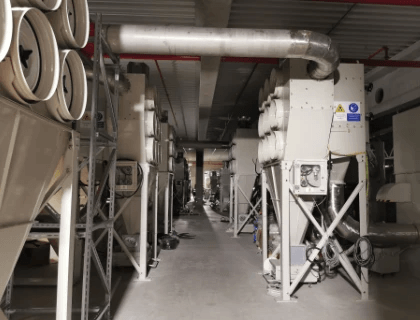
When asking a supplier to evaluate dust collector differential pressure, send more than the highest reading. Include the collector type, filter age, dust source, operating schedule, normal pressure range, current pressure trend, fan information, compressed-air settings, duct changes, and photographs of hoods, duct branches, collector access doors, hopper, and discharge equipment. If the system has a controller, provide cleaning settings and alarm thresholds.
It also helps to describe what changed before the problem appeared. Did the plant add a machine, change material, increase production, switch filter media, adjust fan speed, modify ducting, or relocate a hood? A supplier cannot interpret pressure drop accurately without knowing whether the process is still the same one the collector was designed to handle.
For NAROO-style system planning, the brief should connect the pressure issue to the application. Battery powder handling, photovoltaic production, metal grinding, and woodworking all create different dust behavior. The more specific the process brief, the more useful the equipment recommendation becomes.
Review Alarm Limits After Real Production
Alarm limits should not be copied from a manual and forgotten. After several weeks of stable production, the plant should compare the designed range with real operating data. If the collector consistently runs well below the alarm point with strong capture, the alarm may be acceptable. If operators frequently silence alarms during normal production, the threshold may be unrealistic or the system may need a deeper review.
A staged alarm strategy is often more useful than a single high-pressure warning. An early alert can prompt inspection of compressed air, hopper discharge, or unusual dust loading. A higher alarm can trigger production review or filter service. A sudden low-pressure alarm deserves equal attention because it may indicate bypass, torn filters, an open door, or a failed pressure line. Good alarm logic makes the gauge actionable instead of noisy.
Conclusion
Dust collector differential pressure is not just a maintenance number. It is a practical diagnostic signal for airflow, filter loading, cleaning recovery, and system fit. The best plants use it with context, trend data, and source-capture checks so they can act before dust control performance declines.