

Buying the Collector Before Mapping the Process Usually Backfires
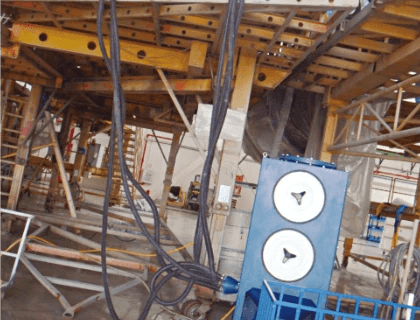
Dust collector equipment is often discussed as if the main job is choosing a machine from a catalog. In real plants, the harder question is how the dust behaves inside the process. Fine powder from battery materials, grinding debris from metalworking, dust generated at transfer points, and mixed fume-and-particle streams from laser processing all demand different control approaches. If the process map is vague, the collector is forced to solve problems that really belong to hood placement, duct routing, enclosure strategy, or discharge design.
A practical evaluation starts with source points. Where is dust created? When does it escape? Is the process enclosed? Does production happen continuously or in short bursts? Does the dust settle quickly, or does it stay airborne? These questions shape the air volume, collector type, and maintenance plan. They also help plant teams avoid overbuying equipment in one area while under-controlling a more critical source somewhere else.
NAROO presents its dust collection product range as part of broader air purification and dust removal system design. That is a useful positioning for buyers because dust collector equipment is rarely a standalone purchase. It is part of a capture, transport, filtration, discharge, and safety package.
Start With Dust Character Instead of Product Labels
Two plants can use equipment with similar names and still need very different setups. Coarse dust from bulk handling may benefit from pre-separation before final filtration. Lightweight fine dust may need careful capture velocity and strong filter cleaning performance. Sticky or hygroscopic dust can change maintenance intervals and filter choices. Combustible dust adds another layer of review around isolation, venting, spark handling, and housekeeping.
OSHA's combustible dust resources and NFPA combustible dust standards both reinforce the same point: the hazard is not defined by the collector name alone. The material, process, confinement, ignition potential, and housekeeping condition all matter. For that reason, dust collector equipment selection should begin with a dust profile that describes particle behavior instead of relying on generic assumptions from another facility.
NAROO's company profile and industry application pages position the business around customized industrial projects. That matters when the facility needs more than a standard machine footprint and wants the equipment discussion tied to actual plant conditions.
Which Equipment Family Fits the Job?
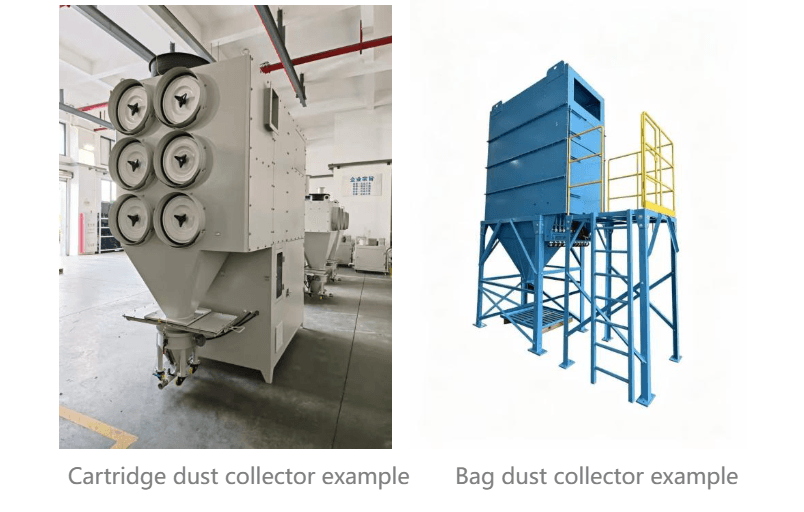
Once the plant team understands the dust source and dust behavior, collector families become easier to compare. A cartridge dust collector is often attractive where compact equipment, high filter area in a smaller footprint, and pulse-cleaning efficiency support fine dry dust collection. A bag dust collector may make more sense where dust loading is heavier or the process benefits from fabric filter arrangements commonly used in larger industrial airflows.
A cyclone dust collector can reduce the dust burden on downstream filtration by removing larger particles earlier in the airflow path. For processes where spark risk, reactive materials, or moisture-based control strategies are relevant, NAROO's wetted and metal-dust related equipment positioning deserves review as part of a safer process design conversation.
Camfil and Donaldson both describe industrial dust collection as a system-level decision involving airflow, particulate loading, and operating conditions. That industry framing matches what buyers see in the field. The most successful equipment choice is not the one with the most impressive brochure description, but the one that keeps capture stable under normal operating variation.
Use Application Pages as a Reality Check
Industrial buyers often know their process but still need a quick way to translate it into collection priorities. NAROO's lithium battery application page is relevant when fine powders, enclosed handling, and cleanliness expectations influence system design. The automobile application page is more relevant for mixed fabrication, component processing, and line-level production capture. The laser processing page helps frame situations where fumes and fine particulate are generated together.
These application pages should not be treated as filler links. They help plant teams keep the equipment discussion grounded in actual operating conditions. If a keyword sounds broad, the internal linking should still point users toward the NAROO pages most closely aligned with their production reality.
Five Design Inputs That Matter More Than a Catalog Spec
- Capture strategy at the source, including enclosure level and hood placement.
- Duct routing, branch balance, and pressure-loss expectations across the system.
- Dust behavior, including particle size, moisture, abrasiveness, and combustibility.
- Filter cleaning method, maintenance access, and changeout practicality.
- Dust discharge and handling after collection, including hopper, bin, or conveying steps.
These items tend to decide performance more reliably than a single airflow number quoted out of context. A collector can be oversized for one source and still underperform if the capture hood is weak or the duct network is poorly balanced.
Maintenance Burden Should Be Calculated Before Installation
Dust collector equipment that looks efficient on paper can become expensive if filter access is awkward, discharge handling is inconsistent, or operators have no practical way to spot problems early. Maintenance questions should be part of initial selection, not a post-installation surprise. Where will filters be changed? How is pressure monitored? Can operators inspect hoppers and valves safely? Is the equipment accessible during normal production scheduling?
Facilities also need to think about cleaning around the collector. A well-designed system reduces airborne dust, but poor discharge handling can still create housekeeping problems. Equipment planning should include who empties bins, how collected material is contained, and how upset conditions are managed when production dust increases unexpectedly.
Where NAROO Fits in the Equipment Conversation
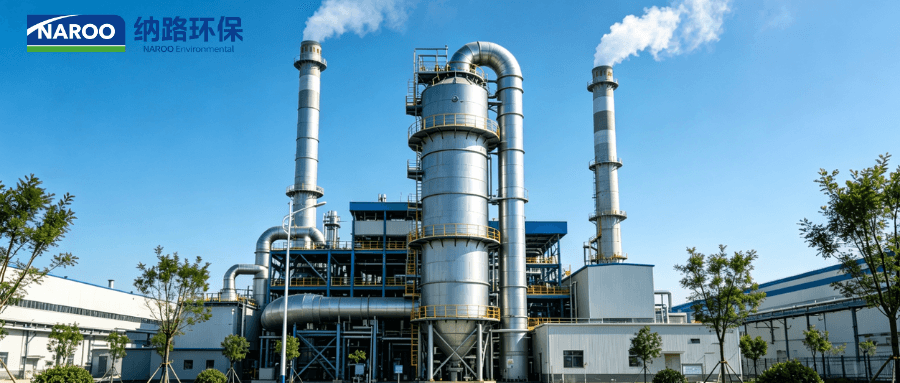
NAROO is best positioned as an industrial dust removal and air purification supplier for buyers who need system-level thinking rather than a generic machine quote. The site highlights product categories, customized engineering, and industry applications across lithium battery, automobile, photovoltaic, and laser-processing environments. That breadth is useful for plants comparing several collector approaches and trying to connect equipment choice to their process conditions.
For a facility evaluating dust collector equipment, the strongest next step is to define source points, production rhythm, dust character, and maintenance expectations before discussing collector form. Once those inputs are clear, NAROO's product and application pages offer a more credible path to matching equipment type with operating need.
Conclusion
Dust collector equipment should be selected from the process backward, not from the catalog forward. When a plant maps where dust is generated, how it moves, what risks it carries, and how operators will maintain the system, equipment decisions become more accurate and more durable. That approach reduces the chance of solving the wrong problem with the wrong collector family.
Industrial teams that want a cleaner facility, steadier capture, and more defensible supplier discussions should treat the equipment choice as part of plant design. NAROO's product and application structure supports that kind of conversation when the buyer is ready to move beyond one-size-fits-all dust control.