

A search for a dust collector for paint booth use often starts with the wrong assumption: everything leaving a finishing area is dust. In reality, a paint operation can produce dry sanding particulate, liquid overspray droplets, sticky coating residue, and solvent vapor. These contaminants behave differently and should not be routed into the same equipment without an engineering and safety review.
The practical starting point is to divide the finishing process into tasks. Surface preparation may need source-capture dust extraction. Spraying needs a booth designed to contain overspray and vapors. Flash-off, curing, mixing, and gun cleaning may create additional vapor sources. Once those streams are identified, the plant can choose filtration and treatment that fit each one.
First Decide What the Booth Must Capture
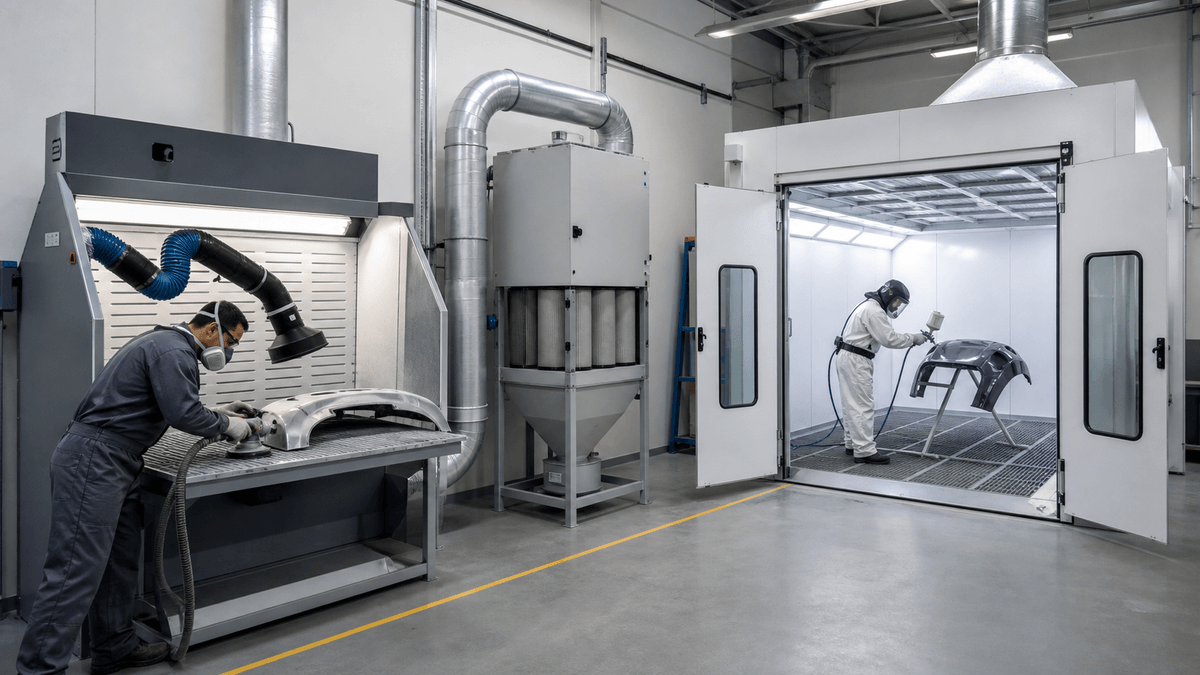
Paint booths are designed around directional airflow through a controlled enclosure. The air carries contaminants away from the operator and toward the exhaust section. OSHA requirements for spray-finishing ventilation address booth construction, air distribution, overspray collectors, access for filter service, and the control of vapors and residues.
That is a broader duty than ordinary dry-powder collection. A dry cartridge collector may be well suited to compatible sanding dust, yet liquid paint droplets can coat filter surfaces, raise pressure drop, and create difficult maintenance. Solvent vapor passes through ordinary particulate media and requires a separate gas-phase control decision.
Ask four questions before comparing equipment: Is the contaminant a dry particle, a liquid droplet, a vapor, or a mixture? Is the source continuous or intermittent? Is the material flammable or combustible? What must happen to the collected residue after capture?
Surface Preparation Belongs on Its Own Dust Route
Dry sanding and grinding generate particles with directional momentum. Tool-mounted extraction, ventilated benches, or enclosed preparation stations can capture this material before it spreads into the booth or finishing room. Close capture usually requires less air than trying to clean the entire room after dust becomes airborne.
For suitable fine, dry particulate, NAROO's cartridge dust collector uses surface filtration and pulse-jet cleaning. The hood, hose, duct, and collector must still be sized around the tool, particle loading, simultaneous workstations, and pressure loss.
Keep preparation dust away from freshly coated parts and spray-booth intake air. A dedicated route also prevents abrasive material from mixing with sticky paint residue inside ducts or filters. NAROO's automotive dust-removal application is relevant where body preparation and component finishing share a production area.
Overspray Is a Droplet Problem
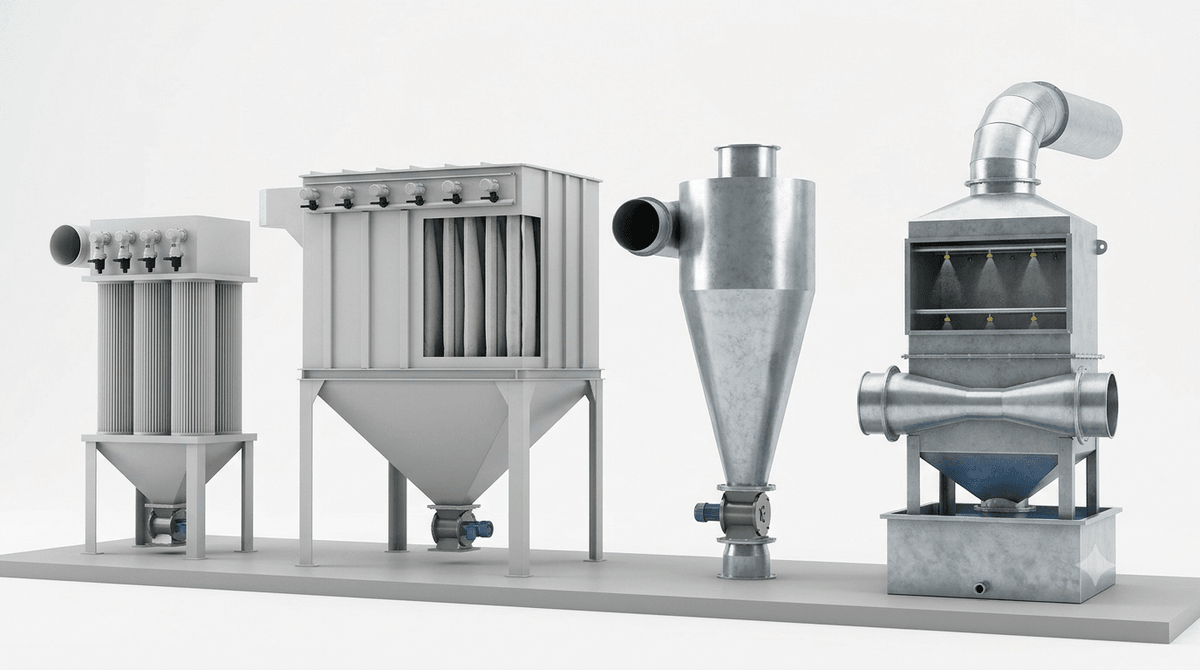
During spraying, paint that misses the workpiece remains suspended as droplets. Booth filters, baffles, water-wash sections, or other approved collection arrangements remove overspray while maintaining the intended airflow pattern. The correct system depends on the coating, spray rate, booth type, finish requirements, and applicable fire and environmental rules.
Sticky overspray can rapidly blind media not designed for it. It may also collect on fans, ducts, and surfaces if the first-stage capture is poor. Maintenance access matters because loaded filters change booth pressure and airflow distribution. Differential pressure or another suitable indicator can help teams service filters according to actual loading rather than appearance alone.
NAROO positions its wetted filter for fine and sticky particulate emissions. That product category can inform a wet-collection discussion, but a paint booth still needs coating-specific fire, chemistry, liquid-handling, and disposal evaluation.
Particulate Filters Do Not Remove Solvent Vapor
Solvent-based coatings can release VOCs during spraying, flash-off, drying, mixing, and cleanup. A filter that captures droplets does not automatically control vapor. The exhaust composition, concentration, airflow, temperature, humidity, and operating schedule determine whether adsorption, oxidation, recovery, substitution, or another approach should be considered.
Do not reduce exhaust simply to extend filter life or save energy without verifying booth safety and performance. Airflow must continue to contain contaminants and support the requirements that apply to the spray process. Makeup air must replace extracted air without pushing overspray toward the operator or creating dead zones.
NAROO's broader industrial air-purification equipment range can support particulate-control planning, while gas-phase treatment should be selected from the actual vapor stream.
Do Not Combine Booth and Sanding Exhaust by Convenience
A shared duct may look economical on a layout, but compatibility comes first. Dry abrasive dust, sticky overspray, solvent vapor, and potential ignition sources create different loading and safety conditions. Combining them can foul media, spread residue, complicate waste handling, or create a system that is difficult to inspect.
Separate systems make operating modes easier to understand. Preparation extraction runs when sanding occurs. The booth exhaust operates according to the spray and curing process. Each system can use filtration, monitoring, and maintenance suited to its contaminant.
If streams are proposed for combination, require a documented review of chemistry, concentration peaks, fire and explosion hazards, duct deposits, fan suitability, filter behavior, isolation, discharge location, and applicable codes. Physical proximity is not an engineering reason to mix exhaust.
Air Distribution Matters More Than a Single Velocity Reading
A booth can meet a reading at one point and still have recirculation or weak zones around large parts. Product geometry, racks, open doors, clogged filters, supply-air placement, and exhaust loading change the flow pattern. Smoke visualization or other approved commissioning methods can show whether air sweeps contaminants toward the exhaust.
Observe the booth during representative production: the largest part, normal operator position, full spray rate, filter loading, and door movement. Check that the operator is not standing between the source and exhaust in a way that draws the contaminant through the breathing zone.
Record clean-filter and loaded-filter pressure conditions, fan settings, makeup-air status, and acceptable door positions. These become the baseline for troubleshooting.
Filter Service Is Part of Booth Performance
Overspray filters should be accessible for inspection, cleaning, or replacement. Plan a changeout method that contains residue and avoids damaging the filter rack. Gaps around filters allow bypass, while incorrect installation can disturb airflow and reduce capture.
Dry preparation collectors need their own maintenance plan. EPA guidance for fabric filters identifies differential pressure, outlet particulate, gas flow, cleaning operation, temperature, and fan current as possible performance indicators. The useful set depends on the equipment and operating requirements.
Collected material must leave the system without becoming airborne again. Seal waste containers, define safe handling, and account for the coating or dust classification. NAROO's bag dust collector may fit heavier compatible dry process dust, but it should not be treated as a default overspray filter.
Retrofits Must Preserve the Booth's Original Control Boundary
Adding a collector to an existing booth can change pressure relationships, exhaust balance, and filter loading. A new branch connection may pull air unevenly across the booth, while an undersized replacement fan may reduce containment. Before modifying the system, document the existing supply, exhaust, filter stages, door positions, fan controls, and interlocks.
Commission the retrofit with representative parts and spray patterns. Check airflow across the booth face or cross section using the methods required for the installation, then observe smoke or another approved tracer around part shadows and operator positions. Verify that alarms, fire-safety interfaces, makeup air, and production controls still respond correctly.
Changes in coating chemistry or application rate can invalidate the original assumptions even when the booth dimensions remain unchanged. Keep the process data and ventilation baseline together so future teams understand why the equipment was selected.
What to Put in the Supplier Brief
Describe the complete finishing process: coating type, spray method, maximum application rate, part size, booth dimensions, operating schedule, surface-preparation tasks, solvent use, flash-off and curing, existing airflow, makeup air, filter history, utilities, discharge route, and required production conditions.
Ask the supplier to identify which contaminants each stage controls, required airflow, filter basis, pressure-loss assumptions, fan and motor suitability, monitoring, maintenance access, waste streams, commissioning tests, and owner responsibilities. NAROO's integrated design, production, and installation capabilities are useful when preparation dust collection must coordinate with a wider plant-air project.
FAQ
Can a cartridge collector be connected directly to a paint booth?
Do not assume so. Compatibility depends on whether the stream contains dry dust, liquid overspray, vapor, flammable material, or a mixture. The booth and collector must be reviewed for the specific coating process and applicable requirements.
Is a dust collector useful in a paint shop?
Yes, especially for compatible dry sanding, grinding, and preparation dust. Keeping this route separate from spray exhaust can improve control and maintenance.
Why does booth airflow fall as production continues?
Loaded overspray filters increase resistance. Fan condition, makeup air, blocked openings, duct deposits, and changed damper positions can also affect airflow.
Will better particulate filtration remove paint odor?
Not necessarily. Odor may come from gas-phase compounds that pass through ordinary particulate filters. The vapor stream needs separate characterization.
Choose the Treatment Path Before the Collector
The right dust collector for paint booth operations depends on which task is actually producing the contaminant. Capture dry preparation dust at the tool, control overspray inside the booth, address vapor with an appropriate gas-phase strategy, and keep incompatible streams separate. That sequence produces a system the plant can operate, clean, and verify.