

Fume collection sounds like a filtration topic, but the real battle is usually fought before the fume reaches the duct. Welding, laser cutting, soldering, brazing, thermal cutting, hot metal work, resin heating, and some coating operations can generate a plume that changes direction with heat, cross-drafts, worker position, enclosure openings, and part geometry. Once the plume spreads into the room, a collector has to chase diluted contamination.
A practical fume collection project starts by watching the process. Where does the plume rise? Does it pass through the worker's breathing zone? Does a cooling fan push it away from the hood? Does the operator move the part so the capture point becomes useless? These questions decide system performance more reliably than a catalog airflow number.
Plume Behavior Comes Before Collector Size
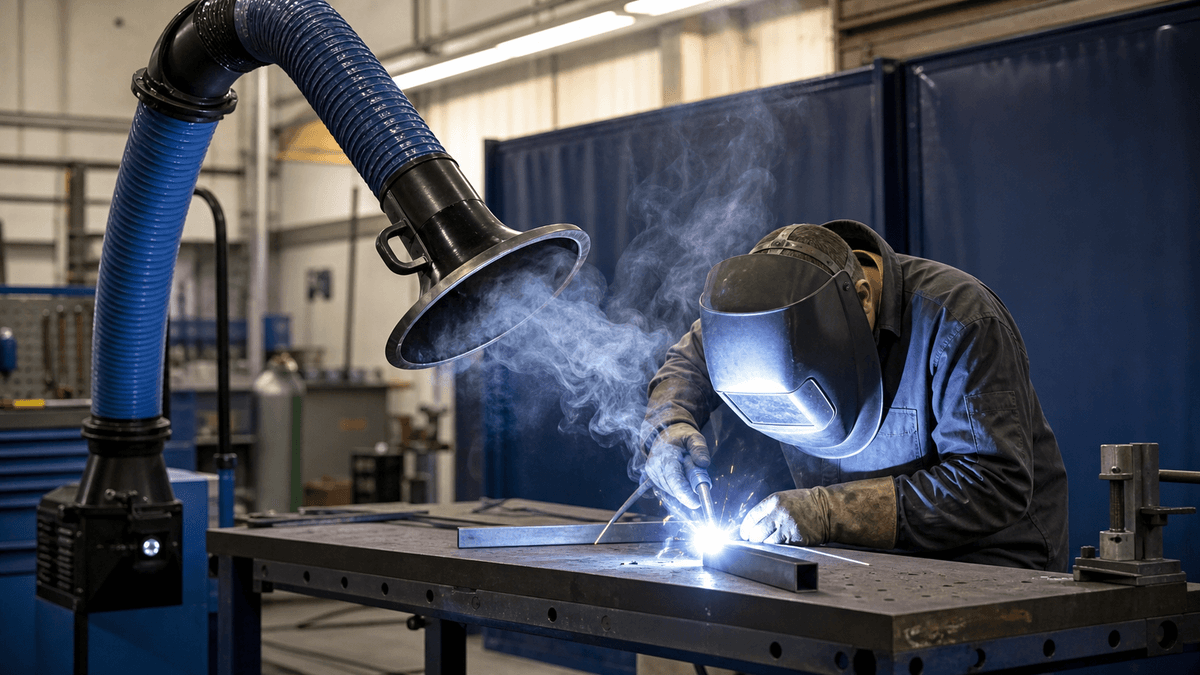
Fume is often hot, fine, and mobile. It may rise because of thermal buoyancy, drift sideways because of room air, or collapse when a door opens. A large fan cannot compensate for a hood that is too far away or pointed at the wrong part of the work. OSHA ventilation guidance emphasizes that local exhaust captures contaminants at or near the source before they disperse into workplace air. That principle is the backbone of fume collection.
In welding, OSHA and NIOSH materials both point to process factors such as welding method, base metal, filler metal, coatings, work location, air movement, and work practice. Those variables explain why two similar booths can have very different exposure results. The fume collector is only one part of a system that includes the plume, the worker, the hood, the duct, the air cleaner, the fan, and the discharge point.
NAROO's laser processing application support fits this conversation when fine particulate and smoke must be captured near the cutting or marking source. The same source-capture logic applies in welding cells, grinding booths, and mixed fabrication areas.
Capture Devices Must Match the Work Pattern
A flexible extraction arm can work well when the operator keeps it close to the fume source. It can fail when the arm is inconvenient, heavy, blocked by tooling, or left in one position while the work moves. A backdraft table can support bench work, but only if the plume naturally moves toward the slot and the worker is not between the source and the airflow. An enclosure can reduce required air volume, but only if doors and openings are managed during production.
Fume collection should therefore be selected around the task. Long weld seams, tack welding, robotic welding, laser cutting tables, maintenance welding, and rework stations all need different capture thinking. The best hood is the one that fits the movement of the job and remains usable after the first week.
NAROO's automotive air filtration and dust removal context is useful for plants where welding, cutting, grinding, and finishing operations occur close together. Mixed production areas need discipline around which fumes, dusts, sparks, and mists should share a system and which should remain separate.
General Ventilation Is Not the Same as Source Capture
General ventilation can reduce background concentrations, heat, and odor, but it is usually a weak first control for process fume. If the plume crosses the worker's face before dilution occurs, the building exhaust may look active while exposure remains poorly controlled. Source capture is different: it aims to intercept the contaminant before it spreads.
Makeup air also matters. A supply diffuser, door draft, pedestal fan, or open bay can bend the plume away from the hood. In winter or summer, seasonal air movement may change capture performance. A commissioning check should include real production, real part positions, and normal doors or fans, not a quiet room with no process disturbance.
When the plant asks for more airflow, the first response should be to check hood placement and enclosure. Moving the capture point a few inches can sometimes improve control more than increasing fan power. This is especially true when the hood is fighting distance, cross-drafts, or poor work positioning.
Filtration Depends on What Is in the Fume
Not all fume streams are the same. Welding fume can include metals and metal oxides from base metals, filler materials, coatings, and fluxes. Laser cutting fume can include fine particulate and smoke from the cut material. Soldering or brazing operations may involve flux by-products. Heated coatings can release particulate and gas-phase contaminants. A filter chosen for one stream may not be right for another.
For fine dry fume and particulate, NAROO's cartridge dust collector category is relevant because it is positioned around fine particle filtration, surface filtration, pulse-jet cleaning, and airflow design. In a high-loading or process-dust situation, a bag dust collector discussion may be more appropriate. If sparks, coarse particles, or dust loading are present before final filtration, a cyclone dust collector or spark-aware pre-separation review may be needed.
An industrial cartridge dust collector can support many fine-particulate fume collection duties, but it should not be treated as a universal answer for vapors, oily mist, combustible metal dust, or sticky residues. If solvents, odors, or gas-phase contaminants are part of the release, the project may need a separate VOCs Control discussion instead of relying on particulate filtration alone.
Maintenance Tasks Are Exposure Moments Too
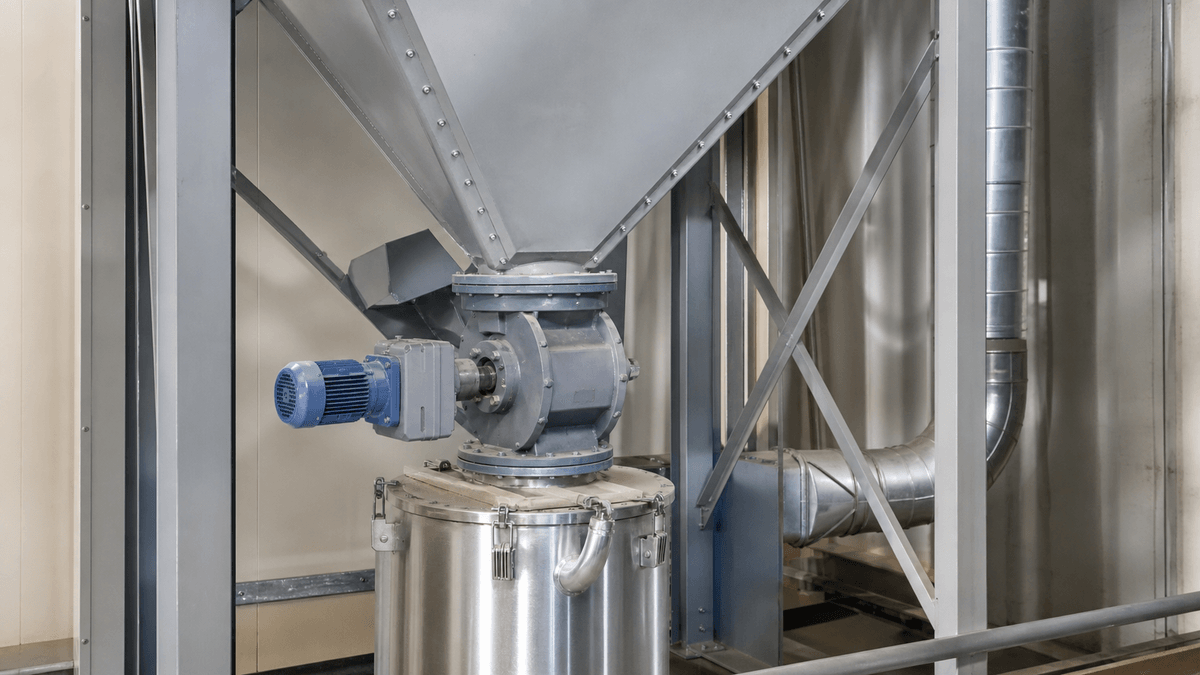
Fume collection residues can be fine, irritating, toxic, or combustible depending on the process. Filter changeout, dust drawer emptying, duct cleanout, and collector inspection should be planned as controlled tasks. A system that captures fume well during production can still create exposure if maintenance workers shake filters, dump dust openly, or use compressed air without capture.
Maintenance planning should include access space, shutoff procedures, filter handling, waste containers, PPE, cleaning method, and documentation. Differential pressure readings should be logged so teams can see whether filter loading changed after a process change. If pressure drops suddenly, inspect for leaks or damaged media before assuming the system is healthy.
NAROO's company profile supports the idea of system support from design through installation. That matters because fume control decisions connect equipment selection, duct routing, commissioning, and maintenance access.
Discharge Direction Needs Early Review
Filtered air may be exhausted outdoors or returned indoors depending on contaminant type, local requirements, energy goals, and monitoring strategy. Recirculation should not be selected merely because it is convenient. The plant must understand what contaminants are present, how filter failure is detected, whether additional monitoring is needed, and how maintenance events are handled.
Outdoor discharge changes the building. Makeup air must replace exhausted air, and the discharge point should not send contaminants toward intakes, doors, windows, roof work areas, or neighboring properties. Long duct runs and stacks add pressure loss, which can reduce capture at the hood if the fan and duct system are not reviewed.
The safer project sequence is to decide discharge strategy before buying the collector. That way the fan, duct, controls, filter access, and building air balance are designed together.
What to Send a Supplier Before Asking for a Quote
- Process type, material, coating, and consumables.
- Photos or video of the plume during normal work.
- Worker position, part movement, and task duration.
- Current hood type, duct route, and fan information.
- Filter pressure history and maintenance frequency.
- Whether air is recirculated or exhausted outdoors.
- Known contaminants that may require exposure or hazard review.
Manual Work and Robot Cells Need Different Proof
A manual station depends heavily on worker behavior. The operator may reposition the work, lean around the part, move the capture arm, or switch between tack welds and long seams. Verification should include the awkward positions, not only the neatest one. If a hood blocks visibility or access, workers will naturally move it away, and the design should be revised rather than blamed on poor habits.
A robot cell has different problems. The plume may be repeatable, but doors, fixtures, part changes, robot speed, and enclosure leakage still matter. The cell may run longer hours with less direct observation, so alarms, filter pressure trends, and periodic smoke checks become important. If the robot path changes, the hood or enclosure should be rechecked.
For both manual and automated work, the best proof is not a clean-looking collector. It is evidence that the plume enters the capture zone during the real duty cycle, that filters load predictably, and that maintenance tasks can be performed without releasing collected residue back into the shop.
Small Process Changes Can Rewrite the Fume Problem
Filler metal, coating thickness, cutting speed, shielding gas, coolant residue, fixture geometry, and production rate can all change the fume stream. A system that worked for one product may struggle after a new part or material is introduced. Change management should therefore include a ventilation checkpoint, especially when the contaminant has exposure, odor, fire, or quality significance.
Maintenance changes count too. Replacing a fan, adding a duct branch, moving a workstation, or changing filter type can alter capture. The plant should document these changes and compare pressure, airflow, and visible capture before and after. Good records turn fume control from a complaint-driven activity into a controlled production support system.
Conclusion
Fume collection succeeds when the plume is captured before it spreads. Start with process observation, choose a hood that fits the task, protect the worker's breathing zone, match filtration to the contaminant, and verify performance under real production conditions. A collector is important, but the fume path decides whether the system actually works.