

A dust collector rotary airlock looks like a small component compared with the collector housing, filters, fan, and ductwork. In daily operation, it can decide whether captured dust actually leaves the system. If the airlock leaks, plugs, wears, or stops too early, dust can build in the hopper, re-enter the filter zone, raise pressure drop, shorten filter life, and create unplanned downtime.
The rotary airlock is also where filtration becomes bulk material handling. Dust that was suspended in air now has to flow through a hopper throat, enter rotor pockets, discharge to a bin or conveyor, and remain contained. That material may be fine, sticky, abrasive, fibrous, combustible, toxic, moist, hot, or prone to bridging. The airlock should be selected for the dust, not treated as a standard accessory.
What the Airlock Actually Does
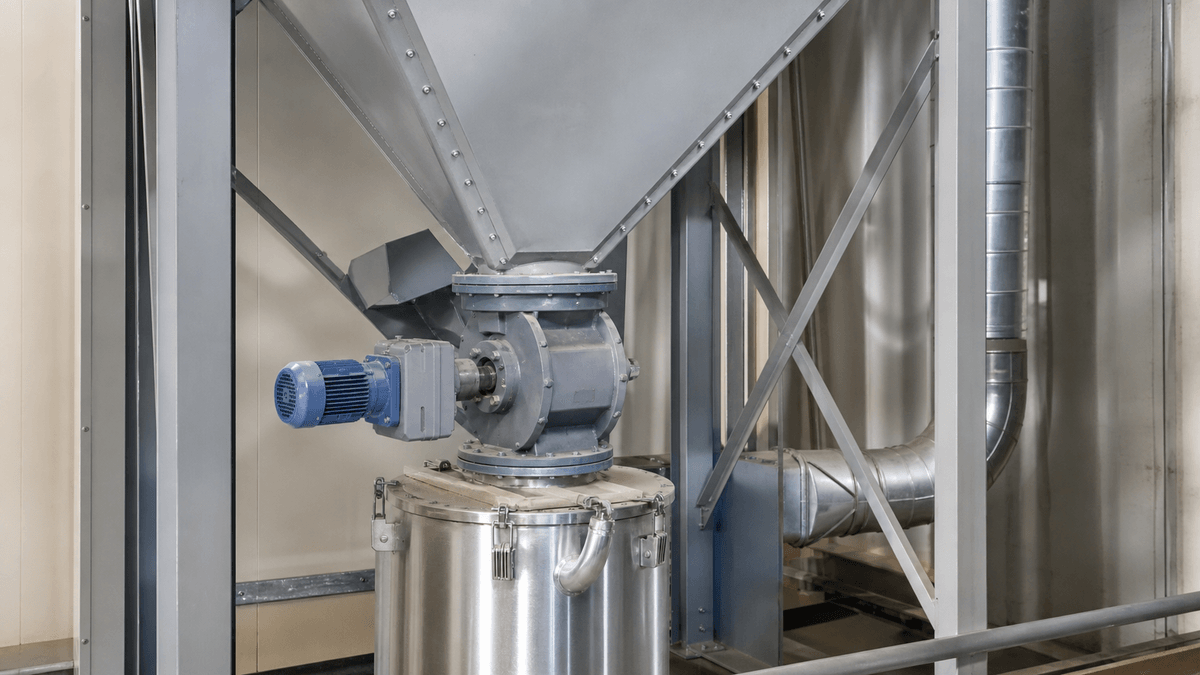
In many dust collectors, the airlock sits below the hopper and meters collected dust out while helping maintain an air seal. Most collectors operate under negative pressure, so worn clearances or poor sealing can pull outside air upward through the discharge. That leakage can disturb dust flow, introduce moisture, and re-entrain material that should have left the collector.
When the discharge path is stable, filters are protected from avoidable reloading. When the discharge path is unstable, the filter section may look like the problem even though the root cause is in the hopper or airlock. Maintenance teams should therefore include the rotary valve, hopper, bin, seals, drive, and discharge chute in normal dust collector inspections.
NAROO's industrial dust collection product range is relevant because collector performance depends on the full route from source capture to final discharge. A well-sized cartridge or bag collector can still struggle if collected material cannot leave the hopper reliably.
Air Leakage Can Look Like a Filter Problem
Air leaking upward through a worn dust collector rotary airlock can change how dust behaves in the hopper. It can fluidize some materials, compact others, and prevent powder from feeding smoothly into the rotor. If the collector is outdoors, leakage may also bring humid air into a dry dust stream. Moisture can make dust cake, bridge, or cling to hopper walls.
The operator may first notice a high differential pressure alarm, frequent pulsing, dust in the clean area, or short filter life. Replacing filters may provide temporary relief, but the problem returns because the hopper is still feeding dust back toward the filter section. This is why discharge inspection belongs in any pressure-drop troubleshooting routine.
A quick review should include rotor blade wear, housing wear, endplate leakage, drive condition, rotation direction, speed, foreign material, bin level, discharge restrictions, and whether the valve continues running long enough after fan shutdown to empty the hopper.
Dust Flow Is Not the Same as Airflow

Dust that moves easily in a duct can behave badly in a hopper. In the duct, air velocity carries particles. In the hopper, gravity and bulk-flow behavior take over. Fine powders may aerate or bridge. Fibrous dust may mat. Sticky dust may build on walls. Abrasive dust may wear rotor tips and housing surfaces. Heavy slugs may arrive after production surges or after the fan stops.
For heavy process dust, NAROO's bag dust collector context is useful because fabric filtration and heavy loading place real demands on hopper discharge. For coarse-particle streams, a cyclone dust collector may reduce downstream loading but still needs a discharge arrangement suited to the collected material.
Do not size the airlock only for average dust generation. Consider peak production, upset conditions, end-of-shift cleanup, filter pulsing, material falling after fan shutdown, and dust bulk density. A valve that is adequate on average can still plug when the process dumps a larger amount into the hopper at once.
Combustible Dust Adds a Separate Review
If the collected material is combustible, the dust collector rotary airlock may be discussed in the context of isolation, explosion protection, and discharge containment. This is a specialist design area. A rotary valve should not be described as an explosion isolation device unless the specific component and installation are rated, selected, installed, and maintained for that purpose under the applicable standard and hazard analysis.
OSHA's combustible dust materials and NFPA combustible dust standards are useful reminders that dust hazards depend on material properties, ignition sources, confinement, dispersion, housekeeping, and equipment arrangement. The airlock may be one part of the protection strategy, but it is not a shortcut around a dust hazard analysis.
NAROO articles should be careful here. It is acceptable to say that combustible dust applications need engineering review and compatible equipment. It is not acceptable to guarantee compliance or imply that every collector, valve, or discharge device is suitable for combustible dust by default.
Filter Selection Still Depends on Discharge Reliability
Cartridge and bag collectors both suffer when the hopper becomes a storage bin. NAROO's cartridge dust collector page emphasizes fine particle filtration, pulse cleaning, airflow resistance, and pressure-loss calculation. Those benefits are easier to maintain when discharged dust leaves the collector instead of rising back into the filter section. For heavier material, bag filtration may require even more attention to dust volume and hopper emptying.
If the collected stream includes sticky particulate, wet process dust, or metal-related material that does not flow well through a dry discharge, NAROO's wetted filter positioning may need review. The correct equipment path depends on whether the dust can be collected, discharged, and maintained safely in the chosen format.
Procurement teams should ask suppliers to connect the proposed filters with the proposed discharge method. Filter area, pulse cleaning, hopper angle, airlock capacity, bin size, and maintenance access are connected decisions.
Control Logic Should Match the Hopper Reality
The airlock should not always stop the moment the fan stops. Dust can continue falling from filters and internal surfaces after airflow ends. If the valve stops too early, that material remains in the hopper until the next startup, where it may bridge, compact, or surge into the valve. A timed shutdown delay can help clear the hopper, but the correct timing depends on collector size, dust load, and discharge arrangement.
Startup sequencing also matters. If downstream conveyors, bins, or valves are not ready, the collector may run while discharge is blocked. Interlocks and alarms should reflect actual failure modes: high bin level, airlock jam, motor overload, missing guard, access door open, or abnormal differential pressure. A simple run signal is not enough for a critical dust-handling point.
Operators should know what to do when an airlock alarms. Repeatedly restarting a jammed valve without checking the cause can damage equipment or create unsafe maintenance conditions.
Bins, Drums, and Conveyors Are Part of the Same Problem
A rotary airlock cannot discharge into a full drum, blocked screw conveyor, plugged chute, or sealed container with no venting path. The equipment below the valve should be reviewed with the same care as the valve itself. If operators have to change drums during production, the process should prevent dust release, avoid exposing workers to falling material, and keep the collector from backing up during the change.
Dust storage also affects housekeeping. A leaky drum lid, torn liner, open tote, or dusty conveyor transfer point can undo the work of the collector by releasing captured material back into the plant. The discharge plan should identify container size, changeout frequency, safe access, cleaning method, and who is responsible for checking bin level.
Wear Is a Slow Failure Mode
Some airlock problems do not appear as sudden jams. Abrasive dust can slowly increase clearances. Sticky dust can slowly build on rotor pockets. Fine powder can work into seals. The system may continue to run, but leakage grows and discharge becomes less predictable. Because the change is gradual, teams may accept declining performance as normal.
Planned inspection helps stop that drift. Measure or document wear where practical, listen for changes in drive noise, check motor load, inspect seals, and compare hopper condition with pressure-drop trends. If the collector needs more frequent filter service and the airlock has not been inspected, the maintenance review is incomplete. A short monthly discharge check can prevent a small leakage or buildup issue from becoming a full collector shutdown.
Supplier Brief for Rotary Airlock Selection
When discussing a dust collector rotary airlock, send the supplier the dust type, particle behavior, bulk density, moisture, abrasiveness, temperature, combustibility status, collector model, hopper geometry, expected dust rate, peak events, bin or conveyor arrangement, and shutdown sequence. If the current system has problems, include photos of bridging, dust buildup, worn rotor edges, leaking seals, and filter loading patterns.
NAROO's system design and installation background is most useful when the discharge device is included in the project scope. A dust collector is not complete at the filter outlet. It is complete when captured dust is removed from the system in a controlled and maintainable way.
Conclusion
A dust collector rotary airlock is not a minor add-on. It protects the air seal, helps discharge collected dust, supports filter performance, and can become a critical point in combustible dust or maintenance reviews. Treat it as part of the dust collection system from the beginning, and many pressure drop, bridging, leakage, cleanup, and filter-life problems become easier to prevent during routine operation. The quiet discharge point deserves the same engineering attention as the visible collector body.