

Hexavalent chromium is not a dust-collection keyword that plant teams should treat casually. It points to a worker-exposure question first and an equipment question second. Stainless steel welding, thermal cutting, chrome plating, chromate coatings, abrasive blasting, and certain high-temperature metal operations can create airborne chromium(VI) or disturb chromium-containing residue. A collector may be part of the answer, but the stronger starting point is a process map.
That map should identify where chromium-containing material is heated, cut, ground, sprayed, stripped, or cleaned. It should also show where workers stand, where the plume travels, how air moves across the task, and how captured material is filtered or exhausted. NAROO's industrial dust removal and air purification products can support fume and particulate control discussions, but exposure decisions still need sampling, engineering review, and applicable regulatory guidance.
The Keyword Is Really About Exposure Pathways
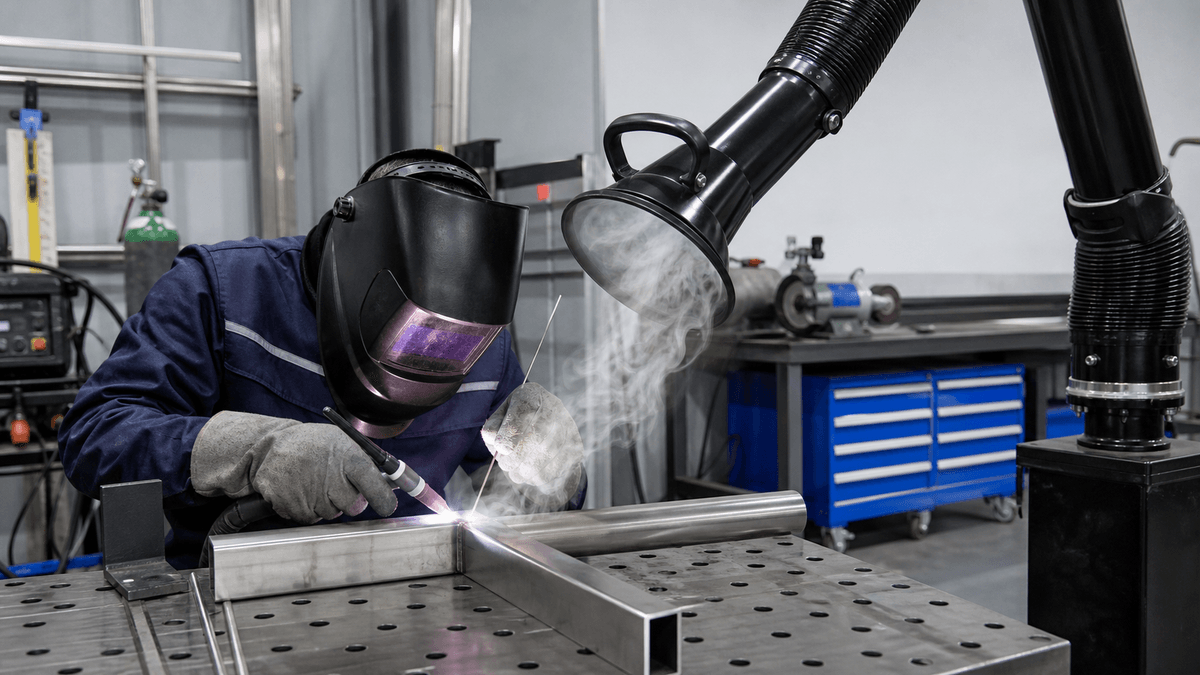
A buyer searching for hexavalent chromium may be worried about stainless welding, surface preparation, hardfacing, coating removal, or mixed metal fabrication. The common mistake is to jump directly to a filter specification. The more useful question is how chromium(VI) becomes airborne in the first place. Is it generated by heat? Is it attached to dust from grinding? Is it in overspray or dried residue? Is it released during cleanup after production?
Each pathway needs a different control strategy. Welding fume moves as a hot plume, so capture distance, hood angle, cross-drafts, and welder position matter. Grinding dust is driven by wheel speed and part geometry. Paint removal or blasting may create high loading and require containment. Cleanup can re-suspend fine residue if dry sweeping or compressed air is used without proper controls.
OSHA's chromium(VI) standard sets a U.S. workplace exposure framework, including an 8-hour time-weighted average permissible exposure limit and requirements around exposure determination, controls, respiratory protection, housekeeping, and regulated areas. This article is not a compliance substitute, but it explains why a plant cannot solve the issue by buying equipment before defining the work operation.
Hot Work Needs Capture Near the Plume
For welding and thermal cutting, the contaminant is usually created close to the arc, torch, or cut line. Once the plume rises and mixes with room air, the ventilation system has to move far more air to gain control. Local exhaust ventilation should be placed so it pulls the plume away from the worker's breathing zone without disturbing shielding gas or blocking the work.
NAROO's laser processing application context is relevant for fine fume and particulate generated by high-energy cutting processes. In broader fabrication shops, automotive air filtration and dust removal experience can also be a useful reference because welding, grinding, cutting, and parts finishing often share the same building.
Capture should be verified during real work, not only during a demonstration. A hood may look close enough until the welder changes posture, the part rotates, a door opens, or a cooling fan pushes the plume sideways. Smoke checks, airflow measurements, worker feedback, and exposure monitoring all help the team understand whether the control is working.
Filtration Is Only One Part of the Control Stack
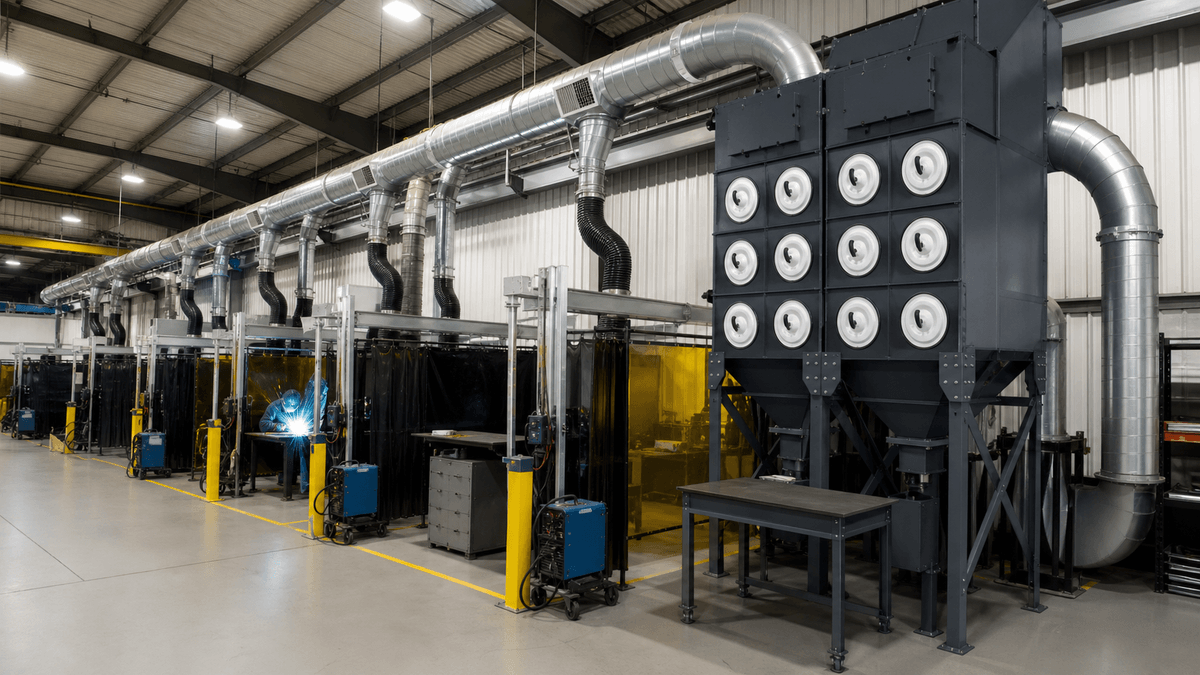
When the stream is primarily dry fume or fine particulate, a cartridge-style collector may be part of the conversation. NAROO's cartridge dust collector positioning supports fine particle filtration, surface filtration, pulse-jet cleaning, airflow resistance calculation, duct layout, and pressure-loss planning. Those design factors are relevant because high-toxicity fume control cannot rely on guesswork.
An industrial cartridge dust collector should still be selected around the contaminant, airflow, temperature, filter loading, discharge route, and maintenance plan. If the process includes sparks, oily mist, sticky residue, combustible dust, or mixed chemistry, the plant should not assume that one dry filter solution covers every condition. Process separation is often as important as filter selection.
For heavier particulate or flue-gas dust separation, NAROO's bag dust collector may be more relevant than a compact cartridge unit. For coarse particles that should be removed before final filtration, a cyclone dust collector can help reduce downstream loading. The equipment path follows the dust stream, not the keyword.
Housekeeping Can Create Exposure If It Is Done Poorly
Hexavalent chromium control does not end at the hood. Dust that settles on fixtures, duct surfaces, ledges, floors, and equipment can become airborne again during cleanup or maintenance. OSHA's chromium(VI) rule addresses housekeeping methods because cleaning can become a second exposure event. Dry sweeping, dry brushing, or using compressed air without capture can move contamination from a surface into breathing air.
A plant should define who cleans, how often, with what equipment, and where collected residue goes. HEPA-filtered vacuuming or other exposure-minimizing methods may be needed depending on the task and applicable rules. Waste handling, filter changeout, and maintenance access also need planning. A good fume collection system can fail its purpose if workers are heavily exposed while emptying dust containers or replacing filters.
Maintenance procedures should be written for the actual equipment layout. Can filters be changed without shaking material loose? Is the discharge sealed? Are access doors located where workers can service them without awkward movement? Is the collector under negative pressure during normal operation, and what happens when the fan shuts down? These details matter more when the dust has toxic significance.
Do Not Recirculate Without a Serious Review
Some industrial fume systems return filtered air indoors to conserve conditioned air. For chromium(VI)-related operations, that decision deserves careful review. The question is not only whether the filter can capture particulate under ideal conditions. The plant also needs to ask how filter failure is detected, how air is monitored, what happens during maintenance, and whether recirculation is allowed or advisable under the applicable regulatory and hazard context.
Outdoor discharge is not automatically simple either. It affects makeup air, duct pressure loss, discharge location, weather exposure, stack design, and potential re-entry through doors or intakes. If the plant changes discharge direction after installation, hood capture may change because total system resistance changes. Ventilation design should be treated as a system, not a final duct afterthought.
Questions to Ask Before Buying Equipment
- Which tasks can generate or disturb hexavalent chromium?
- Where are worker breathing zones during each task?
- Can the source be enclosed or partly enclosed?
- Will local exhaust capture the plume without pulling it through the worker?
- Is the stream dry fume, abrasive dust, sticky residue, mixed mist, or a combination?
- How will filter changes, dust discharge, and cleanup be performed?
- What monitoring or alarm approach will show whether performance changes?
Controls Should Work in Layers
Hexavalent chromium work should be reviewed with a hierarchy of controls mindset. Substitution or process change may reduce the source in some situations. Enclosure and local exhaust can reduce the amount that reaches breathing air. Work-practice rules can keep the plume away from the worker. Respiratory protection may be required when engineering and administrative controls do not fully control exposure, or while controls are being installed and verified. The specific plan should follow qualified EHS review and applicable regulations.
Layered control is important because industrial production changes. A new filler wire, coating, abrasive, part shape, weld position, or shift schedule can change exposure. If the plant treats the collector as the only control, those changes may go unnoticed until sampling or complaints reveal a problem. A better program connects purchasing, production engineering, maintenance, and EHS so changes trigger ventilation and exposure review before routine work resumes.
Supplier Brief: Give the Process, Not Just the Contaminant Name
A useful supplier brief should include material descriptions, safety data sheets, process photos, welding or cutting method, part size, worker position, shift length, current exposure data if available, hood photos, duct route, discharge location, filter service history, and maintenance complaints. If the plant has had visible fume escape, filter loading, odor, dust on surfaces, or sampling results above an internal action level, include that information directly.
NAROO's design, production, and installation background is most useful when the project brief describes the full air-control route. The supplier can then discuss whether a source-capture hood, fume extraction arm, cartridge collector, pre-separation step, wet collection review, or broader plant ventilation change is a better fit.
If the operation also includes solvent vapor, coatings, or degreasing, the team should separate particulate control from VOCs Control. Dry dust collection equipment should not be described as a substitute for gas-phase treatment unless the specific system is designed and documented for that duty. Clear separation of contaminant types protects both performance and credibility.
Conclusion
Hexavalent chromium control is a process and exposure-control problem before it is a filter problem. Start with the materials and tasks, capture fume near the source, verify ventilation under real work conditions, manage housekeeping carefully, and connect sampling data with system maintenance. That approach gives plant teams a stronger basis for choosing equipment and for knowing whether the installed system is doing its job.