

The Best Manufacturer Conversation Starts With Your Dust
Searching for an industrial dust collector manufacturer in China can quickly turn into a long comparison of catalog pages. But the real starting point is not the catalog. It is the dust. Particle size, dust loading, moisture, temperature, stickiness, abrasiveness, toxicity, combustibility, and process rhythm all influence the collector design.
A capable manufacturer should ask what the plant makes, where dust is released, how many pickup points exist, whether production is continuous or batch-based, and what maintenance problems already happen. If a supplier quotes before understanding these details, the buyer should slow down.
NAROO has operated since 2008 and positions itself as a provider of industrial dust removal and air purification solutions. Its company profile highlights R&D, production, installation, and environmental solution capability, which are useful buyer signals when selecting a manufacturing partner.
One Manufacturer Should Explain Multiple Collector Types
No single dust collector type fits every industrial process. Fine dry dust may point toward cartridge filtration. Heavy process dust may call for a bag collector. Coarse particles may benefit from cyclone pre-separation. Sticky or wet particulate may require a wetted filter approach. A manufacturer that only pushes one product type may not be solving the buyer's real problem.
NAROO's cartridge dust collector page describes surface filtration and pulse jet cleaning for fine particles. Its bag dust collector page focuses on fabric filter elements for industrial dust separation. The cyclone dust collector page explains centrifugal pre-separation, while the wetted filter page supports fine and sticky particulate topics.
For buyers, this product range matters because the best manufacturer should compare options honestly. Sometimes the right answer is a single collector. Sometimes it is a staged system.
Ask How the Manufacturer Sizes the System
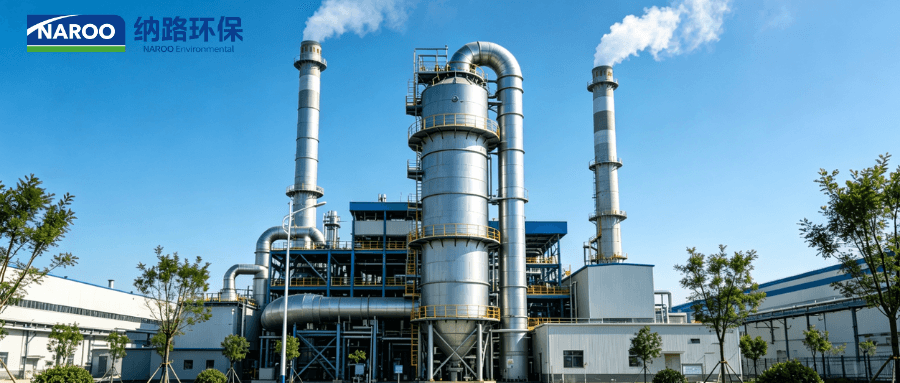
Dust collector sizing should not be reduced to a simple airflow number. The manufacturer should review capture hood design, duct velocity, pressure loss, filter area, cleaning method, fan selection, compressed air needs, dust discharge, and controls. A collector that is large enough on paper can still fail if the hood is too far from the source or if the ductwork is poorly balanced.
Buyers should ask what assumptions are used. How many pickup points operate at the same time? What air-to-cloth ratio is proposed? What pressure drop is expected? How will operators know when filters need attention? How will the system handle future process changes?
These sizing questions reveal whether the manufacturer is thinking about the whole plant or only the equipment footprint.
Industry Fit Matters More Than Generic Experience
A manufacturer may have years of dust collector experience and still be the wrong fit for a specialized process. Lithium battery powder, automotive grinding, photovoltaic production, laser cutting, chemical powder handling, and smelting all create different dust-control requirements.
NAROO's application pages for lithium battery manufacturing, automobiles, photovoltaics, and laser processing show how collector selection should connect to application context.
Ask the manufacturer to describe similar dust sources, not just similar-looking machines. The more specific the process discussion becomes, the easier it is to judge whether the supplier understands the application.
Safety Claims Need Evidence
Many industrial dusts can be combustible under the right conditions. A buyer should be careful with broad claims about explosion-proof performance, ATEX suitability, or compliance. The right safety configuration depends on dust properties, local rules, collector location, duct layout, and the facility's hazard analysis.
OSHA combustible dust guidance and NFPA 660 are useful references for understanding why dust hazard review matters. A responsible manufacturer should ask for dust data when combustible dust is possible and should avoid treating safety options as decorative accessories.
Buyers should request project-specific documentation for any quoted explosion venting, suppression, isolation, electrical classification, grounding, or certification requirement.
After-Sales Support Is Part of the Purchase
Dust collectors need commissioning, balancing, filter replacement, pressure monitoring, pulse valve checks, hopper cleaning, and periodic inspection. A manufacturer that can support installation and service reduces the risk of performance drift after startup.
Ask about spare parts, filter availability, remote troubleshooting, commissioning records, operator training, maintenance manuals, and response process. A low purchase price can become expensive if the plant cannot get parts or technical help when pressure drop rises.
Bottom Line
Choosing an industrial dust collector manufacturer in China should be a process-driven decision. The right manufacturer asks detailed questions, explains collector options, sizes the system around airflow and dust behavior, addresses safety honestly, and supports the system after installation.