

The Dust Problem Is Usually Smaller Than It Looks
Lithium battery dust removal is not only about removing dust that has already settled on floors or equipment. The more important task is to keep powder from escaping in the first place. Battery material dust can appear at bag opening, weighing, mixing, transfer, feeding, coating preparation, trimming, recycling, cleaning, and maintenance points. Each release may look small, but together they can create a plant-wide dust-control problem.
For battery manufacturers, dust removal supports cleaner production areas, more stable process conditions, and easier maintenance. It also helps prevent powder from reaching places where it can affect equipment, filtration systems, housekeeping, or safety review. The best dust removal plan therefore starts at the point where powder becomes airborne.
NAROO's lithium battery application page makes this a core industrial use case for dust removal and air purification planning.
Map the Powder Path Before Selecting Equipment
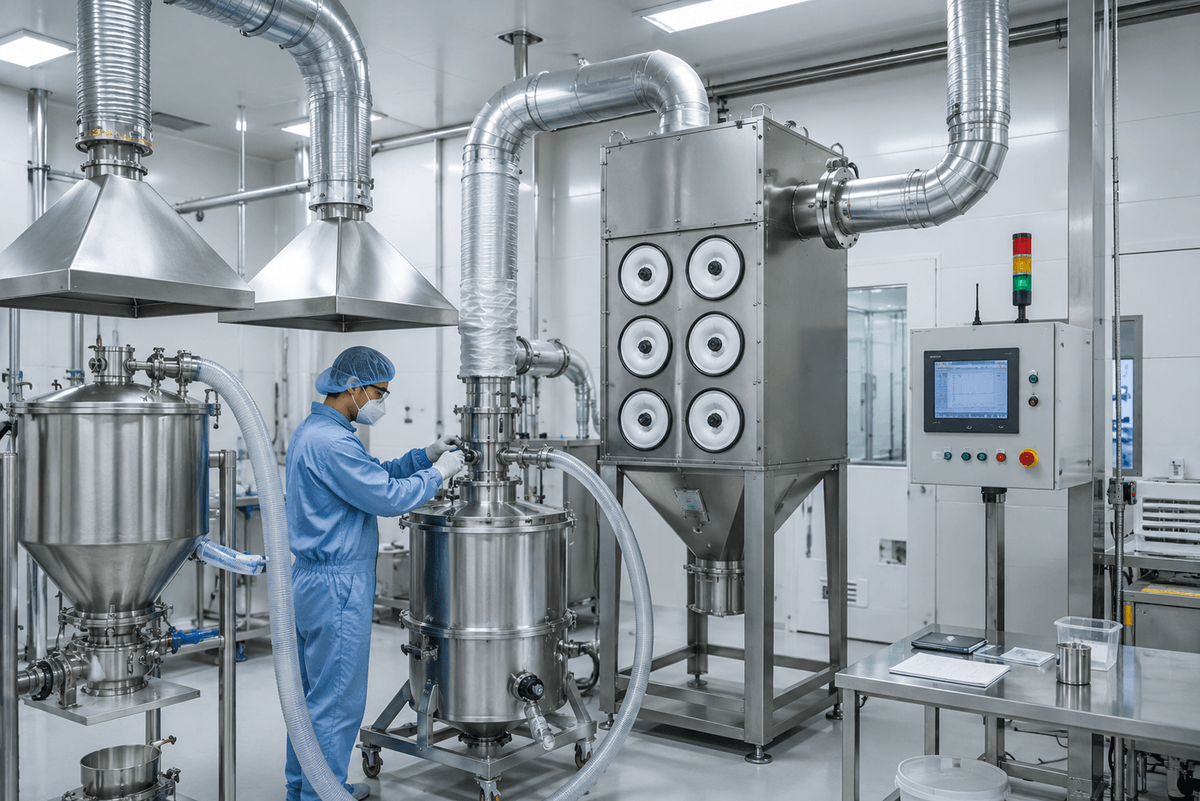
Before choosing a collector, walk the line and mark where powder is handled. A material unloading station may release dust in short bursts. A feeder may create a steady dust source. A transfer connection may leak only during changeover. Filter replacement may create dust when the process is already stopped, which means normal production airflow may not capture it.
A useful map should include normal production, startup, shutdown, recipe change, cleaning, maintenance, and abnormal conditions. Operators and maintenance teams often know where the first signs of dust appear. Their observations can prevent a design that looks good on paper but misses the real release points.
Once the source map is clear, engineers can decide whether each point needs enclosure, local hooding, a connected pickup, a compact collector, or a central system branch.
Fine Battery Powder Needs Stable Capture
Fine powder can move with small air currents. Doors, people, compressed air, product movement, and nearby ventilation can all affect capture. A hood that is too far away may pull air while letting powder escape around the edges. A duct that is poorly balanced may work for one station while starving another.
NAROO's cartridge dust collector page is relevant because it describes fine-particle filtration, surface filtration, pulse jet cleaning, airflow calculation, pressure loss, and air-to-cloth ratio. These factors matter in lithium battery dust removal because capture airflow must remain stable as filters load.
Cartridge filtration can be a strong fit for many dry fine-powder sources, but the dust must still match the media and cleaning method. Moisture, stickiness, electrostatic behavior, particle size, dust loading, and safety requirements all affect the final design.
Do Not Overload the Final Filter
If a dust stream includes larger agglomerates or mixed particle sizes, final filters may load faster than expected. In some systems, pre-separation can reduce the burden on high-efficiency filters. A cyclone dust collector may remove heavier particles before the air reaches cartridge or bag filters when the particle characteristics support it.
NAROO's cyclone dust collector page explains how centrifugal force can reduce filtration load and improve system stability during continuous operation. It is not a replacement for fine filtration, but it can be useful as part of a staged design.
For heavy dust loads or other process conditions, NAROO's bag dust collector page may also be relevant. The choice should follow dust behavior rather than a fixed preference for one collector type.
Safety Review Belongs Early in the Project
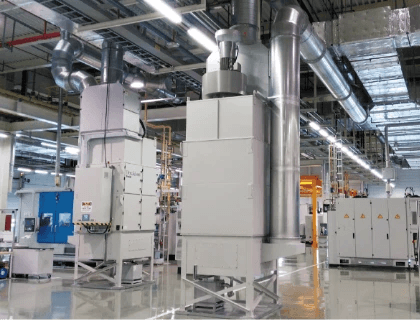
Battery-related powders can raise questions about combustibility, toxicity, reactivity, and housekeeping depending on the material and process. Facilities should not assume that a dust is safe because it is familiar. Representative dust data, process review, and applicable standards should guide the design.
OSHA combustible dust resources and NFPA 660 may be relevant when a dust can burn or explode. Safety review can affect collector location, duct routing, electrical components, grounding and bonding, explosion protection, isolation, dust discharge, and cleaning procedures.
NAROO's products page can help compare dust collection technologies, but the hazard review should be specific to the powder, facility layout, and local requirements.
Maintenance Should Be Clean by Design
Battery dust removal systems can fail during maintenance if access is awkward. Filter replacement, hopper discharge, duct inspection, and cleanup should be planned so powder is not released into the room. If operators need to improvise, the system design is not finished.
Track differential pressure, filter replacement intervals, pulse-cleaning behavior, discharge performance, and dust complaints from operators. A rising pressure drop may indicate filter loading, media blinding, poor pulse cleaning, or dust re-entrainment. A sudden change after a material switch may point to a powder behavior problem rather than equipment failure.
NAROO's company profile describes support from design through production and installation, which matters when a dust collector must fit the real maintenance routine of a battery plant.
A Practical Lithium Battery Dust Removal Checklist
- Map every powder release point during production and maintenance.
- Use close capture or enclosure before relying on general room exhaust.
- Confirm dust properties before selecting filter media or safety features.
- Check airflow, duct velocity, pressure loss, and branch balance.
- Plan dust discharge and filter replacement around clean maintenance.
- Review combustible dust and material hazards early.
- Record baseline pressure and airflow after commissioning.
Common Design Mistakes in Battery Powder Areas
One common mistake is placing the pickup point where it is convenient for equipment layout rather than where powder is released. Another is using general room exhaust to compensate for poor source capture. General exhaust may improve room air movement, but it usually cannot replace a hood or enclosure placed at the actual release point.
Maintenance access is another frequent blind spot. If filters, hoppers, or drums are difficult to reach, workers may delay service or create dust releases during replacement. The dust removal system should make routine work clean and repeatable, especially in powder-sensitive areas.
Finally, plants sometimes ignore small release points because each one looks minor. In battery manufacturing, many small sources can add up to a persistent dust problem. A good design treats the whole powder path, not only the largest visible source.
What to Include in the Supplier Brief
A supplier can design a better lithium battery dust removal system when the project brief is specific. Include the materials handled, process steps, estimated dust loading, room layout, capture points, shift schedule, cleaning method, temperature, humidity, available space, and whether the air will be exhausted or recirculated under applicable requirements.
Also include operating problems from the current line. Does dust appear after bag dumping? Does pressure drop rise too quickly? Are filters hard to change? Does dust escape during maintenance instead of production? These details help the supplier solve the actual problem instead of quoting a generic collector.
FAQ
Is cartridge filtration always the best choice for lithium battery dust?
No. Cartridge filtration is useful for many fine dry powders, but the dust properties must be checked. Sticky, wet, reactive, or high-load dust may require another design or a staged system.
Should battery dust removal be local or central?
It depends on the process layout. A central system can work for multiple pickup points when branches are balanced. Local collectors may be better for isolated, high-release, or cleanroom-sensitive operations.
What should operators monitor after startup?
Operators should track differential pressure, airflow complaints, filter condition, dust discharge, pulse-cleaning behavior, and visible dust near source points. Changes in these signals usually appear before major performance loss.
How to Know the System Is Working
Successful lithium battery dust removal should be visible in daily operations, not only in design documents. Operators should see less dust around transfer points, fewer cleanup complaints, more stable pressure readings, and predictable filter service intervals. Maintenance teams should be able to change filters and empty collected dust without creating a secondary release.
The system should also remain stable after production changes. If a new material, higher throughput, or changed cleaning method causes dust to return, the plant should revisit airflow and capture rather than simply replacing filters more often. Dust removal is a living system because powder handling conditions change.
During periodic reviews, compare current pressure drop, filter life, visible dust, and housekeeping records against the commissioning baseline. This helps catch slow performance drift before it becomes a larger production problem.
Bottom Line
Lithium battery dust removal works best when powder is captured before it spreads. Source capture, cartridge filtration, possible pre-separation, safety review, monitoring, and maintenance all need to fit together. A collector by itself is not the plan; it is one part of a plant-level dust-control system.