

VOCs Control Starts Before the Treatment Unit
VOCs Control is often discussed as if the treatment equipment is the whole solution. In practice, the most important decisions happen upstream. Volatile organic compounds can be released from storage tanks, reactors, coating lines, dryers, solvent transfer points, cleaning stations, filling machines, leaks, and batch process openings. If the vapor is not captured, the downstream treatment unit cannot solve the room-side problem.
A strong VOCs Control plan starts with source mapping. Which sources are continuous? Which are batch-based? Which release short concentration spikes? What air volume, temperature, humidity, solvent composition, and safety limits are involved? These answers determine whether the system needs enclosure, local exhaust, adsorption, concentration, oxidation, condensation recovery, or another approach.
NAROO's industrial dust removal and air purification positioning is useful in plants where dust and VOCs appear together. Dust should be controlled before it contaminates gas-treatment equipment, while VOCs require a gas-phase treatment path.
Do Not Treat Every VOC Stream the Same Way
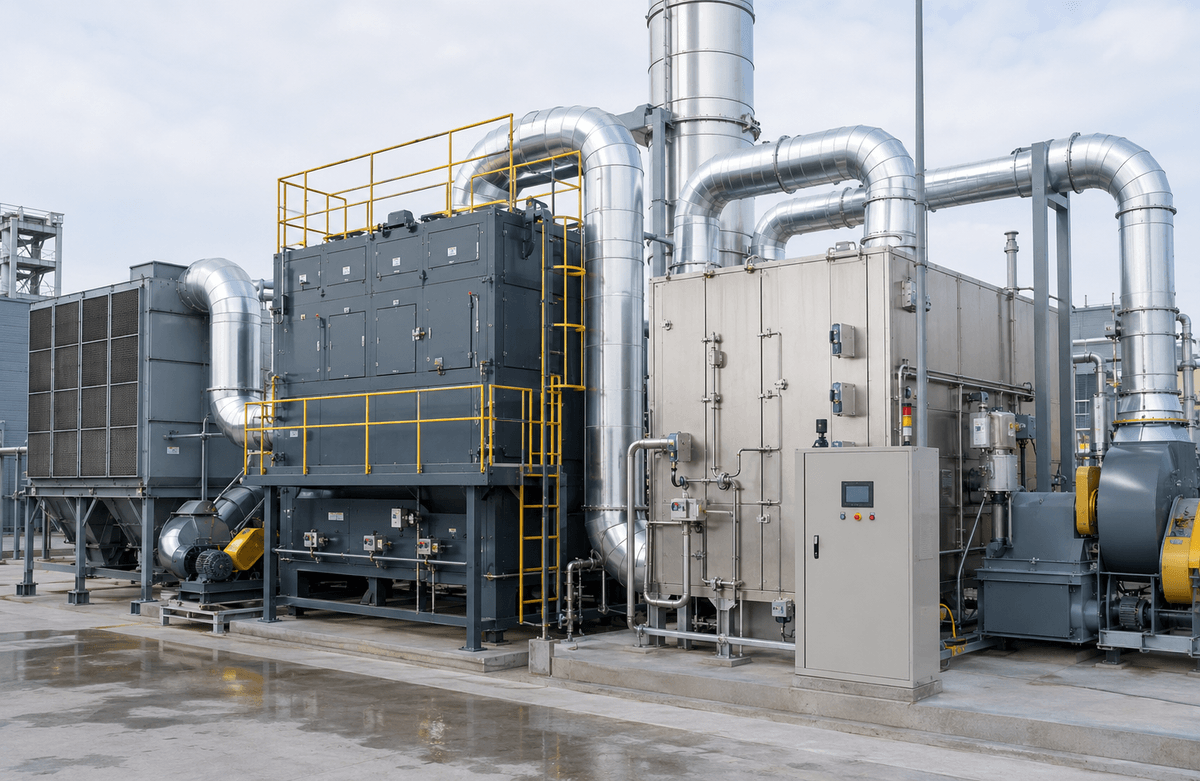
Different VOC streams need different control strategies. A high-concentration, low-airflow stream may require a different treatment method than a high-airflow, low-concentration exhaust. A solvent blend may behave differently from a single compound. Humidity, temperature, particulate contamination, and process variability can all affect equipment selection.
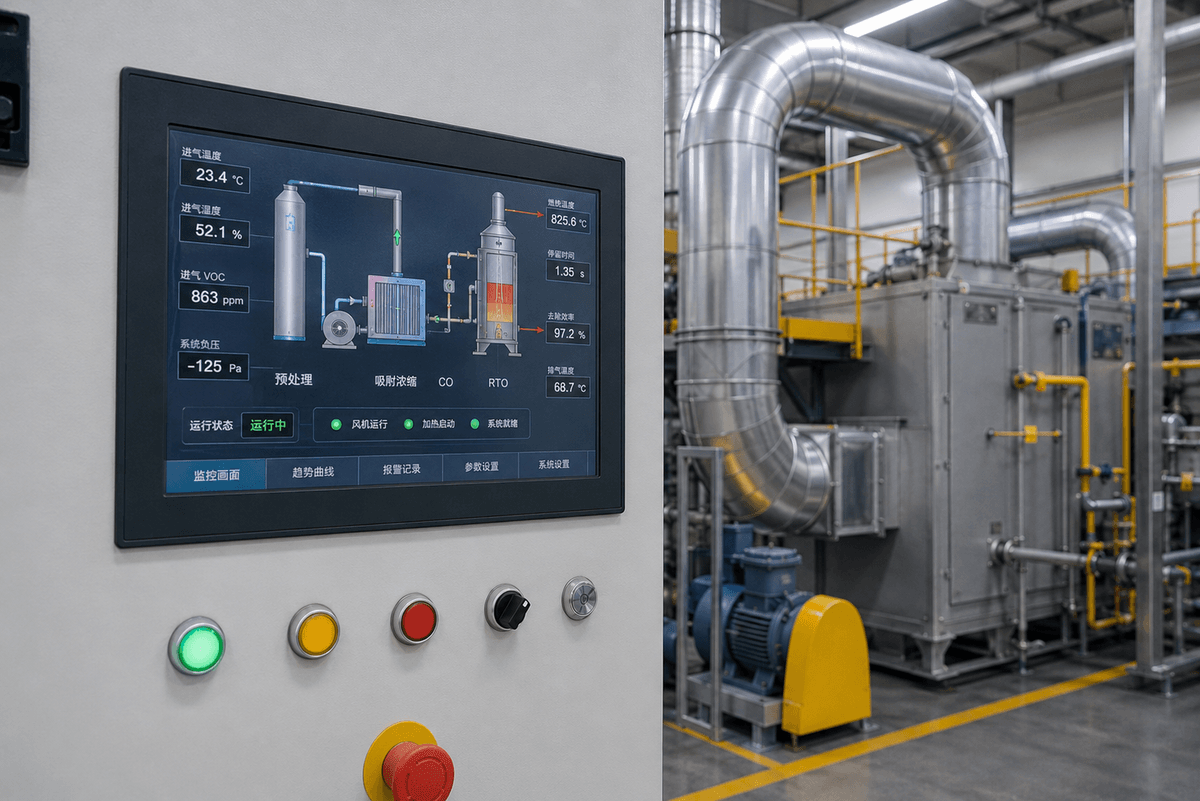
EPA resources on thermal oxidizers identify combustion chamber temperature and outlet VOC concentration as key monitoring indicators for thermal oxidation systems. That highlights a broader point: VOCs Control should be measurable, monitored, and operated within a defined window.
A buyer should ask the supplier to explain why a technology fits the exhaust profile. Generic treatment claims are not enough when concentration swings, safety margins, and operating cost matter.
Adsorption, Concentration, and RTO
For large-volume, low-concentration exhaust, adsorption concentration followed by regenerative thermal oxidation is often considered. A zeolite rotor or other adsorption system can capture VOCs from a larger dilute stream and desorb them into a smaller, more concentrated stream. The concentrated stream can then be treated by an oxidizer.
Regenerative thermal oxidizers, often called RTOs, use heat recovery to reduce fuel demand compared with non-regenerative thermal oxidation. The system still needs careful review of solvent composition, lower explosive limit safety margins, temperature, humidity, prefiltration, bypass logic, and emergency shutdown behavior.
When dust or mist is present, prefiltration becomes important. NAROO's products page shows the dust collection side of air purification, including collector technologies that can protect downstream treatment equipment when particulate is part of the exhaust challenge.
Dust and VOCs Often Interact
Some chemical, coating, battery, pharmaceutical, and material-handling processes release both particles and vapors. Sending dusty air into VOCs Control equipment can shorten media life, foul heat exchangers, contaminate adsorption systems, or create maintenance problems. At the same time, a dust collector will not destroy VOCs simply because it removes particles.
A coordinated system separates the tasks. Dust collection handles source capture, filtration, discharge, and pressure monitoring. VOCs Control handles gas capture, concentration, oxidation, recovery, or adsorption. The two tracks should be designed together so one does not damage the other.
NAROO's cartridge dust collector page is relevant for fine dry particulate, while the bag dust collector page supports heavier dust applications. For sticky particulate, the wetted filter page may be relevant.
Monitoring Turns VOCs Control Into an Operating System
VOCs Control equipment should not be treated as a black box. Operators may need to monitor inlet and outlet concentration, airflow, pressure, temperature, fan status, damper position, rotor speed, desorption temperature, combustion chamber temperature, alarm history, and system interlocks. The exact parameters depend on the technology.
Monitoring is especially important for batch processes. A system that works during steady production may respond differently during startup, shutdown, solvent transfer, or cleaning. Baseline data helps operators see when the process has changed or when maintenance is needed.
NAROO's company profile describes R&D, production, installation, and service capability. That system-level support matters because VOCs Control performance depends on design, commissioning, and operating discipline.
Buyer Questions Before Selecting VOCs Control Equipment
- Where are VOCs released, and are sources enclosed or open?
- What are the exhaust flow rate, concentration range, temperature, humidity, and solvent composition?
- Are there dust, mist, sticky contaminants, or corrosive components in the exhaust?
- Is adsorption, concentration, oxidation, recovery, or another treatment method recommended?
- How are lower explosive limit safety margins and bypass conditions handled?
- Which operating parameters will be monitored after startup?
- What maintenance is required for filters, rotors, valves, burners, fans, and sensors?
Where VOCs Control Projects Go Wrong
One common mistake is sizing treatment equipment around an average concentration while ignoring short spikes. Batch operations can release VOCs in bursts during filling, heating, cleaning, or transfer. If the system cannot manage those peaks safely and effectively, normal average data may be misleading.
Another mistake is overlooking collection efficiency. A treatment system may perform well on the air it receives, but if vapors escape from tanks, hatches, transfer points, or open process areas, the plant still has an uncontrolled source problem. Good VOCs Control begins with capture, not with the outlet stack.
Plants also run into trouble when dust, mist, or sticky contaminants are allowed to reach adsorption or oxidation equipment. Pretreatment may look like a small detail, but it can protect media, valves, heat exchangers, and sensors from early maintenance problems.
Startup Checks After Installation
Commissioning should test the system under representative operating conditions. Check airflow, damper position, pressure, inlet concentration, outlet concentration, temperature, alarms, interlocks, and fan operation. For adsorption concentration systems, verify desorption temperature, rotor operation, seal condition, and prefilter pressure drop. For RTO systems, verify temperature stability, burner operation, purge logic, and safety interlocks.
Operators should receive a clear normal operating range. They need to know which readings are expected, which readings require maintenance, and which readings require shutdown or escalation. VOCs Control is an operating discipline, not only an installed machine.
FAQ
Can one VOCs Control system serve multiple process sources?
Yes, but only if airflow, concentration range, chemical compatibility, timing, and safety limits are reviewed together. Multiple sources can create unpredictable peaks if they operate at the same time.
Is RTO always the right VOC treatment method?
No. RTO can be suitable for many organic exhaust streams, especially when heat recovery is valuable, but adsorption, condensation, carbon systems, catalytic oxidation, or other methods may fit better depending on the exhaust profile.
Why does particulate control matter in VOC projects?
Particles, mist, and sticky contaminants can foul adsorption media, rotors, heat exchangers, valves, and sensors. Good pretreatment helps the VOCs Control system stay stable.
Supplier Inputs for a Better VOCs Control Proposal
A useful supplier proposal needs more than the phrase "organic waste gas." The plant should provide solvent names or categories, estimated concentration range, total airflow, operating hours, batch schedule, exhaust temperature, humidity, oxygen level if relevant, particulate content, and whether the process has odor, corrosion, or safety concerns. If sampling data is available, it should be shared early.
Layout information is also important. Long duct runs, multiple branches, high-temperature sources, or mixed exhaust streams can change equipment selection. A supplier may recommend keeping some streams separate if combining them creates safety, compatibility, or treatment-efficiency problems.
For plants that also generate dust, the brief should describe particle sources and any existing dust collectors. NAROO's cyclone dust collector page, cartridge collector page, and bag collector page reflect the particulate side of air treatment. Coordinating particulate control and VOCs Control can reduce downstream maintenance surprises.
Operating Cost Should Be Discussed Early
VOCs Control equipment can consume energy through fans, heaters, burners, compressed air, pumps, controls, and support systems. Filter replacement, adsorbent life, rotor maintenance, sensor calibration, valve service, and downtime also affect operating cost. A system with a lower purchase price may cost more if it is oversized, poorly matched to concentration, or difficult to maintain.
Ask suppliers to explain expected energy drivers and maintenance tasks. For adsorption concentration plus RTO, ask about pressure drop, desorption energy, heat recovery, purge logic, and prefilter replacement. For carbon adsorption, ask about breakthrough monitoring, replacement schedule, and spent carbon handling. The best VOCs Control plan should be practical to operate, not only technically possible.
Industries Where VOCs Control Often Overlaps With Dust Control
Chemical manufacturing, coating, battery materials, pharmaceuticals, printing, electronics, and composite production can all involve both vapor and particulate sources. In those plants, an air-quality project may need two coordinated control tracks. Dust collection protects equipment and work areas from particles. VOCs Control treats the gas-phase contaminants that filters cannot remove by themselves.
This is why early source mapping is so valuable. It shows which streams need particulate removal, which streams need VOC treatment, and which streams should not be combined without engineering review.
Bottom Line
VOCs Control is not just a treatment device at the end of a duct. It is a system that starts with source capture and exhaust characterization. The best design connects collection, pretreatment, adsorption or concentration, oxidation or recovery, monitoring, and maintenance into one operating plan.