

Introduction: Similar Goal, Very Different Equipment
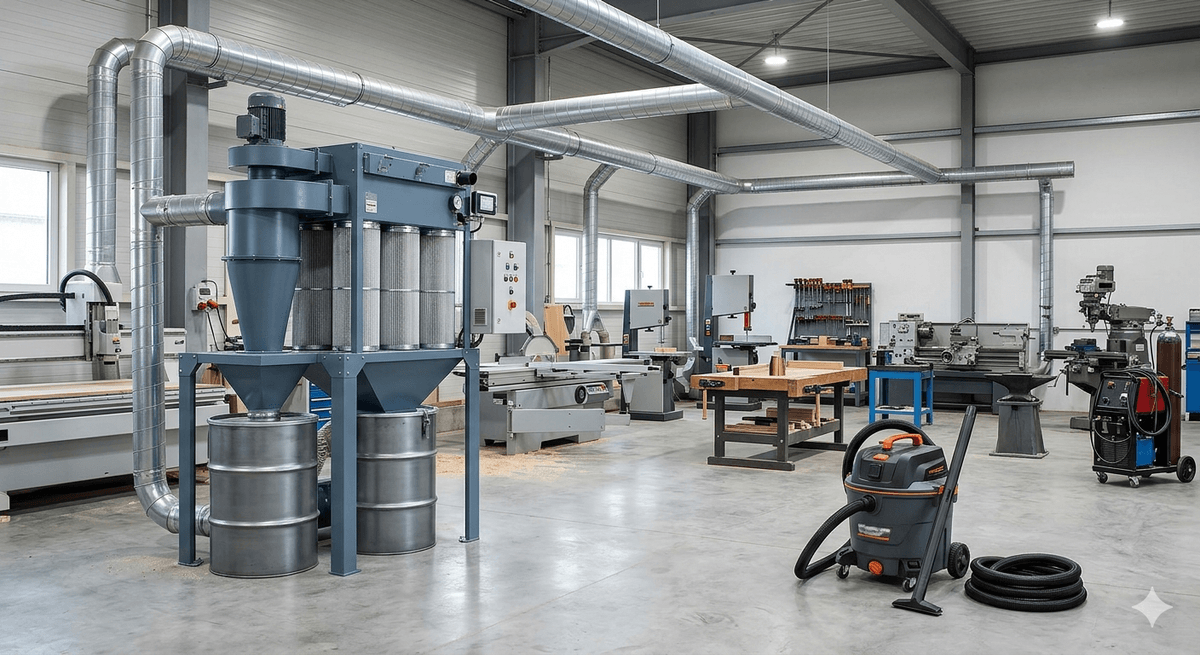
The dust collector vs shop vac question comes up whenever a workshop, production line, or industrial facility needs cleaner air and better dust control. Both systems remove dust and debris, and both use negative pressure to pull material away from the work area. But they are designed for different jobs. A shop vac is usually a portable cleanup tool. A dust collector is usually an engineered air-handling and filtration system designed to capture dust at the source and manage larger airflow volumes over longer periods.
Choosing the wrong equipment can create practical problems. A shop vac may be convenient for small cleanup tasks but struggle with continuous dust generation, fine airborne particles, or multiple machines. A dust collector may be too large or complex for a small hobby bench, but it is often the better choice for industrial processes where airborne dust affects worker exposure, product quality, housekeeping, equipment reliability, or combustible dust risk.
This guide compares dust collectors and shop vacs from a practical buyer's perspective. It covers airflow, suction, filtration, duty cycle, collection capacity, safety, cost, and when a facility should move from a portable vacuum to a dedicated dust collection system.
What Is a Shop Vac?
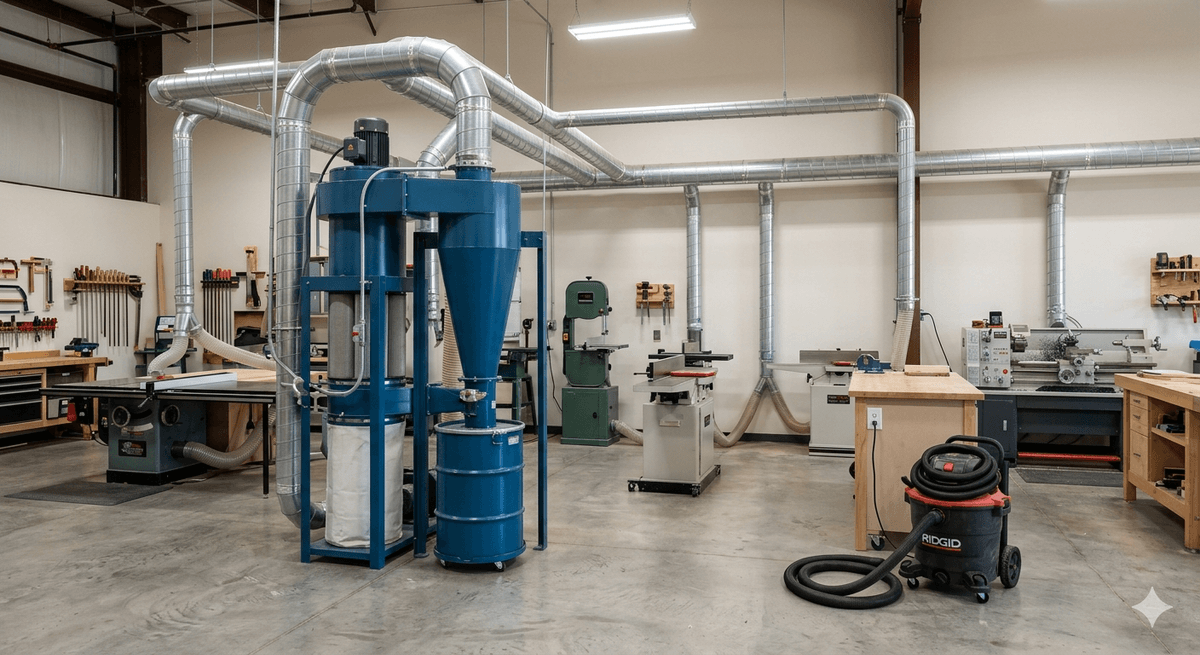
A shop vac, or shop vacuum, is a portable vacuum designed to pick up dust, chips, debris, and sometimes liquids. It is common in woodworking shops, maintenance areas, small fabrication spaces, garages, and construction jobsites. The main advantages are portability, low upfront cost, easy setup, and strong suction at the hose opening.
Shop vacs are useful for spot cleaning, tool cleanup, bench-level debris removal, and intermittent work. They often connect directly to handheld tools or small machines. For a small shop, a good shop vac with the right filter may be a practical first step in dust control.
However, a shop vac is not the same as an industrial dust collector. It typically moves less total air, has a smaller collection volume, may be louder, and may not be designed for continuous operation across several dust-producing machines. NAROO's article on dust collectors vs vacuum systems makes this distinction clear: vacuums are often better for smaller jobs or spot cleaning, while dust collection systems are built for larger and more continuous dust control needs.
What Is a Dust Collector?
A dust collector is a system designed to capture airborne dust and particulate matter from production processes. It may include capture hoods, ductwork, dampers, fans, filter cartridges or bags, cyclones, hoppers, discharge systems, sensors, and control panels. Instead of only cleaning up settled debris, a dust collector is often installed to capture dust before it spreads into the workplace.
Dust collectors are common in woodworking, metalworking, battery manufacturing, laser cutting, welding, pharmaceuticals, chemicals, glass processing, non-ferrous metals, and many other industrial environments. They may be installed as single-machine units or central systems serving multiple extraction points.
NAROO's dust collector system guide explains that these systems use airflow, filtration, and separation methods to capture airborne particles and improve workspace air quality. For industrial facilities, this is the key difference: a dust collector is usually part of the production environment, not just a cleanup accessory.
Airflow vs Suction: The Core Difference
One of the biggest differences between a dust collector and a shop vac is the way each system balances airflow and suction. Shop vacs typically generate high static pressure through a smaller hose. That makes them good for pulling debris through narrow tool ports or small hoses. Dust collectors usually move higher air volume through larger ducts. That makes them better for capturing airborne dust clouds, chips, and particles from larger machines or multiple capture points.
Airflow is often measured in CFM, or cubic feet per minute. Static pressure describes the resistance the system can overcome. A shop vac may feel powerful at the hose end because it has strong suction, but it may not move enough air to capture dust across a large hood or from a wide machine opening. A dust collector may not feel like a household vacuum at a tiny nozzle, but it can move much more air through properly sized ductwork.
NAROO's CFM vs horsepower article is useful here because it explains why airflow is critical for dust collection performance. Horsepower alone does not tell the whole story. The right system depends on the dust source, required capture velocity, duct resistance, filter condition, and how many machines operate at the same time.
Filtration: Capturing Fine Dust Matters
Filtration is another major difference. Shop vacs can be fitted with better filters, including HEPA-style options in some models, but not every shop vac is designed for fine industrial dust. If the filter is poor, fine particles may pass through or leak from the system. If the filter clogs quickly, suction drops and cleanup becomes inefficient.
Dust collectors are usually designed around filter media, dust loading, airflow, cleaning cycles, and maintenance access. Cartridge filters, bag filters, cyclones, and wet collectors each serve different dust types and industrial conditions. A collector may also include pulse cleaning to maintain airflow and reduce downtime.
NAROO's dust collection filter cartridge resource is relevant for facilities that need stable filtration performance. In an industrial setting, filtration is not only about keeping the floor clean. It can affect worker exposure, product quality, equipment reliability, and the ability to maintain consistent process conditions.
Capacity and Duty Cycle
Shop vacs are built for convenience, but their collection tanks are relatively small. They need frequent emptying when handling chips, powders, or heavy debris. They may also lose suction as the container fills or the filter loads. For intermittent use, this is manageable. For continuous production, it becomes a bottleneck.
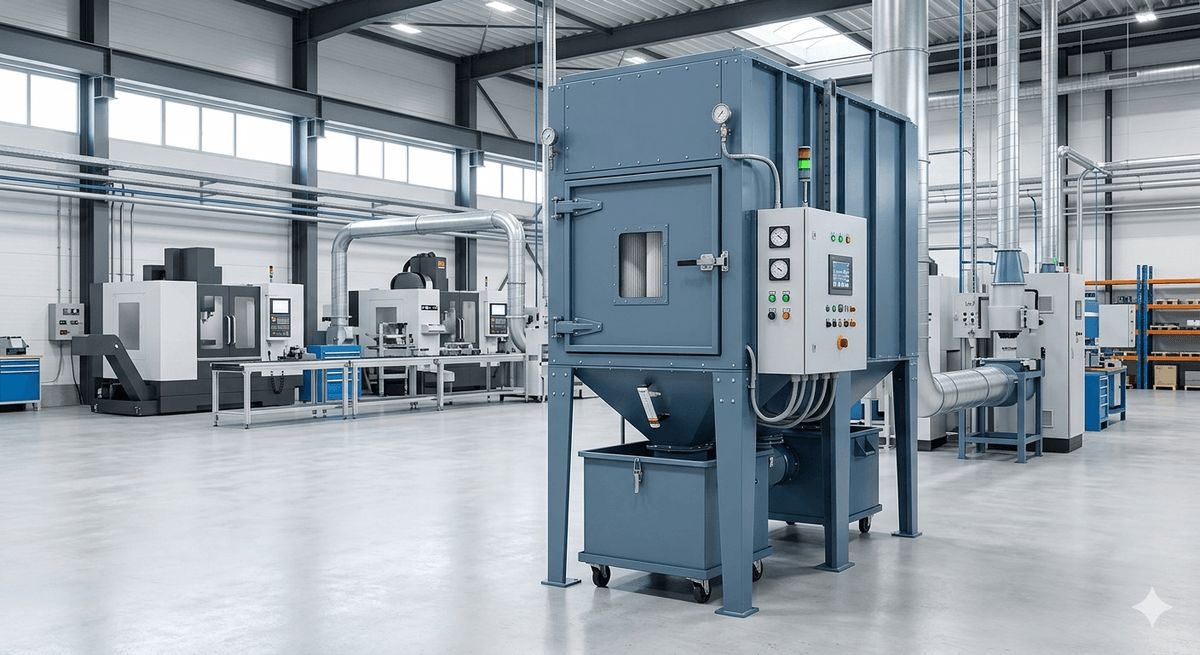
Dust collectors are designed for larger dust volumes and longer operating cycles. They may include larger hoppers, drums, automatic discharge systems, filter cleaning mechanisms, and controls that support continuous or semi-continuous operation. In a manufacturing environment, this matters because downtime and manual cleanup can become expensive.
NAROO's industrial dust collectors working process article explains how dust-laden air is drawn through ducts, separated, filtered, and discharged as clean air. That process-oriented design is why dust collectors are better suited to facilities that generate dust throughout the shift.
Portability vs System Integration
A shop vac is easy to move. That portability is useful for maintenance teams, small workshops, mobile cleanup, and occasional use at different machines. If the dust source changes frequently or the job is small, portability may be more valuable than airflow capacity.
A dust collector is usually less portable but more integrated. It may connect to fixed hoods, machine ports, production enclosures, or overhead ductwork. A central dust collector can serve several machines if the system is properly designed and balanced. Automatic dampers or controls may turn extraction on only where production is active.
NAROO's central dust collection systems article is useful for understanding this system-level approach. Once a facility has multiple dust sources, the question often shifts from "Which vacuum should we buy?" to "How should the dust collection network be engineered?"
Cyclone Separators: A Bridge Between Shop Vacs and Dust Collectors
Cyclone separators are often used to improve dust handling by separating heavier particles before they reach the final filter. In small shops, a cyclone separator can be paired with a shop vac to reduce filter clogging and maintain suction longer. In industrial systems, cyclones can act as pre-separators before a cartridge collector, baghouse, or other filtration equipment.
This makes cyclone technology a useful bridge in the dust collector vs shop vac discussion. A shop vac with a cyclone pre-separator can be more efficient than a shop vac alone, especially for chips or coarse dust. But that setup still may not provide the airflow, capacity, filtration, or safety features required for industrial production.
NAROO's page on cyclone dust collectors explains how centrifugal force separates particles from the gas stream. NAROO's article on pre-filter cyclone dust collectors and separators also discusses how cyclone systems can integrate with shop vacs and improve dust management.
Safety and Combustible Dust Considerations
Safety is where the shop vac comparison becomes more serious. Some dusts are combustible, toxic, reactive, conductive, or hazardous to inhale. Wood dust, metal dust, battery materials, chemical powders, pharmaceutical powders, and fine plastic dust may require controls beyond a consumer-grade or general-purpose shop vacuum.
Using a standard shop vac for combustible dust can be risky if the vacuum is not designed for the hazard. Ignition sources, static electricity, hot particles, motor design, filtration leakage, and dust accumulation all matter. In combustible dust environments, facilities may need explosion-proof equipment, grounding, isolation, venting, suppression, wet collection, housekeeping, and a formal dust hazard analysis.
OSHA's combustible dust guidance highlights the fire and explosion hazards associated with combustible dust in industry. NAROO's ATEX compliant dust control systems article is a useful internal reference for facilities that need dust control equipment designed for potentially explosive atmospheres.
Cost: Upfront Price vs Total Cost of Ownership
Shop vacs usually win on upfront cost. They are inexpensive, easy to buy, and simple to deploy. For small jobs, the lower purchase price can make sense. But for continuous industrial dust generation, the total cost may include filter replacement, frequent emptying, lost suction, manual cleanup, production downtime, poor capture, and possible safety or compliance gaps.
Dust collectors require a larger investment. The system may need engineering, ductwork, hoods, installation, controls, and maintenance planning. However, a properly selected dust collector can reduce cleanup time, improve air quality, support machine uptime, and handle larger dust volumes. For industrial facilities, those benefits can outweigh the higher upfront price.
NAROO's product center describes dust collectors customized for industries such as lithium batteries, glass manufacturing, non-ferrous metals, and mechanical processing. Customization matters because the most cost-effective system is not always the cheapest unit. It is the system that fits the dust, process, and operating schedule.
When a Shop Vac Makes Sense
A shop vac can make sense when the dust source is small, intermittent, and non-hazardous. It is useful for general cleanup, tool-side collection in small workshops, maintenance work, and low-volume debris removal. If the work area has one small machine, short operating periods, and manageable dust volume, a shop vac with appropriate filtration may be adequate.
Shop vacs are also useful as support tools in larger facilities. Maintenance teams may use them for localized cleanup, provided the vacuum is appropriate for the material being collected. In these cases, the shop vac is part of housekeeping, not the primary dust control system for production.
The key is to avoid stretching a shop vac beyond its design. If workers are constantly emptying it, filters clog quickly, dust escapes into the air, or multiple machines need collection at once, the facility is probably asking a portable vacuum to do the work of a dust collector.
When a Dust Collector Is the Better Choice
A dust collector is usually the better choice when dust generation is continuous, airborne dust is visible, multiple machines need extraction, the dust volume is high, or fine particles need reliable filtration. It is also the better choice when dust affects product quality, worker exposure, housekeeping, equipment life, or safety.
Industrial facilities should also consider dust collectors when they need ducted extraction, capture hoods, process enclosures, filter monitoring, automatic cleaning, large collection capacity, explosion-proof design, or integration with production controls. These are not typical shop vac strengths.
NAROO's company profile describes a full process covering R&D, design, production, sales, and installation. For industrial dust control, that system-level capability matters because effective dust collection is often an engineered solution rather than a single product purchase.
Decision Checklist: Dust Collector vs Shop Vac
Use a shop vac if the job is small, portable, intermittent, and non-hazardous. Use a dust collector if the job is continuous, high-volume, airborne, multi-machine, or safety-sensitive. If the dust is combustible, toxic, reactive, or fine enough to stay suspended in air, involve qualified safety and dust collection specialists before selecting equipment.
Ask these questions before deciding: How much dust is produced per hour? Is dust airborne or mostly settled debris? How many machines need extraction? What particle size is involved? Is the dust combustible or hazardous? What filtration level is required? How often will the system run? How often will filters need maintenance? Is ductwork needed? What regulations or safety standards apply?
If the answers point to continuous airflow, multiple dust sources, fine filtration, or explosion protection, a dust collector is usually the more appropriate solution. If the answers point to occasional cleanup and low-risk debris, a shop vac may be sufficient.
Conclusion
The dust collector vs shop vac decision is not about which tool is universally better. It is about matching equipment to dust volume, particle size, airflow needs, filtration requirements, safety risk, and operating schedule. A shop vac is portable, affordable, and useful for small cleanup tasks. A dust collector is better suited to continuous dust capture, industrial air quality, larger dust volumes, and engineered process control.
For workshops, a shop vac may be a practical starting point. For industrial facilities, a dedicated dust collector often becomes necessary as dust volume, machine count, safety expectations, and production demands increase. The moment dust control affects air quality, compliance, product quality, or combustible dust risk, the decision should move beyond convenience and into system design.
NAROO can be considered as a dust removal and air purification solution partner for facilities evaluating industrial dust collectors, cyclone pre-separation, central dust collection systems, ATEX-aware dust control, and customized filtration systems. Final equipment selection should be based on actual dust characteristics, production needs, safety requirements, and site conditions.