

Why Bag House Systems Still Matter
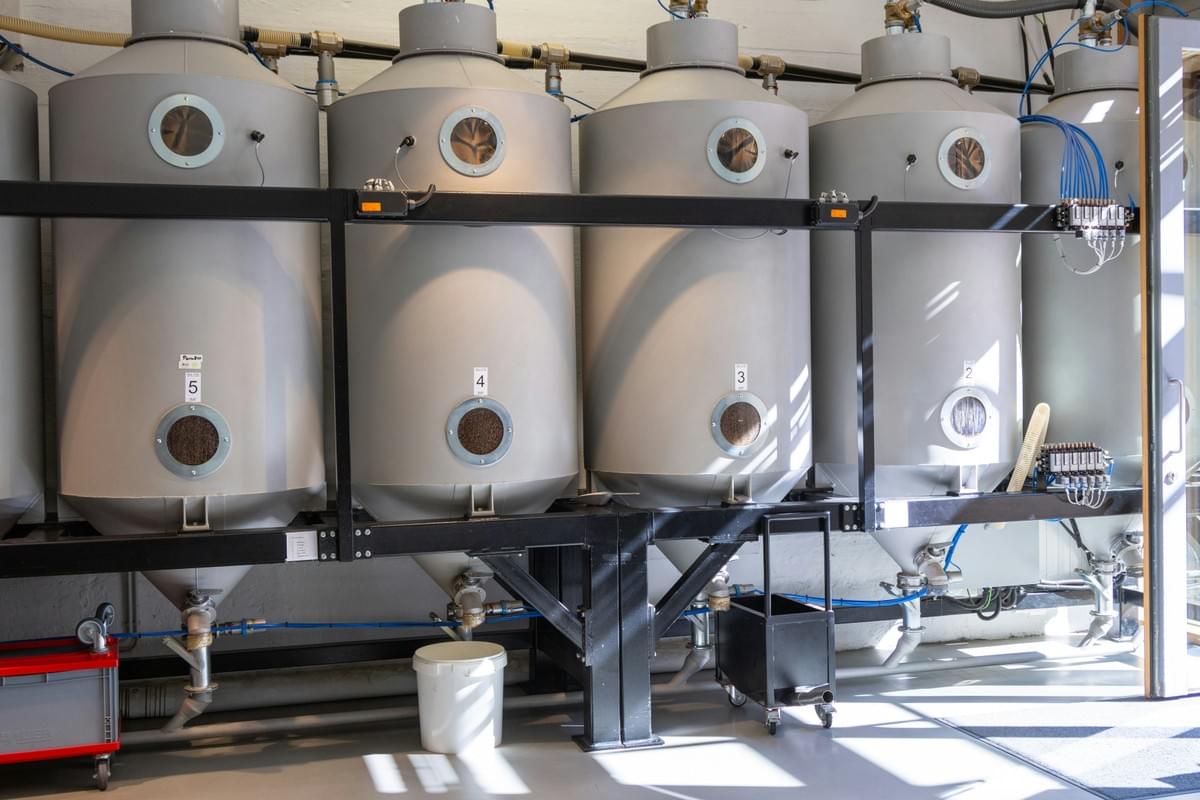
A bag house system, also called a baghouse dust collector or fabric filter dust collector, is one of the most established technologies for industrial particulate control. It is used to remove dust from process air in applications such as metal processing, woodworking, chemicals, food production, pharmaceuticals, glass, cement, battery materials, and other industrial environments where airborne particles must be captured before clean air is discharged or recirculated.
The basic idea is simple: dust-laden air enters the collector, passes through fabric filter bags, and leaves particles behind. In practice, a reliable bag house system depends on much more than fabric bags. Airflow design, dust loading, filter media, air-to-cloth ratio, cleaning method, hopper design, explosion protection, differential pressure monitoring, and maintenance all affect whether the system performs well over time.
This guide explains how a bag house system works, when it is a good fit, how it compares with cartridge and cyclone dust collectors, and what industrial buyers should ask before selecting a supplier.
What Is a Bag House System?
A bag house system is an air pollution control device that uses fabric filtration to remove dust from a contaminated gas stream. The EPA describes a fabric filter, sometimes called a baghouse, as a system that deposits particles on fabric material. The accumulated dust cake on the filter surface is a major part of the filtration mechanism, especially for fine particles.
In a typical baghouse dust collector, dirty air enters through an inlet, slows inside the housing, and moves through rows of cylindrical filter bags. Dust collects on the filter surface while cleaned air passes through the media and exits through the clean-air side. As dust accumulates, the system must periodically clean the bags to maintain airflow and avoid excessive pressure drop.
NAROO's article on types of dust collection systems lists baghouse dust collectors as one of the primary industrial dust collector types, alongside cyclone collectors, cartridge collectors, wet scrubbers, and electrostatic precipitators. The right choice depends on dust type, particle size, airflow, temperature, moisture, space, maintenance access, and safety requirements.
How a Baghouse Dust Collector Works
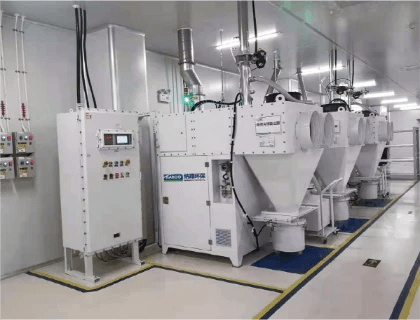
The working process begins with capture. Dust must first be collected at the source through hoods, enclosures, ductwork, or process connections. If dust is not captured effectively, even the best baghouse cannot solve the problem. Once dust-laden air enters the collector, heavier particles may drop toward the hopper while finer particles are carried to the filter bags.
As air passes through the fabric media, particles form a dust cake on the bag surface. This dust cake improves filtration efficiency but also increases resistance. If too much dust accumulates, airflow drops and the fan must work harder. That is why pressure drop, also called differential pressure or Delta-P, is one of the most important operating indicators for a bag house system.
NAROO's overview of industrial dust collectors working process is useful background because baghouses are not standalone boxes. They work as part of a system that includes dust capture, conveying airflow, separation, filtration, discharge, and control.
Common Cleaning Methods: Pulse Jet, Reverse Air, and Shaker
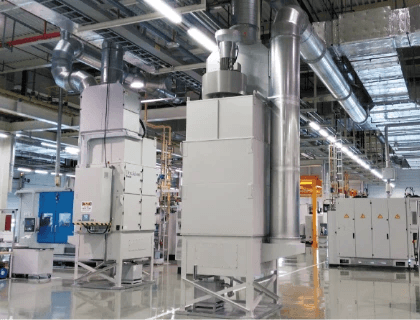
Baghouse filters must be cleaned periodically so the system can keep moving air. The most common cleaning methods are pulse jet, reverse air, and mechanical shaking. EPA materials identify shaking, reverse air, and reverse pulse or pulse jet as common fabric filter cleaning methods.
Pulse-jet baghouses are widely used because they can often clean filter bags while the collector remains online. Short bursts of compressed air travel through blowpipes and pulse valves, flexing the bags and dislodging dust from the surface. The dust falls into the hopper for discharge. Pulse-jet systems can be controlled by timer or, more efficiently, by differential pressure demand.
Reverse-air and shaker baghouses are also used in some applications. Reverse-air systems use a lower-energy airflow reversal to collapse or flex bags and remove dust cake. Shaker systems mechanically shake bags to release accumulated dust. The best method depends on filter media, dust characteristics, airflow rate, operating temperature, available space, and maintenance requirements.
Key Components of a Bag House System
A complete bag house system includes more than filter bags. Key components include the dirty-air inlet, collector housing, tube sheet, filter bags, cages or supports, clean-air plenum, fan, hopper, dust discharge device, pulse valves or cleaning mechanism, compressed-air header, controls, pressure monitoring, access doors, and ductwork.
The filter bag is the visible core of the system, but airflow distribution is just as important. Poor inlet design can overload certain bags, cause abrasion, or lead to uneven dust cake formation. A poorly designed hopper can allow dust re-entrainment. Weak seals can let dust bypass filters. Inadequate access can make maintenance slow and unsafe.
NAROO's product center describes dust collectors customized for industries such as lithium batteries, glass manufacturing, non-ferrous metals, and mechanical processing. This matters because baghouse design should match the process rather than rely on a one-size-fits-all collector.
Filter Bag Selection: Material, Dust Type, and Operating Conditions
Filter bag selection is one of the most important decisions in a bag house system. The bag media must match the dust, temperature, humidity, chemical exposure, abrasion level, filtration efficiency, and cleaning method. Polyester, polypropylene, aramid, PTFE membrane, fiberglass, and other fabrics may be considered depending on application requirements.
NAROO's guide on choosing the right dust collector bag filters explains that filter material, airflow, pressure requirements, dust type, particle size, temperature, and moisture all affect filter performance. A bag that works well for dry wood dust may not be suitable for hot gas, sticky dust, chemical dust, or abrasive metal particles.
For facilities evaluating bag filters, the question is not only "Which bag is cheapest?" It is "Which bag media will maintain airflow, capture the target particles, survive the process environment, clean properly, and support predictable maintenance intervals?"
Air-to-Cloth Ratio and Pressure Drop
Air-to-cloth ratio is a key sizing concept for baghouse systems. It compares the airflow volume to the total filter media area. If the ratio is too high, air moves through the filter bags too aggressively. This can increase pressure drop, reduce filtration stability, shorten bag life, and make cleaning less effective. If the ratio is too low, the system may be oversized and more expensive than needed.
Differential pressure tells operators how much resistance the bags and dust cake are creating. A moderate dust cake can support high filtration efficiency. Excessive pressure drop, however, can reduce airflow at capture points, increase fan energy use, and indicate plugged or blinded filters. Very low pressure drop may also signal a leak, damaged bag, or insufficient dust cake in some applications.
For energy and maintenance planning, pressure drop should be monitored regularly. NAROO's article on industrial dust extractor filters reinforces that filter selection affects the overall efficiency of an industrial dust collector, not just the visible filter replacement schedule.
Baghouse vs Cartridge Dust Collector
Baghouse and cartridge collectors both use filtration, but they are not interchangeable in every application. Baghouse systems often handle large air volumes, high dust loading, and heavy-duty industrial conditions. Cartridge collectors are often more compact and can provide high filtration efficiency with a smaller footprint, especially for fine and dry dusts.
NAROO's cartridge dust collector page explains that cartridge systems use surface filtration and pulse jet cleaning, with attention to system air volume, wind speed, duct layout, pipe diameter, equipment pressure loss, and air-to-cloth ratio. Those same sizing principles matter for baghouses, but the media geometry and maintenance profile differ.
Facilities should compare baghouse and cartridge systems based on dust type, air volume, available space, filter replacement method, compressed-air requirements, dust loading, explosion protection needs, and total cost of ownership. A compact cartridge collector may be ideal in one facility, while a baghouse may be the better long-term choice for high-volume or high-load dust collection.
Baghouse vs Cyclone Dust Collector
A cyclone dust collector separates particles using centrifugal force and changes in airflow direction. It can be useful for removing heavier particles before they reach a final filter. A baghouse, by contrast, captures finer particles through fabric filtration. In many industrial systems, cyclones and baghouses are not competitors; they can work together.
NAROO's cyclone dust collector page explains that cyclone separation reduces the filtration load on high-efficiency collectors and improves system stability during continuous operation. This can be valuable when dust contains a mix of coarse and fine particles.
A cyclone pre-separator may reduce the amount of heavy dust reaching a baghouse, lowering bag wear and improving hopper management. However, cyclones may not capture fine particles to the same level as fabric filters. The final system should be designed around the particle size distribution, dust loading rate, and required emissions or air quality target.
Where Bag House Systems Are Commonly Used
Baghouse systems are widely used in industries that generate substantial dust volumes. Typical applications include woodworking, metal processing, aluminum processing, cement and mineral handling, chemical powders, pharmaceuticals, food processing, glass manufacturing, non-ferrous metals, and smelting. They are also used where process air contains fine particulate that must be captured before discharge.
NAROO's article on aluminum plant baghouse dust collection is a useful example because aluminum dust can create both air quality and fire or explosion concerns. In such applications, the collector design must address dust capture, filtration, safe discharge, and appropriate explosion protection.
Baghouse systems may also support processes where emissions control and workplace cleanliness are important. For high-volume dust sources, their large filter area and robust construction can make them a practical long-term solution.
Combustible Dust and Explosion Protection
Combustible dust safety must be considered whenever a bag house system handles dust that can burn or explode under the right conditions. A baghouse can contain suspended dust, air, confinement, and possible ignition sources. Depending on the material, facility layout, and jurisdiction, explosion venting, flameless venting, suppression, isolation, grounding, spark detection, or ATEX-compliant equipment may be required.
OSHA lists combustible dust as a recognized industrial hazard and provides standards and guidance related to dust fire and explosion risks. Facilities should not assume that a standard baghouse is suitable for combustible dust simply because it captures dust effectively.
NAROO's ATEX compliant dust control systems article is relevant for facilities that need dust collection solutions in potentially explosive atmospheres. Safety requirements should be reviewed early, before equipment selection and layout are finalized.
Maintenance Requirements for Reliable Baghouse Performance
Baghouse maintenance should focus on airflow, pressure drop, bag condition, cleaning performance, seals, hoppers, discharge devices, compressed-air quality, and leak detection. A small leak or damaged bag can allow dust bypass. Poor compressed-air quality can weaken pulse cleaning. A full hopper can cause dust re-entrainment. A blinded bag can raise pressure drop and reduce airflow.
Operators should record differential pressure, inspect bag condition, check pulse valves, verify compressed-air settings, clean hoppers, inspect access doors and seals, and monitor emissions or visible dust. Maintenance intervals should be based on operating data, not only calendar time.
NAROO's dust collectors filters, cartridges, and bags article highlights the importance of selecting and maintaining filtration components. In baghouse systems, filter condition is directly connected to airflow, energy use, emissions, and system reliability.
Questions to Ask Before Buying a Bag House System
Before selecting a baghouse supplier, define the dust and process conditions. What dust is being collected? What is the particle size distribution? Is the dust abrasive, sticky, hygroscopic, combustible, toxic, or chemically reactive? What air volume is required at each capture point? What temperature and moisture levels are expected? Is the system indoor or outdoor?
Ask the supplier how the system will be sized. What air-to-cloth ratio is recommended? What filter media is proposed? What cleaning method will be used? What differential pressure range is expected? How will bags be accessed and replaced? How will dust be discharged? What explosion protection features are needed?
NAROO's company profile describes a full process from R&D and design through production, sales, and installation. For a bag house system, this system-level capability matters because performance depends on engineering, manufacturing, installation, commissioning, and service working together.