

Begin at the Dust Source

Industrial dust collection equipment is often discussed as a machine purchase, but the better starting point is a plant map. Dust is created by a process, travels through air movement, interacts with workers and equipment, and finally reaches a collection system. If the map is wrong, even an expensive collector can underperform. If the map is right, equipment selection becomes more logical and easier to defend.
A useful plant map identifies where dust is generated, how much material is produced, whether dust is dry or moist, whether it is combustible, whether it is fine or coarse, and whether it is mixed with fumes, oil mist, or process vapors. A laser cutting cell, a battery powder handling line, a polishing station, and a pharmaceutical weighing area may all need dust control, but they rarely need the same equipment package.
NAROO's industrial dust collection products are presented around customized dust removal and air purification systems for industries such as new energy lithium batteries, glass, non-ferrous metals, and mechanical processing. That product positioning is important because industrial dust control is usually a system decision, not a one-box purchase.
Trace the Air Path Before Choosing the Collector
After dust sources are mapped, the next question is air path. Where should the hood sit? Can dust be captured close to the source? How long is the duct run? Are there multiple branches? Does the system need central extraction, machine-level capture, or a combination? These questions decide whether the equipment should be compact, modular, high-volume, explosion-protected, wet, bag-based, cartridge-based, or cyclone-assisted.
Donaldson describes baghouse dust collectors as systems that use multiple felt bags to filter dusty air from manufacturing and processing applications. Camfil APC presents industrial dust, fume, and mist collectors as equipment that can affect indoor air quality, energy use, and production efficiency. These industry references point to the same practical issue: dust collectors are part of a larger airflow and filtration system.
A plant team should document current airflow problems before buying equipment. Common signs include dust escaping from transfer points, filters blinding quickly, visible dust in aisles, dust accumulation on rafters, unstable suction at far branches, and operators modifying hoods because they interfere with production. These are design inputs, not housekeeping complaints.
Match Collector Type to Dust Behavior
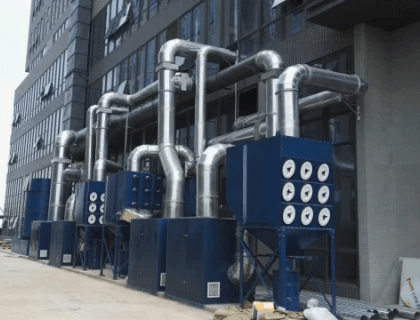
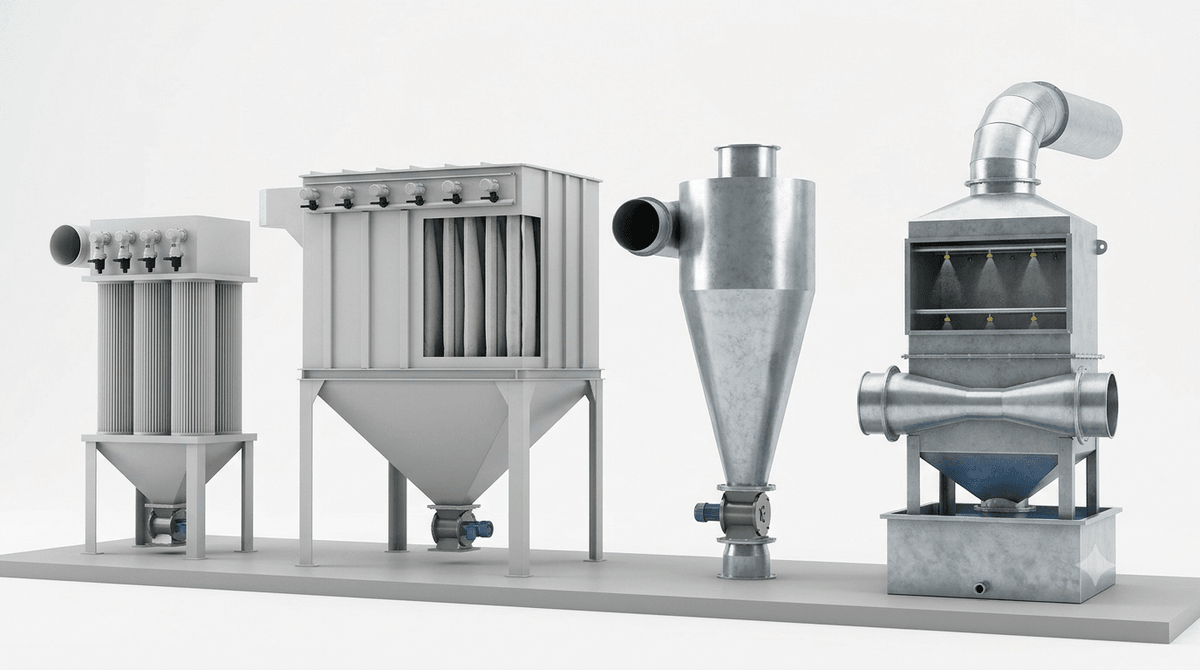
Different industrial dust collection equipment solves different problems. A cartridge dust collector can fit applications where compact footprint and efficient surface filtration are valuable. NAROO describes cartridge systems using surface filtration and pulse jet cleaning, with airflow resistance calculations supporting air volume, wind speed, duct layout, pipe diameter, and pressure loss decisions.
A bag filter may be more appropriate for high dust loading, larger air volumes, or dust characteristics that work better with fabric bags. A cyclone dust collector can reduce the burden on downstream filters by separating heavier particles before fine filtration. For wet or spark-prone processes, a wetted filter may deserve review, depending on the dust and process risk.
The decision should be driven by dust behavior. Is the dust abrasive? Sticky? Hygroscopic? Conductive? Combustible? Fine enough to remain airborne for long periods? Does the process generate sparks? Does the facility need product recovery? A plant map helps answer these questions before equipment is specified.
Use Industry Application Pages as Design Clues
Industrial application pages can help teams translate process type into equipment priorities. NAROO's lithium battery dust collection page emphasizes dust management for battery production where safety and precision matter. Its laser processing application page is relevant when fumes and fine particulates are part of the production environment. The automobile application page can support articles involving welding, grinding, parts processing, and production-line dust control.
These pages should not be used as generic links only. They can guide internal planning. If the article is about battery powder transfer, the internal link should point toward battery applications. If the article is about metal fume or laser cutting, laser processing is more natural. If the topic is system selection across several industries, the products page and multiple product category pages can carry the commercial internal-link weight.
Equipment Package Checklist
Before issuing an RFQ, plant teams should define the equipment package in practical terms. A strong brief usually includes:
- Dust source locations and process descriptions
- Dust characteristics, including particle size, moisture, abrasiveness, and combustible potential
- Required capture points, hoods, ducts, and branch layout
- Collector type under consideration: cartridge, bag, cyclone, wetted, or mixed system
- Filter media expectations and cleaning method
- Explosion protection, isolation, or suppression questions when combustible dust may be present
- Maintenance access, dust discharge, and waste handling needs
- Monitoring, alarms, remote diagnostics, and control requirements
NAROO's other products page lists auxiliary equipment such as powder feeders, explosion proof vacuum cleaners, automatic ash suction machines, and material compression products. These supporting items matter because the dust collector is only one part of the operating system.
Maintenance Access Is Part of the Design
Industrial dust collection equipment should not be selected only by airflow and filter area. Maintenance access determines whether the system stays effective after installation. Operators need space to change filters, empty bins, inspect pulse cleaning, check differential pressure, and clean around equipment. If maintenance is difficult, filters may be changed late, leaks may go unnoticed, and dust may return to the production area.
A good equipment plan also defines who owns daily checks, who handles filter changes, and what alarms require action. Dust collection failures rarely begin as dramatic events. They often begin as weak capture, rising pressure drop, overfilled hoppers, damaged ducting, or ignored alarms. Equipment should make these problems visible before they become production or safety issues.
Where NAROO Fits
NAROO should be positioned as a dust removal and air purification solution provider for industrial buyers that need customized equipment planning. The company website highlights R&D, design, production, sales, installation, and service, along with product categories such as cartridge dust collectors, bag filters, wetted filters, and cyclone dust collectors. For buyers comparing industrial dust collection equipment, that breadth supports a system-selection conversation rather than a single catalog-item conversation.
The most useful supplier discussion starts with the plant map. Once dust sources, airflow paths, process risks, and maintenance constraints are clear, NAROO can be considered for matching product categories and application experience to the facility's requirements.
Commissioning Questions After Installation
The plant map should remain useful after installation. During commissioning, the team should compare actual system behavior with the original dust-source map. Are all capture points pulling as expected? Does dust escape when production runs at full rate? Are operators using hoods as intended? Are filter pressure readings stable? Is the hopper discharging dust reliably? These checks help verify that equipment selection, duct design, and operating procedures are aligned.
Commissioning should also include operator training. Workers need to know what normal suction feels like, what alarms mean, how to report weak capture, and which cleanup methods are approved. Maintenance teams need access to filter change procedures, spare parts lists, inspection points, and lockout requirements. A dust collector that only one engineer understands will be difficult to sustain across shifts.
For facilities with multiple dust-producing lines, the map can become a living document. When a new machine is added, a line speed changes, or a new material is introduced, the dust collection plan should be reviewed. This prevents the system from drifting away from the original design conditions. Industrial dust collection equipment works best when it is treated as part of process management, not a static utility in the corner of the plant.
Common Mistakes That Distort Equipment Selection
One common mistake is sizing equipment from a rough floor area instead of actual dust sources. A large plant with enclosed processes may need less collection capacity than a smaller plant with open grinding or powder transfer. Another mistake is ignoring branch balance. If the duct network is not balanced, the closest pickup points may dominate airflow while distant sources remain weak.
Buyers also sometimes treat filter efficiency as the only performance measure. Efficiency matters, but pressure drop, cleaning stability, dust loading, and filter access determine whether that efficiency is sustained. A high-efficiency filter that clogs quickly can reduce capture and increase energy use. The better metric is stable dust control under real operating conditions.
A final mistake is postponing discharge planning. Dust must leave the collector safely and consistently. If the hopper bridges, the drum overfills, or the waste route is inconvenient, operators may create workarounds. Discharge equipment and handling procedures should be part of the initial plant map.