

A mist collector is often installed beside a CNC machine as if it were an accessory. In reality, mist control is part of the machining process. Coolant type, spindle speed, enclosure leakage, heat, toolpath, door opening, and duct route all decide whether mist stays under control or spreads through the shop.
The best selection conversation starts at the machine. What fluid is being aerosolized? Where does mist escape? Does the collector need to drain recovered coolant? Is the air stream only mist, or does it also contain smoke, fine metal dust, or sticky residue? NAROO's industrial dust removal and air purification products can support this process-led discussion when mist is part of a broader plant-air project.
Machine Enclosure Comes First
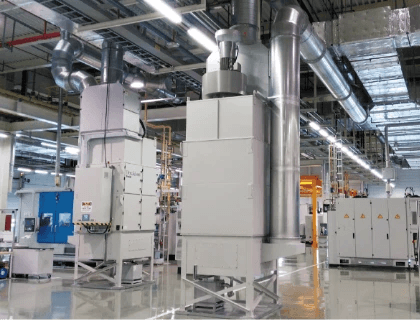
An enclosed machining center gives the collector a defined capture zone. An open machine, leaky panel, or frequently opened door gives mist a path into the room. Before increasing fan size, check the enclosure, door seals, cable openings, and cycle timing. A short dwell before unloading may reduce the mist puff that occurs when doors open too early.
Source capture is usually more reliable than room cleanup. Once mist spreads across a shop, it can settle on floors, electrical cabinets, overhead surfaces, and nearby workstations.
Do Not Mix Mist and Dry Dust Without Review
Machining areas often sit near grinding, welding, deburring, or laser marking. A mist-heavy stream behaves differently from dry particulate. Dry fine dust may point toward NAROO's cartridge dust collector, while heavy process dust may fit a bag dust collector discussion. Mist-heavy streams need their own review.
If a process combines mist with metal fines, smoke, or sticky particulate, the plant should define the contaminant mix before choosing the collector. One device should not be asked to handle incompatible streams by assumption.
Maintenance Access Is Part of the Specification
Mist collectors can fail quietly. Operators may notice haze, oily film, odor, slippery surfaces, or frequent filter loading before a formal alarm appears. Filters and drains need easy access. If the collector is mounted where service is awkward, maintenance will be delayed.
For automotive machining or mixed metalworking lines, NAROO's automotive air filtration and dust removal context is useful because these plants often combine machining, welding, grinding, and finishing under one roof.
Where Wet or Pre-Separation May Enter the Conversation
If the stream includes sticky particulate or wet emissions, NAROO's wetted filter positioning may be relevant. If coarse particles are present before final filtration, cyclone pre-separation may be reviewed. The correct path depends on process details, not a generic label.
Coolant Behavior Changes the Collector Duty
Coolant and oil behavior can change dramatically between machining processes. Flood coolant, high-pressure through-tool coolant, oil-based machining, minimum quantity lubrication, and grinding fluid all create different droplet patterns. A light mist at one machine may become dense aerosol at another because of spindle speed, tool engagement, temperature, or enclosure turbulence.
The collector duty also changes as fluid ages. Concentration, tramp oil, fines, biological growth, and additives can affect odor, residue, and filter loading. If a mist collector begins to load faster after a coolant change, the filter may not be the root problem. The process fluid and operating condition should be reviewed before the plant assumes the collector is undersized.
Plants should document coolant type, concentration range, sump condition, machining cycle, and peak mist events. This information helps separate normal filter loading from process-driven changes. It also helps the supplier understand whether the system needs drainage, pre-filtration, different service intervals, or separation from nearby dry dust sources.
Indoor Versus Outdoor Discharge
Some machining operations discharge filtered air back indoors, while others route air outdoors depending on local requirements, contaminant type, heat balance, and facility policy. Indoor discharge can conserve conditioned air, but it requires confidence in filtration, maintenance, and monitoring. Outdoor discharge may reduce indoor recirculation concerns, but it can affect makeup air, energy use, permitting, and duct layout.
The decision should not be made by convenience alone. If the stream includes smoke, fine metal particulate, odor, or mixed contaminants, the plant should review whether ordinary recirculation is appropriate. If discharge is outdoors, the system still needs good source capture and drainage so mist does not accumulate in ductwork.
A NAROO project brief should state the expected discharge route early. Fan selection, duct pressure loss, collector location, maintenance access, and makeup-air strategy all depend on that decision. Changing discharge direction after installation can be expensive and disruptive.
Signs the Mist Collector Is Not Matched to the Process
- Visible haze escapes when machine doors open.
- Oil or coolant film appears on floors, windows, or machine cabinets.
- Operators report odor or throat irritation near a specific machine.
- Filters load quickly after a coolant, tool, or production change.
- Drain lines clog or recovered fluid leaks around the collector.
- The collector pulls room air while mist escapes from enclosure gaps.
- Maintenance access is so awkward that inspections are skipped.
Coordinate Mist Control With the Rest of the Plant
Many metalworking plants have several airborne contaminant streams in the same building. Machining mist, welding fume, grinding dust, laser smoke, and powder handling dust may all be present. Treating each machine as a separate purchase can create a patchwork system that is difficult to maintain and hard to verify.
A better approach is to map contaminant streams and decide which should remain separate. Dry combustible dust should not be casually mixed with oily mist. Welding fume capture should not be weakened by a machining collector branch added later. Grinding dust may need spark or abrasive-dust review. Each stream should be classified by process, not by which machine happens to be closest to an open duct.
NAROO's design, production, and installation background is useful in this kind of plant-level coordination. The strongest mist collector project is not the one with the biggest fan; it is the one that keeps each air stream understandable, maintainable, and matched to the real process.
Supplier Brief for a Mist Collector Project
When requesting a mist collector recommendation, provide the machine model, enclosure photos, coolant or oil type, sump condition, machining cycle, number of shifts, peak mist moments, desired discharge route, available space, drainage plan, and nearby dry dust or fume sources. If the current system has problems, describe where haze appears, when odor occurs, and how often filters are changed.
The brief should also include maintenance constraints. Can filters be accessed from the floor? Is there room to pull elements? Where will recovered fluid go? Can the collector be isolated for service without stopping unrelated machines? These practical questions often decide whether the installed system keeps working after the first month.
Installation Details That Decide Daily Performance
Small installation details can decide whether a mist collector performs well after startup. The duct should slope or drain in a way that prevents liquid from pooling where it can restrict airflow or leak at joints. Flexible hose should be short, supported, and protected from collapse. The collector should be close enough to the machine to reduce pressure loss but placed where filters, drains, and electrical components can be serviced safely.
Machine connection points matter as much as collector size. Pulling air from the wrong part of an enclosure can draw mist across the operator opening instead of away from it. Too much airflow can disturb coolant behavior, cool the machining zone unevenly, or pull chips into a system intended for aerosol. Too little airflow lets haze escape during high-speed cutting or door opening. Commissioning should verify capture during the actual machining cycle, not only when the machine is idle.
Noise, heat, makeup air, and nearby workstations should also be reviewed. A collector installed where it blocks service access or creates operator complaints may be bypassed or neglected. Practical layout decisions are not cosmetic; they protect the system's long-term usefulness.
How to Verify Mist Control After Startup
Verification should combine observation, maintenance records, and worker feedback. Look for visible haze when doors open, film on nearby surfaces, slipping hazards, odor changes, and filter loading patterns. If the collector has a pressure gauge or service indicator, record readings under consistent production conditions. A clean-looking machine during a short test does not prove the system will remain stable across a full shift.
Plants should schedule a review after the first weeks of production. By then, filters have begun to load, drains have seen real fluid, and operators have learned how the system fits their workflow. This review can catch issues such as clogged drain lines, poor access, wrong airflow balance, or process changes that appeared after installation.
A good mist collector program keeps the machine, fluid, enclosure, collector, and maintenance routine connected. When one of those pieces changes, the air-control plan should be checked again.
That review should be documented in plain language. Note the machine condition, filter readings, drain condition, surface cleanliness, and operator observations. Simple records make future changes easier to diagnose.
Conclusion
A mist collector should be selected from the process outward. Start with the enclosure, coolant behavior, mist release pattern, drainage, and maintenance routine. Then match the collector to the actual contaminant stream. That approach gives plant teams better capture, cleaner work areas, and fewer surprise filter problems. It also makes future coolant, tooling, or production changes easier to evaluate without starting from zero or overlooking maintenance realities during daily operation.