

Pharmaceutical dust extraction is rarely one hood connected to one collector. Powder moves through dispensing, charging, blending, milling, granulation, tablet compression, capsule filling, dedusting, packaging, sampling, and cleaning. Every time the product crosses an open boundary, a small amount can become airborne.
Those releases may be brief, but they matter. They can affect worker exposure, housekeeping, product loss, equipment cleanliness, and cross-contamination control. The best design follows the actual batch route and applies the right level of enclosure and local exhaust at each opening.
Follow the Batch, Not the Ventilation Drawing
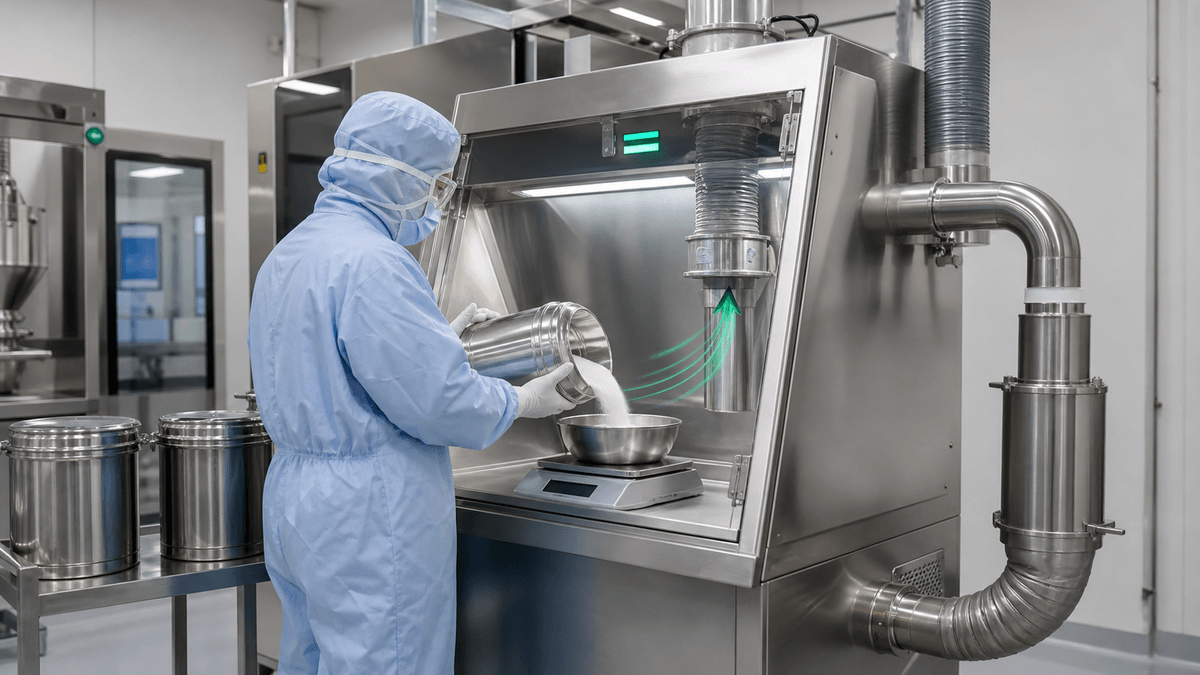
Begin with a task observation. Watch how operators open containers, scoop material, connect liners, charge equipment, collect samples, clear blockages, and remove waste. Include changeover and maintenance, not only steady production. A polished process diagram may omit the manual step that creates the largest dust peak.
NIOSH measurements at a pharmaceutical manufacturing facility found short increases in respirable dust near a tablet press when powder was hand-scooped into the hopper. The lesson is broader than that single facility: average room conditions can hide task-based peaks. Capture should be designed around the release event.
Record the product or ingredient, occupational exposure target, batch quantity, frequency, transfer method, opening size, operator position, cleaning method, and contamination-control requirements. This becomes the basis for containment and airflow decisions.
Dispensing Is the First Test of Control
Weighing and dispensing combine open containers, manual movement, and accuracy-sensitive work. A poorly arranged booth may pull powder across the operator, disturb the balance, or leave dead zones where residue collects. A useful setup controls airflow from a cleaner zone toward the source while preserving comfortable access and stable weighing.
Reduce the distance powder falls. Use closed or lined containers when the process allows. Position waste-bag handling within the controlled zone because rolling or collapsing an empty sack can release retained dust. Design surfaces for cleaning and avoid ledges that trap material.
Local extraction must be matched to the booth geometry and task. More air is not automatically better if it creates turbulence around a fine powder or pulls material away from the intended container.
Charging and Discharge Create Different Plumes
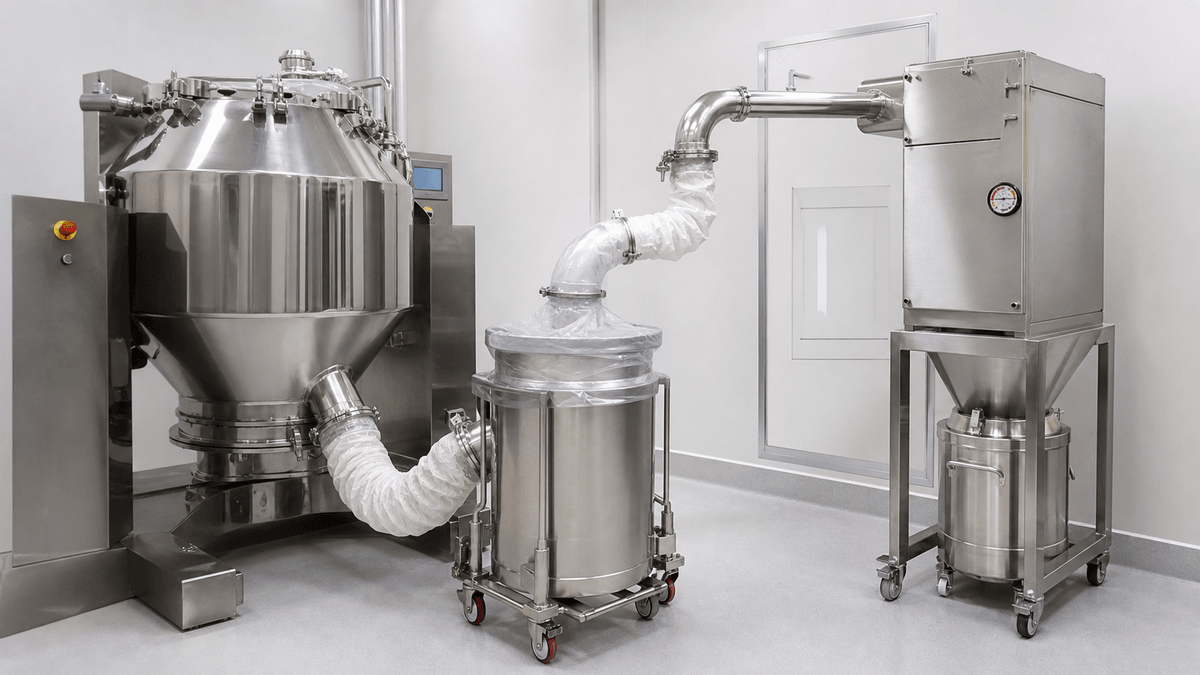
When powder falls into a mixer or vessel, it displaces air. That air needs a controlled route out, or it may carry dust through lids, seams, and charging openings. An enclosing or receiving hood near the charge point can capture the displaced plume while allowing the operator to work outside the main contaminant path.
At discharge, powder momentum, container fill level, flexible connections, and entrained air change the release. A ventilated collar or enclosure around a filling point can help control emissions, but it should not remove valuable product or collapse liners. The design needs to account for the full and nearly empty stages of filling.
For multiple fine-dust sources, NAROO's cartridge dust collector uses surface filtration and pulse-jet cleaning, with airflow parameters considered in system design. The collector is only one part of a pharmaceutical dust extraction network; the source interfaces still determine capture.
Compression and Encapsulation Need Close Control
Tablet presses and capsule fillers can release dust at feed hoppers, product discharge, dedusting, rejection, and access openings. Enclosures supplied with the machine should be assessed in real operating positions. An access panel left open for adjustment can change airflow and defeat the intended containment.
Connect extraction where the equipment manufacturer expects it, then verify performance with the actual formulation and production rate. Too little airflow may allow leakage. Excessive airflow may carry product into the extraction system or interfere with process stability. The correct operating range should be documented.
Downstream packaging is often cleaner, but broken tablets, product transfer, and equipment cleaning can still release dust. Do not end the source map at the press outlet.
Containment Level Comes Before Collector Type
Different powders require different control levels. Hazard, potency, sensitization potential, exposure target, batch scale, and process openness influence whether the task needs local exhaust, partial enclosure, an isolator, contained transfer, or a combination of controls. A general dust collector cannot replace product-specific containment assessment.
NIOSH describes engineering controls such as local exhaust ventilation and containment as ways to remove airborne emissions or place a barrier between workers and hazards. These controls should be integrated into the task so they do not rely on perfect operator behavior for every batch.
Where the dust may be combustible, a separate hazard review is needed. OSHA includes pharmaceuticals among materials that can present combustible-dust hazards when finely divided and suspended under the right conditions. The result may affect collector location, isolation, ignition control, discharge, housekeeping, and other system decisions.
Protect the Product as Well as the Room
Pharmaceutical extraction must fit contamination-control strategy. A shared system can create questions about product carryover, cleaning verification, return airflow, filter integrity, and maintenance access. Some sources may require dedicated collection or specific containment boundaries. These choices belong in the process-risk assessment, not at the end of mechanical design.
Avoid casual recirculation assumptions. HSE research notes that a failed or incorrectly selected filter in a recirculating local exhaust system can return harmful contaminants to the workplace. Any return-air strategy needs a qualified review of contaminant properties, filtration, monitoring, failure response, and applicable requirements.
NAROO's high-cleanliness filtration work for photovoltaic production illustrates the broader importance of clean manufacturing environments, while pharmaceutical applications still require their own product and regulatory controls.
Select Filtration Around Real Powder Behavior
Fine, dry, free-flowing powder may be compatible with cartridge filtration. Heavier loading or long operating cycles may lead designers to consider a bag filter system. A cyclone dust collector may serve as a pre-separator for coarser material, reducing load on final filtration, but it is not a stand-alone answer for all fine pharmaceutical dust.
Powder properties can change with formulation, humidity, granulation state, or process temperature. Sticky material may blind filters. Very fine powder may remain suspended in the hopper. Hygroscopic material may bridge or form deposits. The supplier needs representative data rather than a generic description such as "white powder."
Also define what happens to collected product. Recovery, disposal, potency, cross-contamination, and exposure during container changeout all affect the discharge arrangement.
Filter Change Is a Production Task
Maintenance can create more direct contact with captured dust than normal production. Plan how filters are isolated, removed, sealed, and moved. Provide access that does not require workers to lean over contaminated surfaces. Consider how housings, hoppers, sensors, and ducts will be inspected and cleaned.
Pressure differential, cleaning performance, fan status, and airflow indicators help operators recognize changes before visible escape occurs. The baseline should be established during commissioning and linked to practical response steps. An alarm is useful only when the team knows what condition it represents and what to do next.
NAROO's industrial dust removal portfolio covers several filtration approaches. A pharmaceutical project should use that equipment choice within a documented containment, cleaning, and maintenance plan.
Prove Performance During the Messy Moments
Commissioning should include full-rate charging, the end of container discharge, rejected product handling, bag removal, sampling, filter cleaning, and equipment cleanup. These moments often behave differently from steady operation. Use suitable airflow checks, visualization, exposure assessment, or containment verification methods selected by qualified professionals.
Document hood configurations, access-door positions, branch flows, pressure readings, fan settings, and acceptable process conditions. Recheck performance after formulation changes, equipment modifications, production-rate increases, or rearranged work practices.
Operators should be able to recognize a failed control without waiting for a scheduled survey. Simple indicators at the workstation can make airflow status visible, while preventive maintenance protects the performance behind the indicator.
A Shift-by-Shift Control Check
- Are enclosures, doors, and flexible connections in their intended positions?
- Does the airflow indicator show the normal operating range?
- Is powder escaping during charging, discharge, sampling, or waste handling?
- Are containers sealed before they leave the controlled area?
- Are surfaces being cleaned with the approved method rather than dry sweeping or compressed air?
- Are filter pressure, alarms, and discharge levels normal?
- Has any product, rate, or task changed since the system was commissioned?
Questions Procurement Should Ask Before Quotation
Ask the supplier to explain the control concept at each source, not just the collector model. The proposal should identify process assumptions, simultaneous operating points, airflow and pressure calculations, filtration basis, cleaning method, discharge containment, control logic, maintenance access, commissioning tests, and required owner inputs.
Provide occupational exposure and containment requirements established by the plant's qualified team. Include product data, batch schedule, cleaning strategy, room-pressure relationships, utilities, available space, and interface responsibilities. NAROO has worked in industrial environmental solutions since 2008 and describes support spanning research, production, and installation in its company profile. That system-level coordination is especially relevant when extraction must fit both process equipment and plant operations.
FAQ
Is room ventilation enough for pharmaceutical powder?
General ventilation can dilute background contamination but is usually less effective at controlling a concentrated release than containment and local exhaust close to the source. The control approach should follow the hazard and task assessment.
Can collected pharmaceutical powder be returned to the process?
That decision depends on product quality, contamination risk, traceability, process rules, and regulatory requirements. It should not be assumed from the dust collector design.
How often should extraction performance be checked?
Use the inspection, testing, and maintenance schedule required by the applicable rules and risk assessment, plus routine operator checks. Reassessment is also important after material, equipment, rate, or workflow changes.
Does HEPA filtration solve every containment problem?
No. Final filtration cannot compensate for a poorly controlled opening, an unsuitable transfer method, leakage, or unsafe maintenance. Containment, capture, filtration, discharge, and work practices must operate together.
Keep the Powder Controlled Through the Whole Batch
Pharmaceutical dust extraction succeeds when it follows the product from the first opened container to the final cleaning step. Control each transfer, choose containment before equipment, match filtration to actual powder behavior, and verify the system during the tasks most likely to release dust. That approach protects the process as well as the people who run it.